Key Takeaways
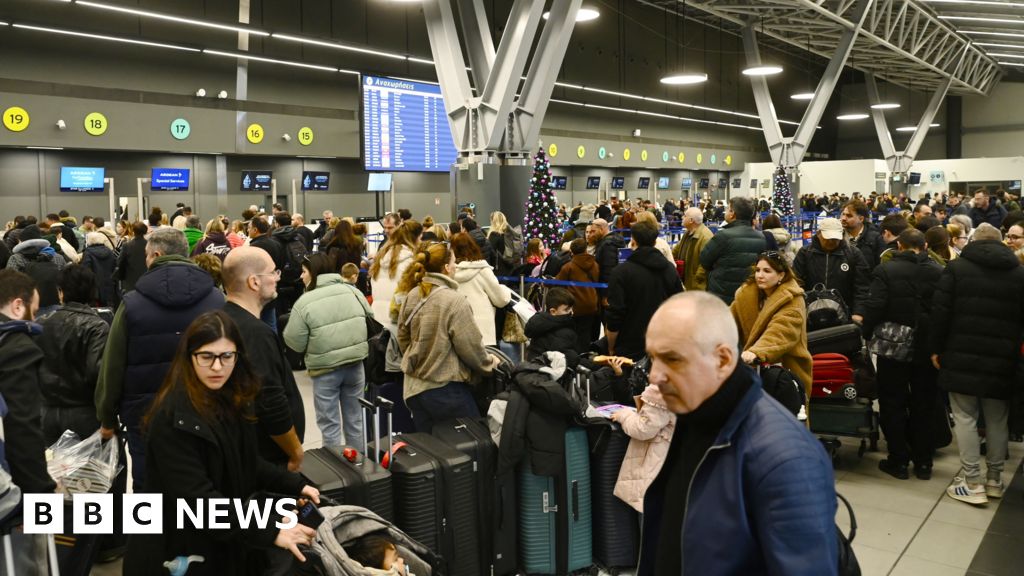
Thousands are stranded across Europe as Greece’s airspace disruption causes widespread flight cancellations and diversions. Get breaking news and today’s travel updates.
Overview
A widespread communications failure has thrown European air travel into chaos, leaving thousands of passengers stranded across the continent. Greece’s critical airspace experienced significant disruption on Sunday morning, forcing immediate flight cancellations and diversions that rippled across multiple countries. This breaking news highlights the fragility of air traffic infrastructure.
The incident, stemming from a sudden loss of radio communications, prevented air traffic controllers from communicating with aircraft, prompting a swift closure of Greek airspace. This disruption occurred as many travelers were attempting to return home from winter holidays, amplifying the immediate impact and concern among affected individuals seeking today updates.
Initial reports indicate more than 90 flights were affected in and out of Athens Airport alone, with Thessaloniki Airport closing entirely. While some departures from Athens have resumed at a rate of approximately 35 aircraft per hour, inbound flights continue to face diversions or outright cancellations.
Officials are working urgently to identify the precise cause of the technical fault and restore full operational capacity, with implications for travellers needing to get back to work by the start of the working week.
Detailed Analysis
Air traffic control (ATC) systems form the intricate backbone of global aviation, orchestrating the safe and efficient movement of millions of passengers daily. In Europe, a continent densely networked by air routes, the seamless functioning of these systems is paramount. Sunday’s sudden and severe communications failure in Greece plunged European air travel into immediate chaos, particularly at a time when airports across the region were managing the high volume of traffic associated with the conclusion of winter holiday periods. This period sees a significant surge in passenger numbers, all eager to return home or to work ahead of the new week. The incident began with an abrupt and complete loss of radio communications between Greek air traffic controllers and aircraft operating within or transiting its airspace. Such a breakdown in a fundamental operational component directly compromises safety, leaving authorities with no option but to implement drastic measures to prevent potential mid-air incidents.
The decision to temporarily suspend all arrivals and departures was a critical safety protocol, immediately impacting a complex web of international flights. Greece, a popular destination for both leisure and business travelers, typically sees its major airports, like Athens’ Eleftherios Venizelos, handle upwards of 600 scheduled flights on an average day. This robust activity highlights the inherent vulnerability when a core system fails. The initial hours of the disruption were marked by confusion and uncertainty as the scale of the problem became apparent. The ripple effect was not confined to Greek borders; flights destined for Greece from various European cities found themselves airborne with no clear destination, while those scheduled to depart faced indefinite delays. Understanding the immediate cause of the failure became the top priority for aviation authorities, not only to restore services but also to assure the integrity and reliability of the region’s air traffic management infrastructure. The incident underscores the critical importance of redundancy and resilience within such complex technological systems.
The communications breakdown rapidly escalated into a full-blown crisis for passengers across Europe. The impact was most acutely felt at Greece’s principal air hubs. Athens International Airport, a major gateway, bore the brunt of numerous cancellations and diversions, while Thessaloniki Airport, a key regional hub, was forced into a complete closure. Initial figures pointed to a staggering figure of over 90 flights affected at Athens Airport alone within hours, disrupting travel plans for thousands of individuals. The human element of this disruption quickly came to the fore, with distressed passenger accounts emerging. One individual, scheduled to fly from Athens to London via Stockholm with SAS, voiced deep concern over missing a critical work shift at Newport Hospital, highlighting the far-reaching personal and professional consequences. Their frustration, exacerbated by a perceived lack of information from airline and airport staff, was a recurring theme among those stranded.
The immediate aftermath saw numerous flights outbound from various European cities suddenly ordered to change course. Flights departing from Dublin, Barcelona, and Paris, for instance, were instructed to return to their airports of origin, creating a logistical nightmare for both airlines and passengers. Further compounding the issue, services originating from Copenhagen and Malta were cancelled outright, leaving travelers with no immediate prospect of reaching their destinations. Flights inbound for Athens were largely diverted, primarily towards Turkey, or were held on standby at their departure points, awaiting any clear instructions. Even airports on popular tourist islands, such as Heraklion on Crete, experienced significant delays for international flights, including one bound for Munich, underscoring the widespread geographical impact. While Athens eventually managed to resume some departures at a controlled rate of 35 aircraft per hour, this partial restoration offered limited relief, especially for the backlog of inbound traffic. The underlying technical fault was eventually narrowed down by an initial investigation by Greek security services, suggesting a failure of a critical antenna in the Gerania Mountains, a key component of the radio system used by air traffic controllers for vital communication with aircraft. This pinpointed the specific nature of the technical glitch that caused such extensive disruption.
The scale of the disruption in Greek airspace offered a stark contrast to its typical, bustling operations. With Athens International Airport routinely facilitating over 600 flights per day, the near-empty flight radar maps observed earlier on Sunday vividly illustrated the severity of the technical fault. This incident serves as a potent reminder of the fragility of modern air travel infrastructure, where a single point of failure can cascade across an entire network. Regional cooperation became immediately essential to manage the fallout. Countries like Italy, Turkey, and Cyprus rapidly mobilized to assist Greece, helping to reroute and manage the diverted flights. This cross-border collaboration highlights the integrated nature of European airspace management and the necessity for robust contingency plans that extend beyond national boundaries. Without such swift international assistance, the potential for further complications and extended delays would have been significantly higher, underscoring the collective responsibility in maintaining air safety and operational continuity across the continent.
While the focus was primarily on international travel, the disruption also brought into question domestic travel alternatives. For those stranded within Greece, the national rail network might offer a viable, albeit significantly slower, option for getting home. However, for the vast majority of international travelers affected by the airspace closure, rail travel was largely impractical or simply not an option for reaching their intended European destinations. This situation emphasizes the unparalleled efficiency of air travel for covering long distances quickly, and the lack of readily available, fast alternatives when it fails. The incident also casts a temporary shadow on Greece’s tourism sector, a vital component of its economy, especially as winter holidaymakers typically inject significant revenue. Though the immediate impact is acute, the long-term repercussions will depend on the speed of recovery and the implementation of measures to prevent future occurrences. Such disruptions inevitably lead to questions about maintenance protocols, system redundancies, and investment in critical national infrastructure, crucial for both national security and economic stability.
For general readers and news consumers, the European airspace disruption serves as a timely reminder of the complexities inherent in modern air travel and the potential for unforeseen events to upend meticulously planned journeys. The immediate impact centered on the thousands of passengers left stranded, facing not only significant delays but also unexpected costs for accommodation, food, and alternative travel arrangements. The anecdotal accounts of passengers missing crucial work appointments or receiving inadequate information from airline staff underscore the emotional and practical toll such disruptions exact. This situation highlights the critical importance of robust communication channels from airlines and airports during crises, alongside the need for travelers to proactively seek updates from multiple verified sources.
Understanding passenger rights in such scenarios, while often complex and varying by jurisdiction and airline policy, can empower travelers to seek appropriate compensation or assistance. Furthermore, the incident reinforces the value of comprehensive travel insurance policies that can mitigate some of the financial burdens associated with unexpected cancellations, diversions, or prolonged delays. Moving forward, the focus will be on the complete resolution of the technical issue, the full resumption of normal flight schedules, and any subsequent official investigations. Such inquiries typically delve into the root cause of the failure, assess existing protocols, and recommend upgrades or changes to ensure greater resilience in air traffic control systems. For countries like India, with its rapidly expanding air travel sector, this event offers a valuable case study in the vulnerabilities of critical infrastructure and the importance of continuous investment in advanced, redundant, and secure air traffic management technologies to ensure passenger safety and maintain economic fluidity.
About the Author