Key Takeaways
West Bengal CM Mamata Banerjee criticizes ‘unplanned’ electoral roll revision, urging CEC to fix procedural flaws or halt the process. Understand policy implications.
Overview
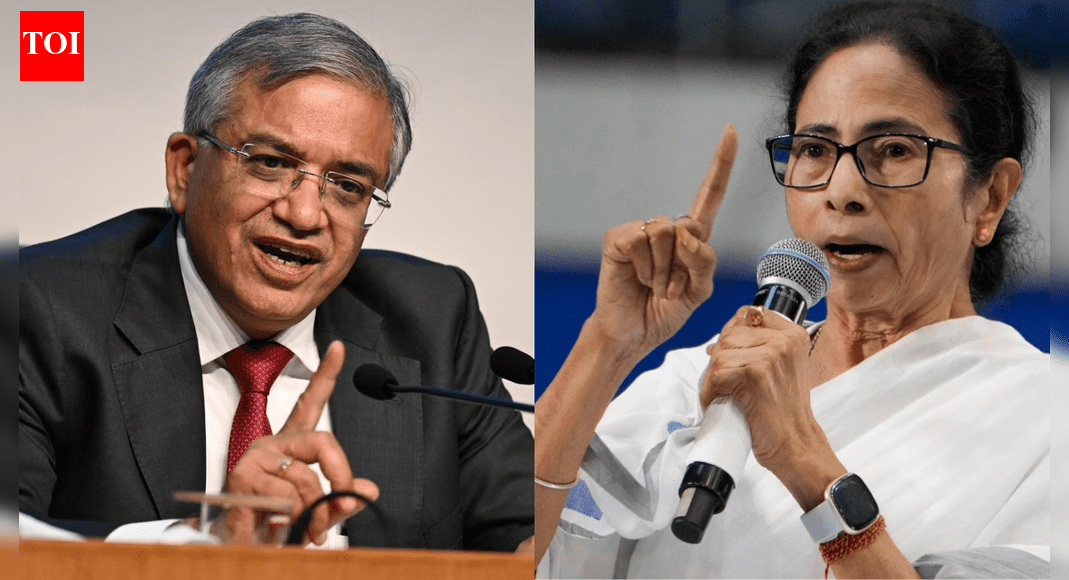
West Bengal Chief Minister Mamata Banerjee has once again raised significant concerns regarding the Special Intensive Revision (SIR) of electoral rolls currently underway in the state. Addressing a letter to Chief Election Commissioner (CEC) Gyanesh Kumar, she criticized the process as “unplanned, arbitrary and adhoc,” highlighting serious “procedural violations” and “administrative lapses.”
This intervention underscores mounting tensions surrounding electoral preparedness in India Politics, particularly in states gearing up for polls. The integrity of the electoral roll forms the bedrock of democratic governance, and any perceived flaws can lead to widespread skepticism among voters and political stakeholders.
Banerjee specifically noted her apprehension about “large-scale disenfranchisement of eligible voters” and expressed concerns over issues like “poor training,” “server failures,” and Booth Level Officers (BLOs) working “far beyond human limits.” She urged the CEC to “immediately address and rectify the glitches,” or “halt” the exercise.
The Chief Minister’s strong stance signals potential challenges to the upcoming electoral process. This analysis explores the immediate policy implications of these allegations, stakeholder perspectives, and the broader context of electoral roll revisions in India.
Detailed Analysis
The Election Commission of India (ECI) holds the constitutional mandate to ensure free and fair elections, a responsibility that begins with maintaining accurate and inclusive electoral rolls. The Special Intensive Revision (SIR) process is a crucial exercise designed to update these rolls, incorporating new eligible voters, deleting deceased or shifted ones, and correcting errors. Historically, electoral roll revisions are complex administrative tasks, often involving a vast network of ground-level officials. While political parties routinely scrutinize these processes, the direct and pointed criticisms from a sitting Chief Minister like Mamata Banerjee, alleging foundational flaws, elevate the issue beyond routine complaints and bring the procedural integrity of the **elections** directly into question.
Mamata Banerjee’s letter details several critical allegations against the ongoing SIR in West Bengal. She termed the exercise not just “unplanned” and “arbitrary” but also highlighted significant “procedural violations” and “administrative lapses.” Her primary concern revolves around the potential for “large-scale disenfranchisement of eligible voters,” which she unequivocally calls a “direct assault on the foundational principles of democratic governance.” Specific operational challenges cited include inadequate “poor training” for BLOs, widespread “confusion over mandatory documentation,” and the “near impossibility of meeting voters during their work hours.” Furthermore, she pointed to systemic issues such as **server failures** and “repeated data mismatches” crippling online submissions, making accurate data upload by deadlines like December 4 “almost certain” to fail. These issues, she asserts, force BLOs to make incorrect entries under duress, further risking the disenfranchisement of genuine voters, a situation she had previously flagged in November citing even the deaths of BLOs in Jalpaiguri, describing the scenario as having reached an **alarming stage**.
Comparing West Bengal’s current situation to broader challenges faced in electoral roll revisions across diverse states highlights the immense logistical and administrative hurdles the ECI often navigates. Conducting an SIR involves coordinating millions of officials and voters, often in remote areas with varying digital infrastructure. While the ECI typically issues detailed directives, ensuring uniform implementation on the ground remains a persistent challenge. Such strong criticisms from a state leader, irrespective of their eventual validation, invariably raise questions about the impartiality and effectiveness of the election machinery. For **policy watchers** and **political analysts**, the central concern is the potential erosion of public trust in the electoral process itself, which is paramount for a functioning democracy. Previous instances in other states have also seen debates over voter list accuracy, often intensifying during **election coverage** periods, underscoring a recurring need for the ECI to demonstrate unyielding transparency and responsiveness.
For **News Readers** and **Informed Citizens**, the core takeaway is the direct impact on their fundamental right to vote. Any flaws in the electoral roll revision, as alleged, could mean eligible voters are left out, or ineligible ones included, thereby distorting the democratic mandate. They should monitor the Election Commission of India’s response to these serious allegations, including any potential investigations or remedial actions. **Political Analysts** will closely observe how the ECI addresses these concerns, as its actions will set a precedent for future interactions with state governments regarding electoral preparedness. The credibility of forthcoming **elections** in West Bengal and possibly beyond rests significantly on the ECI’s ability to ensure a transparent, fair, and glitch-free electoral roll, reinforcing trust in the democratic framework.
About the Author