Key Takeaways
Robots now learn 1,000 physical tasks from single demos in a day. Discover how this AI robotics breakthrough reshapes automation, startups, and future tech.
Overview
A recent breakthrough in **AI robotics** is poised to fundamentally redefine how machines acquire new skills, moving beyond the traditional limitations of narrow, repetitive tasks. This significant development challenges long-held assumptions about robot learning efficiency, marking a pivotal moment for innovation in the sector.
For Tech Enthusiasts, Innovators, Early Adopters, Developers, and Startup Founders, this advancement signifies a closer step towards truly adaptive and flexible automation. It addresses a core bottleneck that has hindered widespread robot deployment in dynamic, unstructured environments.
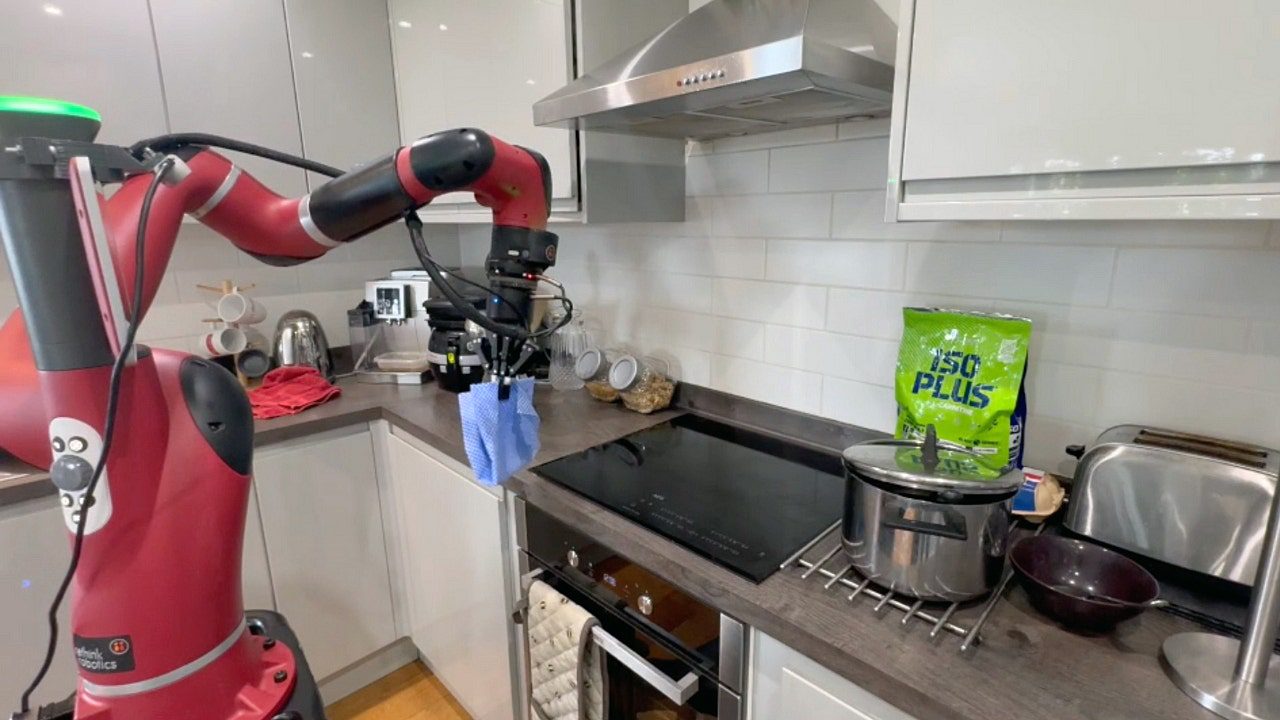
Published in Science Robotics, the research demonstrates a robot learning 1,000 distinct physical tasks from just a single demonstration per task, all within under 24 hours of human input time, and crucially, in a real-world setting.
This paradigm shift promises to accelerate the integration of intelligent robots into diverse industries, from complex manufacturing to household chores, warranting close observation of its future implications.
Key Data
| Aspect | Traditional Robot Learning | Breakthrough Method (Science Robotics) |
|---|---|---|
| Learning Efficiency | Painfully inefficient; slow | Order of magnitude improvement; fast |
| Demonstrations Required | Hundreds or thousands per task | One demonstration per task |
| Learning Scope | Narrow, small variations, specific movements | 1,000 distinct physical tasks (placing, folding, inserting, gripping, manipulating) |
| Environment | Tightly controlled lab conditions/factory | Real-world objects, real mistakes, real constraints |
| Generalization Ability | Limited; fails when conditions change | High; adapts to new object instances and conditions |
Detailed Analysis
For decades, the promise of robots has often outpaced their practical capabilities. Science fiction regularly depicted machines effortlessly performing a myriad of household and industrial tasks, yet real-world robotics remained largely confined to highly structured environments, executing highly specific, repetitive movements. This disparity stemmed from a fundamental challenge: teaching robots new physical tasks was an incredibly data-intensive and time-consuming process. Engineers typically needed to collect vast datasets, often involving hundreds or thousands of demonstrations for even simple actions, followed by extensive fine-tuning of backend systems. This inherent inefficiency meant that while factory robots could tirelessly repeat a single motion, they lacked the flexibility to adapt to changing conditions or learn novel tasks quickly – a stark contrast to human learning, where a single demonstration often suffices.
This long-standing bottleneck in robotics has fueled the sector’s evolution towards more intuitive and efficient learning paradigms. The research highlighted in Science Robotics represents a significant leap, pushing the boundaries of what’s achievable in robot learning. The core of this **AI robotics learning** breakthrough lies in its sophisticated approach to imitation learning, a machine learning technique where robots learn from human demonstrations. Instead of attempting to replicate entire complex movements, the system ingeniously deconstructs tasks into simpler, manageable phases. One phase focuses on precisely aligning with an object, while the subsequent phase handles the actual interaction or manipulation. This modular decomposition, combined with a retrieval-based approach called Multi-Task Trajectory Transfer, allows the robot to draw upon and reuse knowledge acquired from previous tasks, applying it effectively to new ones. This means the robot doesn’t start from scratch with every new instruction; rather, it generalizes its understanding, significantly boosting its learning speed and versatility. The capability to learn 1,000 distinct physical tasks—encompassing a wide array of actions like placing, folding, inserting, gripping, and manipulating various everyday objects—all within a single day and from just one demonstration per task, underscores the profound impact of this innovation.
What truly sets this development apart is its validation in the real world. Many robotics demonstrations often impress in perfectly controlled lab simulations but falter when exposed to the unpredictable nature of actual environments. This research explicitly states that the learning occurred with real objects, real mistakes, and real constraints, and the system was rigorously tested through thousands of real-world rollouts. This robust testing demonstrates the robot’s ability not only to perform learned tasks but also to handle new object instances it had never encountered before. This capacity for generalization is a critical differentiator, marking the shift from a machine that merely repeats programmed actions to one that truly adapts. This represents an ‘order of magnitude improvement in data efficiency’ compared to conventional methods, which relied on arduous data collection and meticulous system fine-tuning. For instance, traditional industrial robots, despite their precision, are largely inflexible; a change in product design or assembly requires extensive re-programming. This new method, by contrast, suggests a future where robots can quickly reconfigure their skill sets, making them invaluable in dynamic production lines or even consumer settings. [Suggested Matrix Table: Robot Learning Paradigm Comparison]
This **innovation in AI** has profound implications for Tech Enthusiasts, Innovators, Early Adopters, Developers, and Startup Founders across **Technology India** and globally. For innovators and developers, it means a drastically reduced barrier to entry for developing complex robotic applications. The need for extensive datasets and specialized programming expertise shrinks, enabling faster prototyping and deployment cycles. Startup founders in the **robotics India** ecosystem can leverage this efficient learning to create more flexible, cost-effective solutions for niche markets in healthcare (e.g., assistive robots for the elderly), logistics (e.g., adaptive package handling in warehouses), and manufacturing (e.g., reconfigurable assembly robots). Early adopters can anticipate a new generation of more versatile gadgets and automated systems capable of learning new skills on the fly from simple human input, potentially transforming smart homes and personal assistant robots. While humanoid helpers in every home might not be immediate, this research signals a tangible move towards practical, adaptable general-purpose robots. The shift is from what robots are programmed to repeat to what they can autonomously adapt to next. Key metrics to monitor include the speed of commercialization, the emergence of open-source toolkits based on these principles, and further scaling of task complexity and generalization capabilities. This development not only enhances the potential of individual robots but also drives the broader evolution of **AI and innovation**, moving towards systems that learn in ways that are more intuitive and human-like.
About the Author