Key Takeaways
The US arrest of Venezuelan President Nicolás Maduro triggers hope and deep uncertainty. Explore citizen reactions, policy implications, and future political landscape for Venezuela.
Overview
The recent capture of Venezuelan President Nicolás Maduro by US forces has ignited a complex mix of hope and apprehension across Venezuela. This significant geopolitical event, marked by US military action and subsequent extradition of Maduro to New York, immediately reshapes the nation’s fragile political landscape.
For News Readers, Policy Watchers, Informed Citizens, and Political Analysts, this development signals a critical juncture in Latin American geopolitics and US foreign policy, potentially leading to profound governance implications and shifts in regional power dynamics. The situation demands careful scrutiny as stakeholders within and outside Venezuela assess the future.
The US accuses Maduro of leading a “narco-terrorist” regime and questions the legitimacy of Venezuela’s 2024 election. Since Maduro assumed power, close to eight million Venezuelans have sought exile, underscoring the severe humanitarian and economic conditions under his rule.
This analysis delves into the immediate societal reactions, historical context of Maduro’s administration, and the intricate policy implications that will define Venezuela’s path forward following this unprecedented political intervention.
Detailed Analysis
The sudden capture of Venezuelan President Nicolás Maduro by US forces represents a seismic shift in the country’s entrenched political standoff, moving beyond diplomatic pressure and sanctions to direct intervention. Maduro’s rule, commencing in 2013, has been consistently marred by allegations of political repression, human rights abuses, and economic mismanagement, culminating in widespread discontent both domestically and internationally. His re-election in 2024 was largely deemed illegitimate by numerous foreign governments and opposition factions within Venezuela, setting the stage for a prolonged crisis. This historical context of internal division and external condemnation provides crucial background to understanding the complex reactions now unfolding on the streets of Caracas and beyond. The US justification, centered on accusations of a “narco-terrorist” regime, frames the action as a response to perceived transnational criminal activities, escalating a geopolitical struggle that has simmered for years.
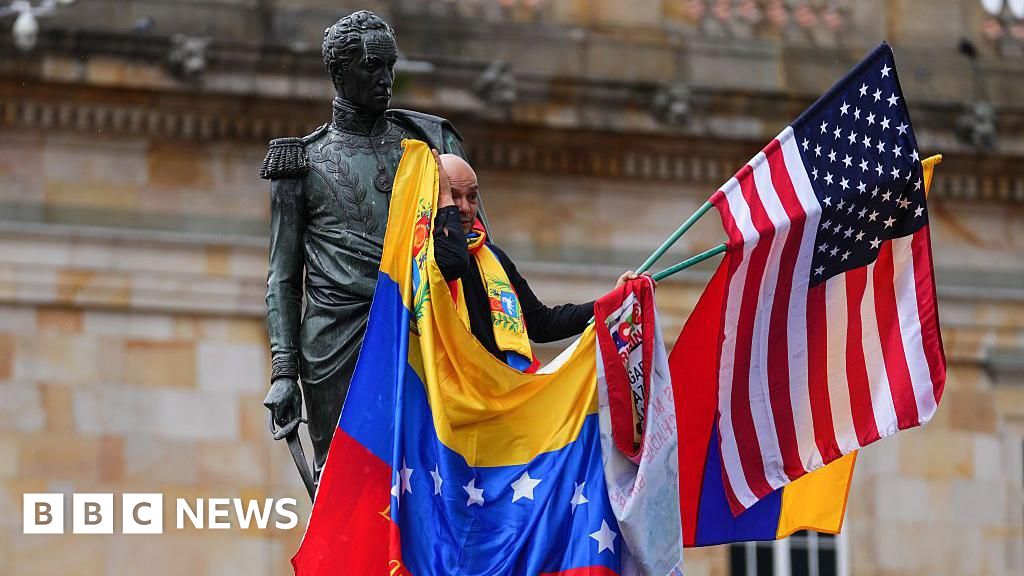
Immediate reactions within Venezuela vividly illustrate the deep chasm in public sentiment. Citizens like Dina, expressing gratitude for Maduro’s removal, articulate a cautious hope for change, viewing it as a potential “light at the end of the tunnel.” However, this optimism is tempered by profound uncertainty regarding the immediate future and a palpable fear of political reprisal, highlighted by Dina’s reluctance to share her real name. Jorge, another Venezuelan, while thankful for US support, voices apprehension about the power vacuum and potential instability, questioning what “the coming days will bring.” Concurrently, staunch Maduro loyalists, including Caracas Mayor Carmen Meléndez, have mobilized, condemning the US action as a “kidnapping” and demanding his release. This stark dichotomy underscores the deeply polarized political landscape, where hopes for liberation clash with fears of chaos and a strong segment loyal to the ousted leader. The recent law criminalizing support for US naval blockades further reveals the repressive environment and the risks associated with expressing dissent, even as the political ground beneath them shifts.
The US’s explicit statement of temporarily running Venezuela and managing its critical oil reserves introduces a complex layer of policy implications and international precedent. This direct assertion of external control raises questions about national sovereignty and the long-term political autonomy of Venezuela. Historically, such interventions, even if framed as temporary, often encounter protracted challenges in establishing stable successor governments and ensuring broad public acceptance. The deep mistrust of US policy, exemplified by Dina’s skepticism regarding President Trump’s reliability, suggests that even those welcoming Maduro’s ousting view the US presence with caution. The fears articulated by Jorge regarding the influence of figures like Diosdado Cabello, Venezuela’s Minister of Interior, Justice, and Peace, highlight the persistent internal power dynamics and the potential for residual loyalist forces to destabilize any transition. The fate of the nearly eight million Venezuelans who have fled the country since 2013 also remains a critical policy concern, with many expressing relief but also skepticism about the path for return or justice.
For News Readers, Policy Watchers, Informed Citizens, and Political Analysts, the current situation in Venezuela necessitates monitoring several critical factors. Short-term, the focus will be on maintaining order, managing pro-Maduro resistance, and the immediate operationalization of US administrative control over key sectors like oil. Medium-term, attention will shift to the establishment of an interim government, the drafting of new electoral processes, and addressing the deep-seated economic and social crises that fueled the mass exodus of citizens. Long-term, the challenge lies in fostering genuine political reconciliation, rebuilding democratic institutions, and ensuring that Venezuela’s considerable natural resources benefit its populace rather than becoming a source of renewed conflict. The balance between international intervention and domestic self-determination will be crucial, with the international community keenly observing how this unprecedented political development unfolds and its broader implications for global governance and regional stability.
About the Author