Key Takeaways
New details surface on US capture of Venezuelan President Maduro & wife. Learn about the overnight raid, narco-terrorism charges, and its global implications.
Overview
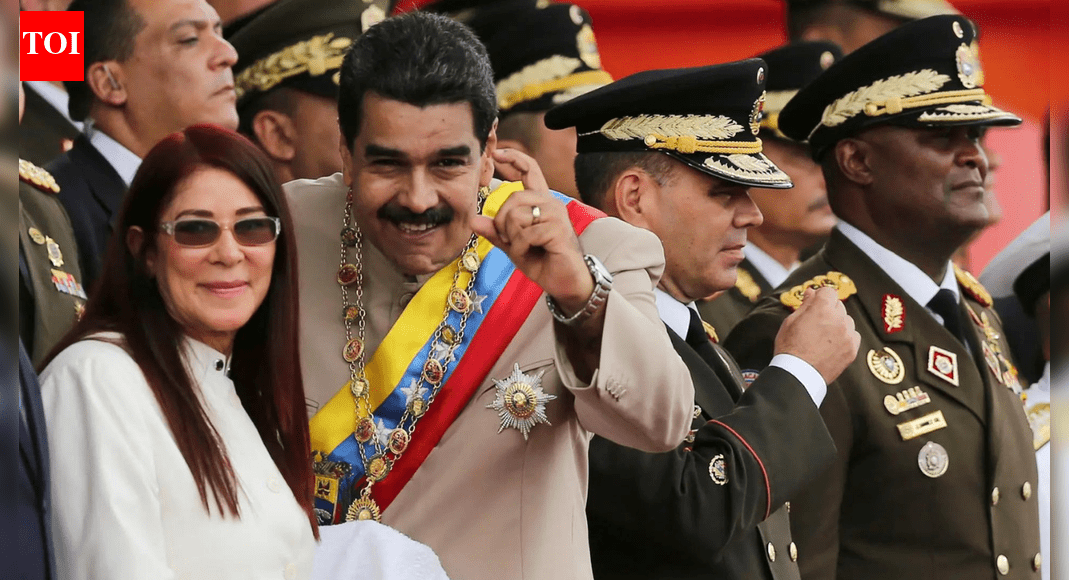
In a dramatic development that has sent ripples across international diplomacy, Venezuelan President Nicolás Maduro and his wife Cilia Flores were captured by US forces following an overnight military operation. New details emerging from officials briefed on the operation reveal the couple was “dragged from their bedroom” during the swift raid, marking a significant escalation in US pressure against the Venezuelan leadership.
This unprecedented event holds profound implications for current affairs and international relations, particularly concerning state sovereignty and the targeting of sitting heads of state. The incident underscores a decisive shift in US foreign policy tactics, aimed at bringing Maduro to face justice on American soil amidst long-standing tensions.
The operation, executed by US Army’s elite Delta Force and FBI agents, concluded in less than 30 minutes with no American fatalities reported, though some personnel sustained injuries. Both Maduro and Flores now face narco-terrorism charges in US courts, with their arrival in New York anticipated shortly.
The unfolding scenario demands close monitoring, as the capture ignites intense debate and sets a potential precedent for future international interventions and legal proceedings against foreign leaders, impacting India News and global headlines today.
Detailed Analysis
The sudden and decisive capture of Venezuelan President Nicolás Maduro and his wife Cilia Flores has dramatically reshaped the dynamics of international relations, thrusting the complex history of US-Venezuela tensions into a startling new chapter. According to officials briefed on the operation, as cited by CNN, the couple was literally “dragged from their bedroom” during an overnight US military raid. This intensely personal detail underscores the unexpected and forceful nature of the intervention. The raid took place at their residence within the heavily guarded Ft Tiuna military complex in Caracas, a location implying significant security measures that were evidently overcome by the US forces. Breaching such a fortified stronghold speaks volumes about the meticulous planning and precision involved in the operation.
This dramatic capture did not occur in a vacuum; it culminates “months of escalating US pressure,” a sustained campaign that included various overt and covert actions. The source content highlights naval deployments as one aspect of this pressure, aimed at interdicting alleged drug-smuggling routes. Furthermore, strikes targeting these very routes were part of the strategy, demonstrating a direct assault on the economic lifelines reportedly used by cartels. Adding to this backdrop of intensifying pressure, a CIA drone strike reportedly hit a Venezuelan docking site linked to these cartels just last week. This specific intelligence-led action, occurring so close to the main operation, suggests a methodical weakening of the infrastructure supporting illicit activities and potentially the Venezuelan leadership itself, paving the way for the eventual raid. The overarching narrative from the US side frames these actions as part of a broader effort against narco-terrorism, leading directly to the charges now leveled against Maduro and Flores.
The operation itself was a testament to specialized military and law enforcement capabilities. Carried out by the US Army’s elite Delta Force alongside FBI agents, the raid was a highly coordinated effort, designed for maximum impact and minimal engagement. News agency AP reported that the couple was asleep when US special forces stormed their residence, emphasizing the element of surprise. The entire operation lasted “less than 30 minutes,” a remarkably short duration for a high-value target capture within a military complex, signifying exceptional tactical efficiency and speed. US President Donald Trump commented on the absence of American fatalities, describing it as “amazing,” though he did acknowledge that some personnel were injured during the mission. This outcome underscores the perceived danger of the operation and the high level of execution by the US teams involved, making the lack of significant casualties a notable success from their perspective. Explosions were also reported across Caracas during this swift overnight military operation, with at least seven blasts heard, apparently targeting military sites. This suggests a broader, coordinated assault, with smoke rising from a base hangar and power cut at another installation, indicating a simultaneous neutralization of key military capabilities during the capture.
Following their capture, US Attorney General Pam Bondi announced that Maduro and Flores had been indicted in New York and would “soon face the full wrath of American justice on American soil in American courts.” She detailed specific charges including “Narco-Terrorism Conspiracy” and weapons offenses, outlining the serious legal battle ahead. President Trump also confirmed the couple were being held aboard a US warship and would be prosecuted in New York. Fox news reported that the duo was expected to reach New York on Monday, setting a clear timeline for their transfer into US custody and the commencement of legal proceedings. This move to prosecute a sitting head of state on such charges in a US court is a highly unusual and potent diplomatic maneuver, signifying a significant assertion of American legal jurisdiction over foreign leaders accused of specific crimes. Venezuelan ruling party figure Nahum Fernández corroborated the capture, noting that the pair were seized at their residence inside the Ft. Tiuna military complex, lending an additional layer of confirmation to the dramatic event.
The capture of Nicolás Maduro and his wife sets a profound precedent in international law and geopolitics, moving beyond traditional diplomatic pressure to direct military and legal intervention against a sitting leader. Comparing this operation to previous high-profile captures reveals a calculated risk, especially given the target’s status as a head of state and the location being a heavily fortified military complex. The swiftness and apparent precision of the raid, which resulted in no American fatalities, contrasts sharply with the complexities often associated with such sensitive international operations. The “months of escalating US pressure,” including naval deployments and strikes on drug-smuggling routes, served as a strategic erosion of Maduro’s regime and its alleged illicit networks. This systematic approach, culminating in the raid, demonstrates a coordinated application of military, intelligence, and legal instruments. The preceding CIA drone strike on a docking site linked to cartels indicates a targeted effort to disrupt critical logistical support for these networks, potentially weakening the regime’s operational capacity just prior to the main event. The gravity of the “Narco-Terrorism Conspiracy” and “weapons offenses” charges means the case will likely draw comparisons to other instances where foreign leaders or high-ranking officials have faced prosecution outside their home countries, though the direct military capture of a sitting president remains historically rare. This event will undoubtedly be analyzed in international law circles for its implications on sovereign immunity and the scope of extraterritorial jurisdiction. [Suggested Line Graph: Timeline of US pressure on Venezuela, detailing naval deployments, drug route strikes, CIA drone strikes, and the final raid leading to Maduro’s capture, with dates as available from the source.]
For General Readers and News Consumers, the capture of Nicolás Maduro represents a dramatic example of how international disputes can escalate into direct action. This event highlights the complexities of global governance and the willingness of powerful nations to enforce their interpretation of international law, particularly concerning issues like narco-terrorism which are deemed to have global repercussions. It serves as a stark reminder that even leaders within heavily protected environments are not immune to such operations. The immediate implications for Venezuela itself are significant; the sudden removal of its de facto leader could trigger a period of intense political uncertainty, potentially leading to power vacuums, internal strife, or further international involvement. The long-term implications for international relations are equally profound, as this incident will likely shape future discussions on sovereignty, intervention, and the legal accountability of state leaders. The pending legal proceedings in New York will be under immense global scrutiny, testing the boundaries of international legal frameworks. The “full wrath of American justice” promised by Attorney General Bondi indicates a determined prosecution that will unfold in the public eye. Audiences should closely monitor several key developments: the detailed legal processes following Maduro and Flores’ arrival in New York, the nature of their initial court appearances, any official reactions from the Venezuelan government, and the broader international community’s response, including any diplomatic condemnations or endorsements of the US action. This breaking news story represents a pivotal moment in current affairs, with ramifications that will reverberate across global political and legal landscapes for the foreseeable future, making it a critical item in India News and worldwide today.
About the Author