Key Takeaways
US strikes in Venezuela escalate global geopolitical risk. Understand potential market volatility, oil price impacts, and critical investment strategies for 2026.
Overview
The geopolitical landscape witnessed a significant tremor with reports of overnight US strikes in Venezuela, culminating in the alleged capture of President Nicolas Maduro and his wife. This sudden escalation introduces a substantial layer of uncertainty into global markets, particularly concerning emerging economies and commodity prices, demanding immediate attention from astute investors.
For Retail Investors, Swing Traders, Long-term Investors, and Finance Professionals, such events directly translate to heightened risk premiums and potential volatility. The incident could influence investor sentiment towards stability in Latin American markets and global energy supplies, necessitating a strategic reassessment of portfolio exposures.
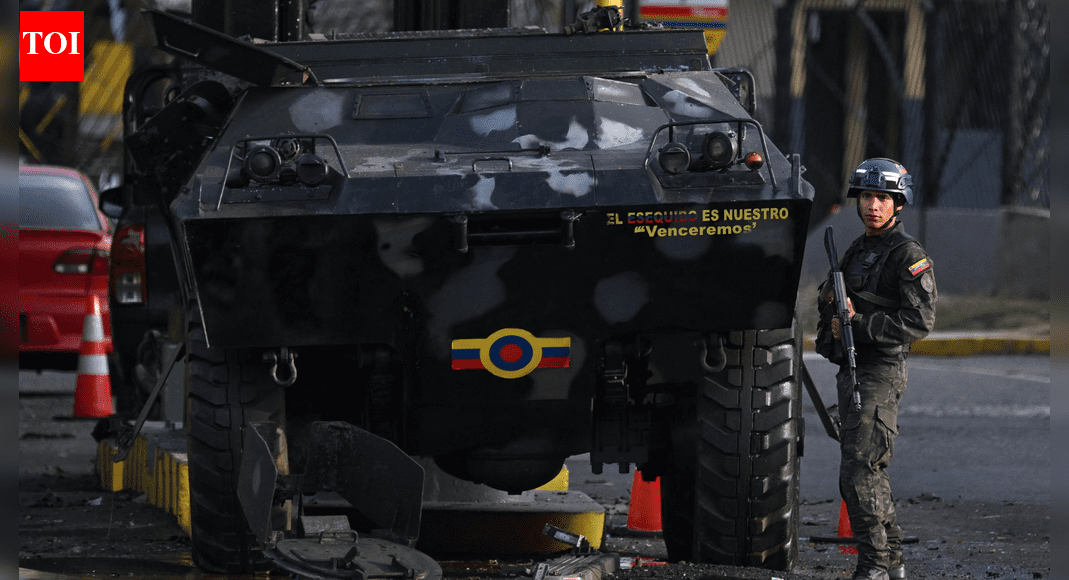
Initial reports highlight deserted streets in Caracas, widespread closures of fuel stations across several cities, and plumes of smoke from damaged areas including the Port of La Guaira. These tangible disruptions signal immediate economic paralysis and potential supply chain distress within Venezuela.
This analysis delves into the short-term market reactions, medium-term economic ripple effects, and long-term strategic investment implications arising from the rapidly evolving Venezuelan situation, offering a data-driven perspective for informed decision-making.
Detailed Analysis
The dramatic developments in Venezuela, triggered by US military intervention and the alleged capture of its leader, underscore the profound interconnectedness of global financial markets with geopolitical stability. Historical patterns suggest that sudden, high-impact political shifts in resource-rich nations, particularly those with significant oil reserves, frequently introduce significant volatility into global commodity markets and impact investor confidence in broader emerging market segments. While the immediate focus is on Venezuela’s internal power vacuum, the reverberations extend to international trade routes, energy supply dynamics, and capital flows. The overnight strikes, confirmed by US President Donald Trump, mark the first US military intervention targeting a foreign leader since the 1989 Panama invasion, signaling a heightened willingness to intervene, a factor that investors must now integrate into their risk models for various regions.
According to Reuters, Caracas awoke to deserted streets and checkpoints manned by armed personnel around the Miraflores presidential palace, indicating a severe disruption of normal economic activity. Residents stayed indoors, glued to updates, while concerns of looting, as expressed by a mechanic in Maracaibo, highlight the immediate threat to private assets and commerce. The widespread closure of fuel stations across multiple cities suggests a critical breakdown in essential services and logistics, which could rapidly escalate into a broader humanitarian and economic crisis. Furthermore, reports of dark smoke rising from the severely damaged Port of La Guaira, as reported by CBS news, and another plume near a major air base, point to significant infrastructure damage. This damage directly impacts Venezuela’s capacity for international trade and domestic distribution, potentially exacerbating supply chain issues and inflationary pressures, factors keenly watched by long-term investors assessing sovereign risk and short-term traders reacting to immediate supply shocks.
Comparing this unfolding situation with past instances of regime change or significant geopolitical interventions reveals a consistent pattern of initial market shock followed by a re-evaluation of risk. While specific financial metrics for Venezuela are unavailable from the source, similar events globally have historically led to spikes in crude oil prices, a flight to safe-haven assets such as gold and specific sovereign bonds, and a widening of credit default swaps for emerging market economies perceived as politically unstable. The immediate paralysis of Venezuelan commerce, including port damage, underscores potential long-term impacts on the nation’s capacity for oil exports, a critical determinant for global energy markets. This disruption contrasts sharply with periods of relative stability, where policy predictability allows for more accurate financial forecasting and investment allocation. Investors are advised to monitor the crude oil benchmarks, particularly Brent and WTI futures, for any sustained upward pressure.
For Retail Investors, Swing Traders, Long-term Investors, and Finance Professionals, the Venezuelan crisis serves as a stark reminder of unquantifiable geopolitical risks. While direct investment exposure to Venezuela may be limited for many, the indirect impacts on global commodity prices, emerging market sentiment, and overall market volatility warrant careful consideration. Investors should review their portfolio’s diversification, particularly regarding exposure to energy-dependent sectors or highly correlated emerging markets. Swing traders might find opportunities in short-term volatility in oil futures or currency markets, while long-term investors must factor in an elevated geopolitical risk premium for certain regions. Key metrics to monitor include official statements from major international bodies, further developments in Venezuela’s political landscape, and the price movements of global crude oil. Strategic vigilance and data-driven analysis remain paramount in navigating such fluid, high-impact events.
About the Author