Key Takeaways
US strikes in Venezuela spark nationwide emergency. Analyze how this geopolitical crisis impacts global oil prices, market volatility, and investor strategies.
Overview
Recent reports confirm the United States conducted strikes on civilian and military installations across Venezuela, leading President Nicolás Maduro to declare a nationwide state of emergency. This geopolitical escalation immediately heightens **global market volatility**, particularly within the energy and commodity sectors, directly impacting investment and trading strategies for retail investors and finance professionals observing the Stock Market India and international indices.
The US actions, including deployment of naval assets and seizure of oil tankers, underscore Washington’s escalating campaign against the Maduro government. Venezuela, possessing significant oil and mineral reserves, now faces direct military confrontation, leading to immediate investor concern over supply chain disruptions and potential commodity price shocks.
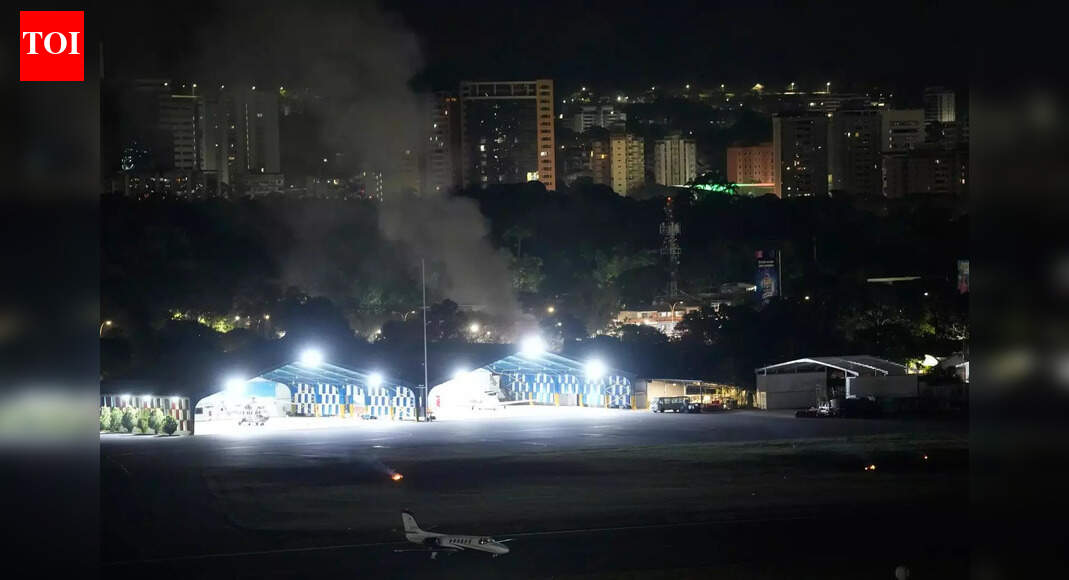
Reports of at least seven explosions and low-flying aircraft in Caracas around 2 AM local time on Saturday triggered Maduro’s ‘mass mobilisation’ order, a swift and severe response to perceived ‘military aggression’. US officials later confirmed President Donald Trump ordered strikes on Venezuelan sites.
Investors and traders must closely monitor the evolving situation for its short-term trading implications and long-term investment risks, especially concerning global oil benchmarks and related equities exposed to geopolitical instability.
Detailed Analysis
The sudden escalation of military actions in Venezuela, as evidenced by US strikes and President Maduro’s declaration of a nationwide emergency, injects significant uncertainty into global financial markets. Historically, geopolitical flashpoints in major oil-producing regions have triggered immediate reactions across commodity markets, particularly crude oil. Venezuela, a nation rich in oil and mineral resources, stands at the center of this latest development, raising questions about potential supply disruptions and their ripple effects. The United States has consistently escalated pressure, from military buildups in the Caribbean to seizing oil tankers and conducting strikes on vessels accused of carrying drugs. This aggressive posture, coupled with Caracas’s accusation of a bid to ‘seize Venezuela’s strategic resources,’ paints a grim picture for stability and directly impacts investor risk assessment.
From a detailed financial analysis perspective, the immediate impact on global oil prices is a primary concern for investors. While specific metrics of oil production or export disruption were not disclosed in the immediate aftermath, the declaration of emergency and calls for ‘mass mobilisation’ signal a heightened state of alert that could impede future supply. For swing traders, this situation creates potential for sharp, short-term price movements in crude oil futures, necessitating agile risk management. Long-term investors, particularly those with exposure to energy sector equities or emerging market funds, must evaluate the prolonged risk of instability in a key producing nation. The US justification, citing a need to stem the flow of drugs, contrasts sharply with Venezuela’s claim of an attempt to gain access to its ‘vast oil reserves,’ suggesting a multifaceted conflict with deep economic underpinnings.
Comparing this situation to past geopolitical events reveals a consistent pattern: uncertainty correlates with increased volatility. Similar tensions in other oil-rich regions, even without direct military engagement, have historically led to spikes in global benchmarks like Brent and WTI crude. For Indian investors monitoring the NSE and BSE, this could translate into higher input costs for energy-intensive sectors, impacting manufacturing and transportation stocks. Conversely, companies involved in oil exploration, refining, or those holding significant crude inventories might see short-term gains. The US deployment of significant naval power, including the USS Gerald R Ford aircraft carrier, mirrors previous show-of-force tactics that precede significant policy shifts, amplifying the potential for sustained market impact. [Suggested Line Graph: Global Crude Oil Price Volatility (Brent/WTI) vs. Geopolitical Index over 1-year period].
For retail investors and finance professionals, the Venezuela crisis necessitates a cautious yet analytical approach. Short-term, traders should prepare for potential commodity price surges and consider hedging strategies against energy cost inflation. Medium-term, monitor diplomatic developments and any direct impact on Venezuelan oil output, which could influence global supply-demand dynamics. Long-term investors should assess the geopolitical risk premium in their portfolios, particularly for assets tied to emerging markets or the global energy sector. Key metrics to watch include international crude oil futures (Brent, WTI), the performance of oil & gas sector indices on the NSE and BSE, and currency fluctuations as investor sentiment shifts. This crisis underscores the need for diversification and careful asset allocation in a volatile global economic landscape, especially as nations compete for strategic resources.
About the Author