Key Takeaways
Dilip Ghosh questions BJP’s Bengal electoral strategy, citing Faizabad loss despite Ram Mandir. Explore internal party tensions and 2026 poll implications for informed citizens.
Overview
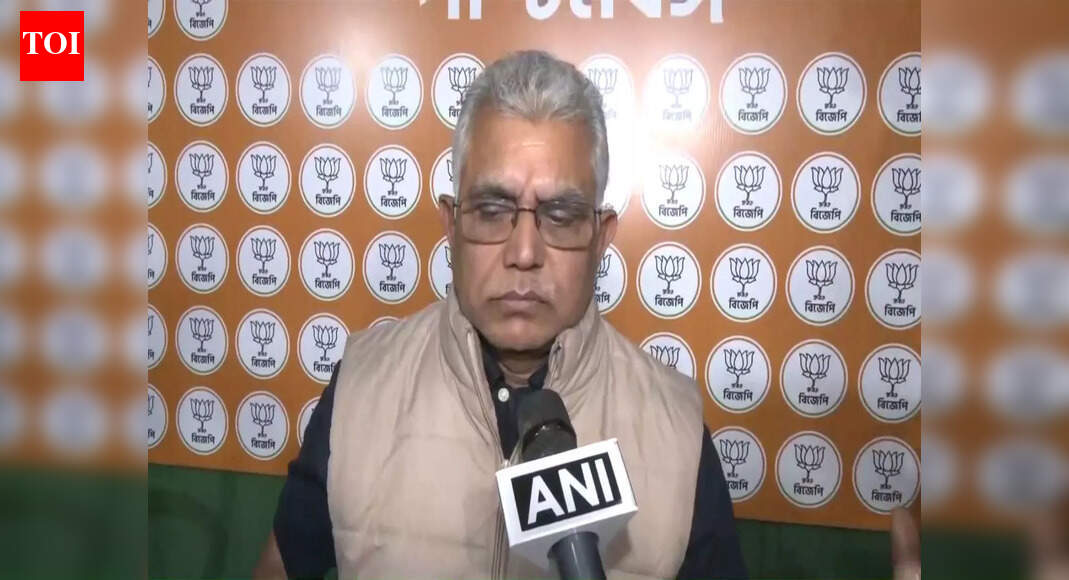
Former Bengal BJP chief Dilip Ghosh publicly questioned the BJP Bengal electoral strategy, specifically its reliance on ‘mandir-masjid’ issues for poll victories. His remarks, following a meeting with Union Minister Amit Shah, highlight internal tensions within the state unit concerning India Politics.
This development is crucial for News Readers and Political Analysts, especially regarding the upcoming 2026 Bengal assembly Elections. It prompts close examination of the Bharatiya Janata Party’s tactical approaches.
Ghosh cited the BJP’s 2024 Lok Sabha loss in Faizabad, despite the Ram Mandir, as direct evidence. He suggested temple construction would not secure victory for Bengal CM Mamata Banerjee in 2026.
His candid assessment, coupled with his reported intent to contest the Kharagpur assembly seat, precedes key leadership visits to Bengal this month, impacting the Government’s image.
Detailed Analysis
The recent public statements by Dilip Ghosh, a seasoned political figure and former President of the West Bengal unit of the Bharatiya Janata Party (BJP), transcend simple critical observation. They signify a moment of profound internal introspection, or potentially open dissent, within the party’s ranks concerning its fundamental electoral strategies. This developing narrative is set against a backdrop of intensified political activity in West Bengal, a state where the BJP, despite making significant inroads in recent years, continues to grapple with the formidable challenge posed by the ruling Trinamool Congress (TMC). Historically, the discourse surrounding ‘mandir-masjid’ issues has proven to be an exceptionally potent force within India’s political landscape, particularly for parties aiming to consolidate a specific voter base. The construction of the Ram Mandir in Ayodhya, for instance, was widely perceived and championed as a cornerstone of the BJP’s national agenda, resonating deeply with a substantial segment of the electorate across the country. However, Ghosh’s stark and public declaration – asserting that such religiously charged issues ‘do not impact poll results’ – introduces a compelling alternative perspective. This view suggests a potential saturation point or even a strategic miscalculation in how these issues are leveraged in certain regions. His unequivocal and direct reference to the BJP’s significant electoral setback in the Faizabad Lok Sabha constituency during the 2024 general elections, despite that area’s profound proximity and connection to Ayodhya, serves as a crucial and undeniable data point in this escalating internal party debate. This specific event offers a powerful counter-narrative to the conventional wisdom that has long surrounded the electoral dividends derived from religious identity politics, thereby compelling News Readers and Political Analysts to fundamentally re-evaluate the intricate nuances of voter behavior and the efficacy of political messaging in contemporary India Politics. This broader contextual understanding is vital for Informed Citizens tracking evolving policy implications.
Dilip Ghosh’s candid assertions carry considerable weight for News Readers, Policy Watchers, Informed Citizens, and Political Analysts. His argument that ‘mandir-masjid’ issues ‘do not impact poll results’ brings a critical, alternative perspective, challenging conventional electoral wisdom in India Politics. Ghosh cited the BJP’s 2024 Lok Sabha election loss in Faizabad, despite the Ram Mandir’s prominence in Ayodhya, as compelling evidence. This outcome compels observers to reconsider voter behavior and political messaging effectiveness. He extended this critique to state-level dynamics, suggesting Bengal CM Mamata Banerjee would not secure victory in the 2026 assembly polls by merely constructing temples, framing the issue as electorally insignificant. Beyond religious narratives, Ghosh’s remarks about ‘recent entrants’ to the state BJP unit, though unnamed, are widely interpreted as a veiled critique of politicians who defected from the Trinamool Congress (TMC) prior to the 2021 assembly elections. This segment of leadership has often faced suspicion from long-standing party workers, who perceive them as opportunistic or lacking genuine ideological commitment. The strategic timing of Ghosh’s comments, following a high-level meeting with Union Home Minister Amit Shah, signals a deliberate attempt to articulate these profound internal grievances at the highest echelons of the party. His assertion that ‘everyone is a worker in BJP’ and that ‘recent entrants have to prove their identity’ underscores a prevailing sentiment of dissatisfaction among veteran cadre, hinting at a significant struggle for influence, recognition, and potentially ideological purity within the Bengal BJP unit. This internal friction, if unaddressed, could significantly impede party unity and coordinated electoral efforts, crucial in a politically charged state like West Bengal, thereby impacting future Government stability and policy implementation for the state.
The implications of Dilip Ghosh’s candid observations reverberate across short, medium, and long-term political timeframes for India Politics. In the immediate short-term, these statements generate immediate ripple effects within the BJP, potentially deepening existing fissures between factions and prompting a rapid re-evaluation of campaign strategies in West Bengal. This open dissent from a senior leader like Ghosh could embolden other voices within the party who share similar concerns but have hitherto remained silent. News Readers will closely monitor how the central leadership, particularly during the upcoming visits by Prime Minister Narendra Modi, Union Home Minister Amit Shah, and BJP President JP Nadda to Bengal in January, responds to these public expressions of dissatisfaction. These high-profile visits are undoubtedly intended to galvanize the state unit and strategize for future polls, but Ghosh’s remarks complicate the narrative by introducing an undeniable element of internal challenge and discord, potentially impacting overall Government cohesion. For Policy Watchers and Political Analysts, the medium-term impact centers on the BJP’s adaptability in its electoral approach. Ghosh’s argument about the limited electoral utility of ‘mandir-masjid’ issues suggests a potential pivot towards more secular governance and development narratives in state elections, particularly in regions where religious polarization might not yield desired results. The party may need to recalibrate its messaging significantly, focusing on issues directly affecting citizens’ daily lives rather than solely on identity politics. This strategic shift, if it materializes, could profoundly influence policy debates and resource allocation, aiming for a broader appeal across diverse electorates. The explicit mention of Ghosh seeking permission to campaign in Kharagpur for the 2026 assembly polls further signals his intent to remain an active, and potentially influential, voice in state politics, even from a position of perceived marginalization. His future role within the Bengal BJP unit will serve as a critical indicator of how internal party dynamics are managed and resolved. [Suggested Matrix Table: Evolving Electoral Strategies: BJP’s Traditional Identity Politics vs. Emerging Development Narratives across Key Regional Polls (e.g., Uttar Pradesh 2024, West Bengal 2026)]
For News Readers, Policy Watchers, Informed Citizens, and Political Analysts, diligent monitoring of key metrics and events will be crucial in the coming months. Firstly, statements and actions by Prime Minister Narendra Modi, Union Home Minister Amit Shah, and BJP President JP Nadda during their anticipated Bengal visits will offer significant insights. These will reveal the central leadership’s strategy to address internal discord and re-energize the state unit ahead of the 2026 Elections. Any public acknowledgement or subtle dismissals of Ghosh’s concerns will be highly telling indicators of the party’s internal health and strategic direction within India Politics. Secondly, observing the BJP’s campaign messaging in subsequent local and state elections will provide a tangible barometer of whether there is a discernible shift away from overtly religious themes towards more development-oriented or policy-centric narratives. Such a shift would signal a strategic adaptation to perceived electoral realities and evolving voter preferences. Thirdly, Dilip Ghosh’s own political trajectory—specifically how his explicit request to campaign in Kharagpur is handled, and his subsequent visibility and role in party activities—will serve as a critical barometer of internal power struggles within the Bengal BJP. Increased visibility could suggest reconciliation, while continued isolation might exacerbate internal tensions with potential negative repercussions for party unity and public image. The implications for the 2026 Bengal assembly polls are paramount; a disunited or strategically misaligned BJP could face an even tougher challenge against a well-entrenched Trinamool Congress (TMC), impacting state governance and future Parliament dynamics. Immediate risk factors involve potential factionalism undermining party coherence and public perception of infighting. Conversely, opportunity lies in the BJP’s capacity for introspection and its ability to adapt strategies to the evolving political realities of a diverse electorate, potentially forging a more resilient and locally relevant political platform for the Government.
About the Author