Key Takeaways
Samsung HBM4 chip supply progress fuels advanced AI and high-performance computing globally. Discover its impact on India’s tech ecosystem and future innovations.
Overview
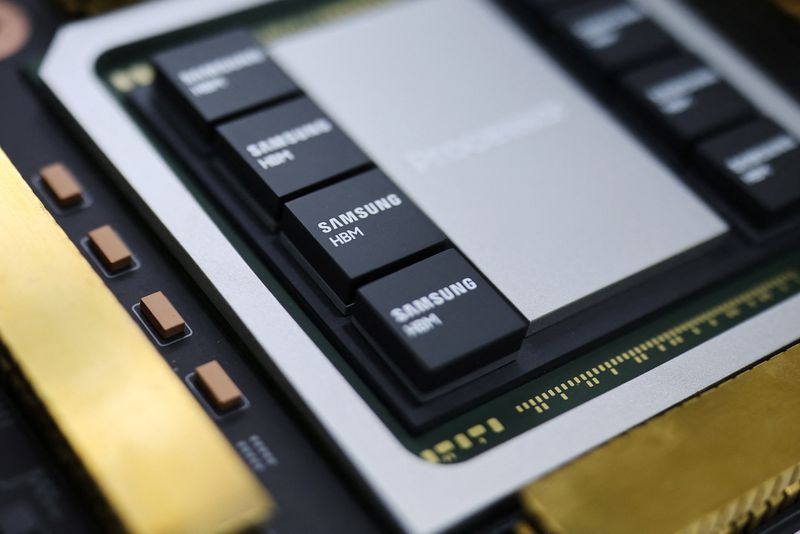
Samsung Electronics has announced substantial progress in its HBM4 chip supply efforts, marking a critical milestone for the global technology sector. This advancement solidifies Samsung’s enduring leadership in cutting-edge memory solutions, indispensable for high-performance computing and the relentless evolution of artificial intelligence applications, particularly within India’s dynamic tech landscape.
High-Bandwidth Memory (HBM) chips, especially the forthcoming HBM4 generation, are foundational elements powering next-generation AI accelerators, expansive data centers, and advanced graphics processing units. For Tech Enthusiasts, Innovators, and Startup Founders, this development signals a future with more powerful and efficient hardware capabilities.
While specific metrics detailing the full extent of this progress remain undisclosed in the current report, any forward movement in Samsung’s HBM4 chip supply is a significant indicator of the industry’s rapid pace. It underscores the unwavering commitment of key players to push memory technology boundaries.
Stakeholders should closely monitor subsequent announcements from Samsung and the broader semiconductor market for deeper insights into this pivotal technology trend, which promises to reshape digital infrastructure by 2026.
Detailed Analysis
The journey of memory technology, from conventional DRAM to the sophisticated High-Bandwidth Memory (HBM), encapsulates decades of relentless innovation within the semiconductor industry. Historically, memory advancements have always been a critical bottleneck, often dictating the pace at which processing power could be fully utilized. Samsung Electronics, a titan in memory chip manufacturing, has consistently spearheaded breakthroughs in this arena. Its pivotal role in developing and mass-producing advanced memory components like HBM has been instrumental in shaping the modern digital landscape. The current era, dominated by the insatiable demands of artificial intelligence and machine learning, presents an unprecedented challenge and opportunity. From the complex computations required for large language models to the intricate data processing in scientific simulations, the need for memory solutions capable of keeping pace with high-performance processors has never been more acute.
Samsung’s declared progress in HBM4 chip supply is far more than a routine corporate update; it represents a strategic advancement vital for fortifying the technological bedrock of future innovations across diverse industries. This includes everything from the compact efficiency required in next-generation consumer devices to the immense computational power needed for national computing infrastructure and sophisticated enterprise solutions. For Tech Enthusiasts and Developers, this implies access to hardware that can unlock new levels of performance for AI model training, real-time data analytics, and graphic-intensive applications. For Startup Founders in India and beyond, it means a more robust and capable foundational technology upon which to build disruptive products and services, accelerating the pace of digital transformation and competitiveness on a global scale.
Understanding the significance of HBM4 requires a look at its predecessors. Each generation of HBM has progressively overcome the limitations of traditional memory, stacking multiple DRAM dies vertically to achieve higher bandwidths and reduced power consumption. This architectural shift fundamentally altered how memory interacts with processors, creating a high-speed, energy-efficient conduit for massive data flows. The demand for such advanced memory has surged in direct correlation with the rise of AI. As AI models grow in complexity and data intensity, the ability to rapidly transfer vast amounts of data between the processor and memory becomes paramount. Samsung’s continuous investment in this specialized memory segment underscores its long-term vision for maintaining leadership in a market that is increasingly defined by AI and high-performance computing.
HBM4 chips are engineered to deliver a significant leap forward in both data transfer bandwidth and energy efficiency, far surpassing the capabilities of prior generations. Their design facilitates a much faster and more efficient communication pathway between the memory and the processor, a critical factor for managing the immense datasets and intricate computations inherent in today’s demanding AI workloads. Samsung’s strategic global position as a leading memory supplier means that any advancement it achieves in HBM4 directly reverberates throughout the entire global tech ecosystem. While the exact technical specifications and precise nature of the “progress” mentioned in the announcement remain broad without concrete metrics, it strongly implies successful navigation through intricate manufacturing efficiencies, the finalization of advanced design architectures, or an initial ramp-up in production capacity. The challenges in fabricating such advanced memory are monumental, encompassing highly complex processes, substantial capital investment, and rigorous quality control. Therefore, even a general statement of progress signals the successful overcoming of significant engineering hurdles.
This momentum strategically positions Samsung to not only meet but potentially capitalize on the ever-growing market for high-performance memory. This sector has rapidly become a key battleground for semiconductor dominance, with companies vying to offer the most potent and efficient solutions. The core of HBM4’s advantage lies in its ability to process more data in parallel, drastically reducing latency and increasing throughput. For Developers and Early Adopters, this means the potential for new algorithms and software architectures that can fully leverage these memory capabilities, leading to breakthroughs in areas such as real-time image recognition, natural language processing, and complex scientific modeling. The impact extends beyond raw performance, influencing factors like system size, cooling requirements, and overall operational costs for data centers and AI farms. Samsung’s commitment reinforces the market’s trajectory towards memory solutions that are not just faster, but also smarter and more integrated.
The innovation isn’t merely about speed; it’s also about integration. HBM is typically co-packaged with GPUs and CPUs, reducing the physical distance data has to travel and maximizing efficiency. HBM4 further refines this integration, potentially allowing for even higher stack counts and broader interfaces, pushing the envelope of what’s possible in a compact, high-density memory form factor. This continuous push for miniaturization and performance density is crucial for developing smaller, yet more powerful, AI-enabled devices and edge computing solutions. The underlying technology involves sophisticated thermal management and interposer designs, ensuring stable operation at extreme data rates. Samsung’s expertise in these complex manufacturing processes is a significant competitive differentiator, assuring its partners and clients of reliable, high-quality supply for their next-generation products. This progress is a testament to the continuous drive for excellence that defines the bleeding edge of the semiconductor industry.
In the intensely competitive semiconductor market, Samsung’s strategic focus on accelerating HBM4 chip supply directly responds to advancements from rival memory producers and the overall industry’s forward trajectory. Major players are currently engaged in a heated race to deliver the most efficient and powerful memory solutions, with billions invested in research, development, and manufacturing capabilities. This development from Samsung will undoubtedly influence competitive dynamics against other global memory giants like SK Hynix and Micron, who are also pouring substantial resources into their own next-generation HBM technologies. The increasing sophistication of AI models, coupled with the exponential expansion of data center architectures, necessitates continuous and significant improvements in memory performance. Consequently, HBM4 becomes a pivotal determinant of future system capabilities, dictating the potential for advancements in AI, high-performance computing, and ultimately, technological leadership.
The global supply chain also forms a critical backdrop to these developments. Enhancing HBM4 supply capabilities is crucial for ensuring that the broader technology industry—from established tech firms to nimble startups in India—can reliably access these vital components. A robust and diversified supply of advanced memory chips mitigates risks associated with potential shortages and geopolitical disruptions, fostering a more stable environment for innovation and product development. This stability is paramount for Innovators and Startup Founders who depend on predictable component availability to scale their operations and bring new AI-driven products to market. The persistent upward trend in demand for high-bandwidth memory (HBM) chips over the past five years underscores the market imperative Samsung is addressing.
[Suggested Line Graph: Global demand growth for high-bandwidth memory (HBM) chips over the past five years, reflecting increasing adoption in AI and data centers. Data points could include annual growth rates or total market size in billions of USD.] This visual would clearly illustrate the surging adoption of HBM in critical applications, emphasizing why Samsung’s supply progress is so strategically significant. The relentless demand curve signifies that the market is far from saturation, making enhanced supply not just beneficial, but essential for continued technological expansion.
For Tech Enthusiasts, Innovators, Early Adopters, Developers, and Startup Founders, Samsung’s progress in HBM4 chip supply translates into a tangible promise: the advent of more powerful, efficient, and capable technology in the coming years. This foundational advancement in memory technology is the engine enabling faster and more sophisticated AI services, significantly more capable smartphones, and a more resilient, high-performance cloud computing infrastructure. The ripples of this progress will touch virtually every digital interaction, from how we process information on our devices to the speed and intelligence of enterprise-level AI deployments. This robust and advanced memory supply chain provides a critical advantage for companies reliant on cutting-edge AI hardware, including the vibrant ecosystem of startups and established tech firms flourishing across India.
From an opportunity perspective, the enhanced availability of HBM4 will accelerate development cycles for AI hardware and software, potentially lowering the barrier to entry for innovators creating advanced solutions. Developers can anticipate environments where memory constraints are less restrictive, allowing for the exploration of more complex models and larger datasets. Early Adopters will be among the first to experience the performance gains in next-generation consumer electronics and professional workstations. However, the competitive landscape also presents a risk: while Samsung’s progress is positive, the intense rivalry among memory producers means that other advancements could emerge, continuously shifting the market dynamics. Maintaining a keen eye on diverse supplier roadmaps will be crucial.
Looking ahead, stakeholders should closely observe several key metrics and events. Future announcements from Samsung regarding specific production timelines, detailed technical specifications of HBM4, and any strategic partnerships will offer vital clues. Furthermore, monitoring the broader semiconductor market for competitive responses and overall HBM adoption rates will provide a comprehensive understanding of the evolving landscape. The ongoing global race for semiconductor leadership, particularly in critical components like HBM4, will continue to shape the trajectory of technological innovation and its widespread societal impact, making this a pivotal area for continuous attention and analysis well into 2026 and beyond.
About the Author