Key Takeaways
Groundbreaking Brusselstown Ring discovery in Ireland challenges Viking first-towns theory. Explore this Late Bronze Age proto-town and its historical implications.
Overview
A groundbreaking archaeological discovery in County Wicklow, Ireland, may reshape historical understanding. Researchers identified the Brusselstown Ring, a massive hilltop settlement with over 600 suspected houses, marking it as prehistoric Britain and Ireland’s largest.
This ancient Ireland town, from around 1200 BC (Late Bronze Age), challenges the theory that Vikings founded Ireland’s first towns. It predates Viking settlements by two millennia, altering our urbanisation narrative.
Published in Antiquity, the study details its scale. Test excavations began in 2024.
This current affairs discovery impacts historical perspectives and today updates on archaeology.
Key Data
| Settlement Site | Estimated Houses | Period | Significance |
|---|---|---|---|
| Brusselstown Ring | More than 600 | Late Bronze Age (~1200 BC) | Largest nucleated settlement in prehistoric Britain & Ireland |
| Mullaghfarna, Co. Sligo | More than 150 | Middle Stone Age / Late Bronze Age (3300-2900 BC / 1200-900 BC) | Previously large cluster of ancient settlements |
| Corrstown, N. Ireland | About 74 | Bronze Age (from 2002 discovery) | Previously considered the first “village” of that era |
Detailed Analysis
For centuries, the prevailing historical narrative in Ireland, especially concerning urban development, attributed the founding of the island’s first true towns to the Vikings. Major coastal settlements like Dublin, Waterford, and Limerick are often cited as prime examples of Viking ingenuity in establishing significant trade hubs and proto-urban centers beginning in the 9th and 10th centuries AD. This widely accepted theory has shaped how generations have understood the evolution of Irish society, positing a relatively rural, agrarian landscape before the arrival of Norse seafarers and their more complex societal structures. The archaeological record largely supported this view, with prior discoveries of prehistoric settlements tending to be smaller, dispersed units, typically categorized as hamlets comprising one to five dwellings.
However, recent archaeological endeavors are challenging these long-held beliefs, prompting a significant re-evaluation of Ireland’s ancient past. The discovery of the Brusselstown Ring in County Wicklow fundamentally alters this historical understanding. This site emerges from a landscape already rich with ancient history, nestled within the broader Baltinglass Hillfort Cluster on the south-western edge of the Wicklow Mountains. This region is home to thirteen large hilltop enclosures, some of which feature structures dating back to the even more ancient Neolithic period and the Early Bronze Age. This existing network of prehistoric sites suggested a dynamic, if not densely populated, ancient landscape, yet nothing of the scale of an ancient Ireland town like Brusselstown Ring had ever been identified.
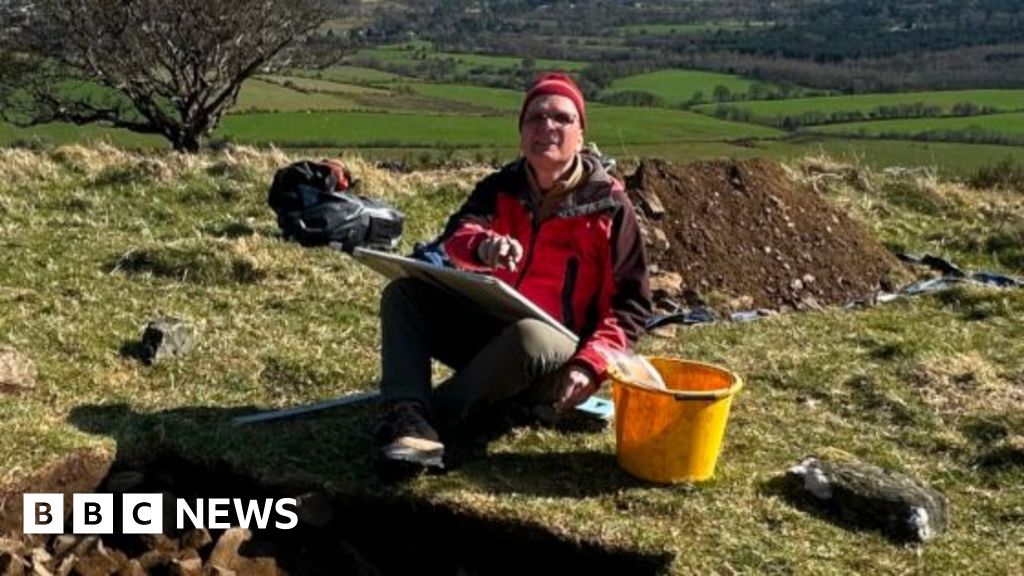
The significance of this new find lies not just in its immense size but in its potential to push back the timeline for urban-scale living in Ireland by an astonishing two millennia. Researchers initially conducted extensive survey work over the past two decades, yet crucial questions regarding “the date, development and function of both the enclosing elements and the internal settlement remain unanswered.” Consequently, a dedicated team initiated test excavations in 2024 to peel back the layers of time and uncover the secrets held within Brusselstown Ring. Their meticulous work, now published in the peer-reviewed journal Antiquity, presents a robust body of evidence that positions this site as a monumental pivot point in the study of early Irish history, fundamentally altering the archaeological discourse surrounding urbanism and societal complexity.
The Brusselstown Ring, nestled in County Wicklow, stands out as an unprecedented archaeological find due to its sheer scale and sophisticated layout. Dr. Dirk Brandherm, a reader in prehistoric archaeology at Queen’s University Belfast and a lead researcher, highlighted the site’s unique nature, specifically pointing to “the large number and the concentration of roundhouses” in one spot. Prior to this discovery, the understanding of Bronze Age settlements typically involved small, scattered hamlets. Brusselstown Ring shatters this perception with platforms for more than 600 suspected houses, making it, by a significant margin, the largest nucleated settlement ever discovered across prehistoric Britain and Ireland.
The settlement’s primary emergence is around 1200 BC, placing it squarely within the Late Bronze Age. While evidence indicates main occupation during this era, researchers also noted “continued use or reuse of some house platforms in the Early Iron Age.” This longevity suggests a robust community. The sheer number of dwellings positions Brusselstown Ring not merely as a large village, but, as Dr. Brandherm put it, “a proto-town of sorts.” This reclassification is critical; it pushes back the conceptualization of urban living in Ireland by an astonishing 2,000 years before the commonly accepted Viking period.
Beyond residential structures, its architectural complexity further underscores significance. The site is uniquely encompassed by two widely spaced ramparts. What distinguishes this hillfort is its expansive reach, enclosing not only its own summit but also that of the nearby Spinas Hill One. This dual-hill fortification system, a rare architectural feat, showcases advanced planning and considerable communal effort. Aerial surveys and photogrammetry mapping identified 98 house platforms within the inner enclosure, with over 500 more situated between the two formidable ramparts.
Adding another layer to this discovery is the potential identification of a large, stone-lined cistern. Found near one of the trenches, this “boat-shaped” chamber is described as “slightly larger than a round house.” It appears fed by an uphill stream, strongly suggesting fresh water storage. If samples confirm its synchronicity with the roundhouses, this cistern would be a “first in Ireland” for this period, drawing parallels to similar Bronze Age and Iron Age structures in France and Spain. Such an advanced water management system indicates a higher degree of communal organisation for prehistoric Irish societies, enhancing its claim as a true proto-urban center.
The discovery of Brusselstown Ring places it in a league of its own when compared to previous archaeological finds in Ireland and Britain. Historically, the notion of larger prehistoric settlements was relatively new. For instance, the Corrstown excavation in Northern Ireland in 2002 uncovered approximately 74 Bronze Age roundhouses. This was, at the time, hailed as Ireland’s first prehistoric “village,” significantly changing perceptions of Bronze Age communal living. However, Dr. Brandherm emphasizes that Brusselstown Ring represents “a different ball game altogether.” The sheer scale of over 600 identified house platforms dwarfs Corrstown, elevating Brusselstown from a mere village to a “proto-town” in its own right, a crucial breaking news insight.
Further context comes from Mullaghfarna in County Sligo, another significant ancient settlement. Mullaghfarna is thought to have contained more than 150 houses during two distinct periods: the middle Stone Age (3300-2900 BC) and the later Bronze Age (1200-900 BC). While impressive, particularly for its multi-period occupation, Mullaghfarna’s size is still considerably smaller than Brusselstown Ring. The contrast highlights not only Brusselstown’s unprecedented scale but also its unique density of occupation, which sets it apart within the Baltinglass hillfort cluster and more broadly across the Atlantic Archipelago.
The implications of such a comparison are profound. For archaeologists and historians, this discovery necessitates a re-evaluation of the capacity for societal complexity and organised settlement in prehistoric Ireland. The traditional model of small, isolated hamlets dominating the landscape before the Vikings now appears incomplete. Brusselstown Ring provides concrete evidence of a highly organised, nucleated community thriving thousands of years earlier. This not only rewrites the timeline of urban development but also suggests a sophisticated social structure capable of supporting and managing such a large population, along with the construction of extensive defensive works and potentially advanced infrastructure like a community cistern. The existence of different sized houses also prompts questions about potential social or economic stratification, although current data cannot confirm a definitive social hierarchy. Continued analysis of these structural variations will be critical in deciphering the internal dynamics of this remarkable prehistoric society for current affairs understanding.
For general readers and news consumers, the unearthing of Brusselstown Ring transcends mere academic interest; it profoundly impacts our understanding of identity and the historical tapestry of Ireland. This discovery dismantles a long-standing historical cornerstone – the notion that the Vikings introduced urbanisation to Ireland. It instead paints a picture of indigenous innovation and societal complexity that predates external influence by millennia. This shift challenges preconceived notions about the ‘primitiveness’ of early societies and highlights the advanced capabilities of Bronze Age communities in Ireland and Britain. It speaks to the resilience and resourcefulness of ancient peoples, capable of establishing settlements of significant scale and complexity, a truly must-read insight for anyone interested in India news and global current affairs, impacting today updates in archaeology.
This archaeological revelation raises a wealth of new questions. What drove such a large concentration of people to this hilltop location? What was the nature of their economy, their social structures, and their interactions with surrounding communities? The differing sizes of the discovered roundhouses, for instance, hint at potential social stratification, a fascinating avenue for future investigation. While confirming a social hierarchy is not yet possible, the inquiry itself enriches our appreciation for the nuanced lives of these early inhabitants.
Looking ahead, the research team’s upcoming work will concentrate on critical areas. Confirming the precise nature and date of the potential stone cistern is paramount, as its existence would signify an unprecedented level of engineering and communal resource management for the period. Identifying the specific structural features of the prehistoric roundhouses and establishing a precise chronology for the encompassing ramparts will also provide invaluable insights into the daily lives and defensive strategies of Brusselstown Ring’s inhabitants. As these investigations continue, they promise to unveil further details of this extraordinary site, continually enriching our appreciation for ancient Ireland and providing crucial today updates on archaeological breakthroughs that rewrite our history books.
About the Author