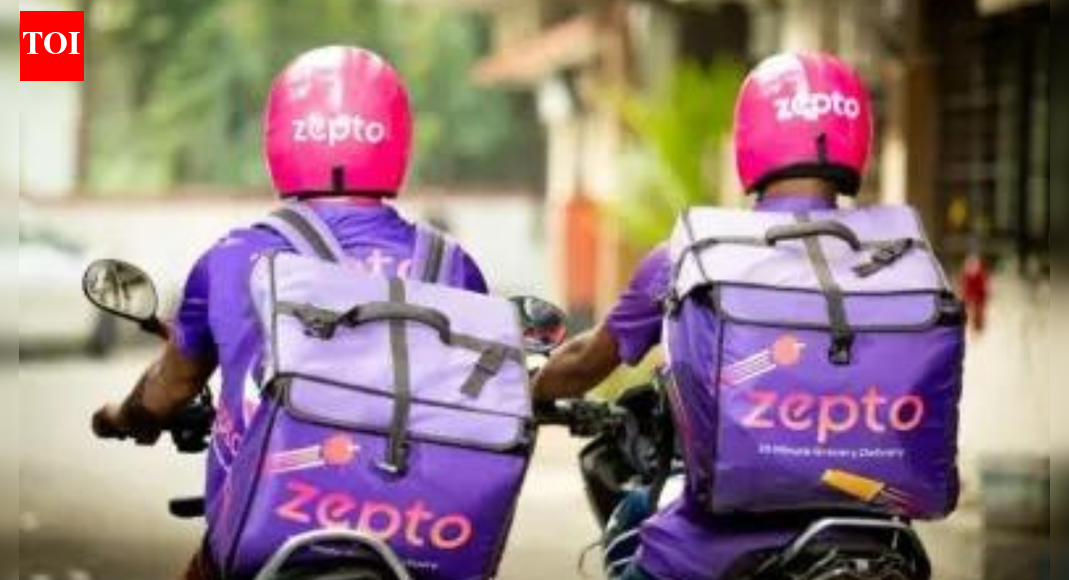
Key Takeaways
Zepto’s Rs 11,000 crore IPO filing signals a major e-commerce debut. Get data-driven insights into valuation, market positioning, and investment implications for 2025.
Overview
Quick e-commerce pioneer Zepto has initiated its initial public offering (IPO) process, filing preliminary papers with SEBI for an ambitious Rs 11,000 crore issue. This move positions the startup for a potential stock market debut next year, marking a significant milestone in India’s burgeoning online retail sector, drawing considerable attention from retail investors.
The confidential pre-filing strategy, a growing trend among tech companies, allows Zepto greater flexibility to navigate volatile market conditions, critical for any new investment. This development holds key implications for swing traders looking for pre-IPO momentum and long-term investors assessing the potential of India’s quick commerce landscape.
Valued currently at $7 billion, Zepto has rapidly scaled, having raised $1.8 billion (approx. Rs 16,000 crore) since its inception. The company achieved unicorn status in August 2023 at a $1.4 billion valuation, underscoring its rapid growth trajectory in a competitive market.
As Zepto prepares to join its peers like Zomato and Swiggy on the exchanges, this financial analysis will delve into the underlying metrics, market positioning, and the broader implications for the Indian stock market and potential investors.
Key Data
| Metric | Previous (Aug 2023) | Current (As of Filing) | Change |
|---|---|---|---|
| Company Valuation | $1.4 Billion | $7 Billion | +$5.6 Billion |
| Key Funding Round | $200 Million | $450 Million (Oct) | +$250 Million |
| Planned IPO Size | N/A | ₹11,000 Crore | N/A |
Detailed Analysis
The Indian quick commerce sector has witnessed explosive growth, driven by rapid urbanization, increasing disposable incomes, and a tech-savvy consumer base demanding instant gratification. Zepto’s trajectory, from its inception by Stanford dropouts Aadit Palicha and Kaivalya Vohra to its current valuation, mirrors the broader trend of venture capital flowing into high-growth, consumer-facing digital platforms. This sector, characterized by thin margins and intense competition, has historically required substantial capital infusion to build out infrastructure, including extensive ‘dark store’ networks, and to acquire customers. The confidential pre-filing with SEBI indicates a strategic approach to market entry, allowing Zepto to fine-tune its offer based on real-time market sentiment and investor feedback, a lesson perhaps learned from earlier, more volatile tech IPOs.
Zepto’s financial details, as revealed through its preliminary filing, paint a picture of aggressive expansion fueled by significant investor backing. The planned Rs 11,000 crore IPO is a testament to both the company’s ambitions and investor confidence in its growth story. With a current valuation of $7 billion, a significant jump from its $1.4 billion unicorn valuation in August 2023, the startup has clearly demonstrated strong value accretion. Its ability to raise $1.8 billion (approximately Rs 16,000 crore) in total funding, including a recent $450 million round from CalPERS in October, highlights sustained institutional interest. Operational efficiency remains a critical metric; Zepto currently manages over 900 dark stores across major Indian cities, enabling its 10-minute grocery delivery promise. Despite an operational spend of Rs 1,000-1,100 crore, the company has achieved impressive gross sales of $3 billion (about Rs 26,000 crore), indicating substantial revenue generation alongside its expansion efforts. However, achieving sustainable profitability will be the ultimate test for Zepto as it transitions to a publicly listed entity.
Comparing Zepto to its listed and pre-listed peers provides valuable context for financial professionals and investors. Zomato, through its acquisition of Blinkit, and Swiggy with Instamart, are direct competitors in the quick commerce space. While specific profitability metrics for Zepto are not detailed in the available information, the high operational burn of Rs 1,000-1,100 crore suggests a similar investment-heavy model to its rivals. Zomato’s market performance post-IPO, along with Swiggy’s impending listing, will serve as crucial benchmarks for Zepto’s valuation and market reception. The sector’s core challenge lies in balancing rapid customer acquisition and expansive delivery networks with unit economics. Investors will closely scrutinize metrics such as average order value, customer retention rates, and the path to adjusted EBITDA profitability for a clearer picture of long-term viability. [Suggested Matrix Table: Comparison of Key Metrics for Indian Quick Commerce Players (Zepto, Zomato-Blinkit, Swiggy-Instamart) including Valuation, Gross Order Value, Operational Burn, and Funding Raised]
For retail investors and swing traders, Zepto’s IPO presents a significant opportunity coupled with inherent risks typical of high-growth tech startups. The confidential filing creates an initial information asymmetry, requiring careful analysis upon public disclosure of the Draft Red Herring Prospectus (DRHP). Long-term investors should evaluate Zepto’s long-term competitive advantage, sustainability of its 10-minute delivery model, and its ability to scale profitably beyond current gross sales figures. Key aspects to monitor include the company’s customer acquisition cost (CAC), lifetime value (LTV) of customers, and any shifts in regulatory policy affecting the gig economy or e-commerce. The success of its IPO, planned for next year, will be a critical indicator of investor appetite for high-valuation, high-growth Indian startups, potentially influencing future listings on the NSE and BSE. Understanding these dynamics is paramount for making informed investment decisions in the evolving Indian stock market.
About the Author