Key Takeaways
Zelensky-Trump peace talks pose geopolitical risks for global markets. Understand the potential impact on India’s NSE, BSE, and investment strategies for 2025.
Overview
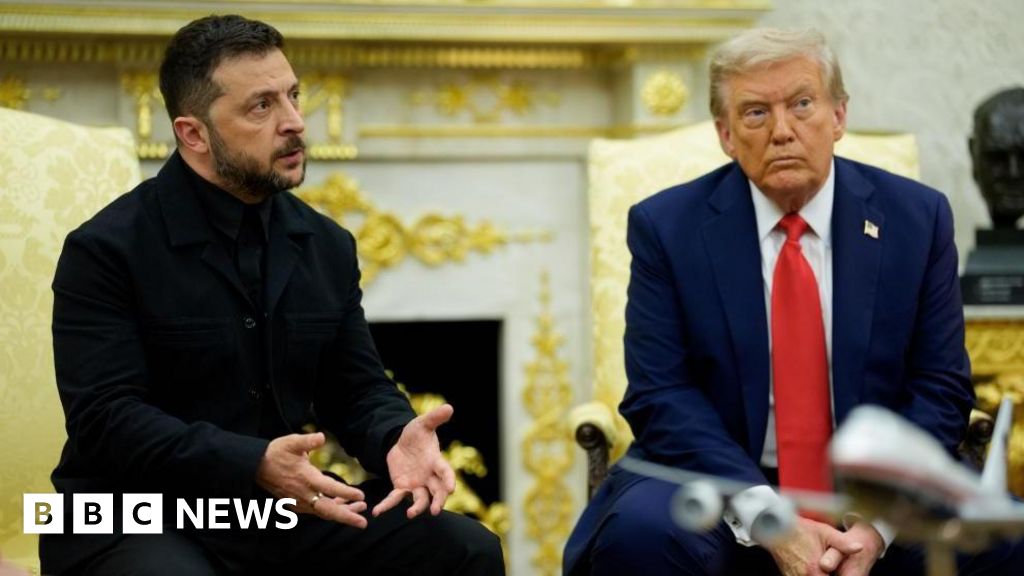
The impending meeting between Ukrainian President Volodymyr Zelensky and former US President Donald Trump this Sunday in Florida introduces significant geopolitical uncertainty, directly influencing global market sentiment and Stock Market India. These high-stakes discussions, focused on a US-brokered peace plan and security guarantees, could trigger immediate shifts across the NSE and BSE, impacting investment outlooks.
Retail investors and finance professionals are closely monitoring these developments, recognizing global political stability as a critical determinant of investment risk. While Russian officials note “slow but steady progress,” Zelensky’s 90% complete 20-point plan contrasts with renewed aerial attacks on Kyiv and Kharkiv, underscoring persistent volatility.
This complex landscape demands attention. Investors should prepare for potential market reactions tied to these talks, from commodity price fluctuations to shifts in defense sector valuations.
This analysis delves into the short-term and long-term implications for Indian equity markets, guiding trading and investment amid evolving geopolitical dynamics.
Detailed Analysis
The ongoing conflict between Russia and Ukraine, initiated with a full-scale invasion in February 2022, has consistently exerted a profound influence on global economic stability and, by extension, investment markets including those in India. Historically, significant geopolitical events, from oil shocks in the 1970s to recent US-China trade tensions, have demonstrably impacted commodity prices, supply chains, inflation rates, and investor risk appetite. The impending talks between Ukrainian President Volodymyr Zelensky and former US President Donald Trump represent a pivotal moment in this protracted conflict. These negotiations are framed against a backdrop of complex diplomatic maneuvers, where both sides articulate differing views on resolution pathways. Moscow indicates “slow but steady progress” in its own discussions, yet simultaneous Russian aerial attacks on Ukrainian cities like Kyiv and Kharkiv underscore the precarious and unpredictable nature of the conflict. For Indian investors, understanding this volatile geopolitical stage is crucial, as global stability directly correlates with capital flow and risk perception in emerging markets.
The core of the upcoming discussions revolves around a US-brokered peace plan and separate proposals for US security guarantees. Zelensky’s assertion that his 20-point peace plan is “90% complete” suggests tangible progress from Ukraine’s perspective, potentially aiming for a “free economic zone” in Donbas if Russia also withdraws. However, Donald Trump’s statement that Zelensky “doesn’t have anything until I approve it,” coupled with a Russian official labeling the US plan as “radically different” from their negotiations, highlights a substantial chasm in expectations. These divergences present a considerable challenge for financial analysis. From an investor standpoint, the lack of immediate consensus signals continued market uncertainty. Commodity markets, particularly for oil, natural gas, and grains, often react sharply to news of peace or escalation. The defense sector, globally and in India, might see heightened interest if tensions persist, or a re-evaluation if de-escalation appears imminent. Currency markets could also exhibit volatility, with the US Dollar strengthening as a safe haven during heightened uncertainty, potentially impacting the Indian Rupee. Investors on the NSE and BSE must consider these ripple effects.
Historically, major geopolitical events cause initial market reactions, followed by trends based on long-term resolution prospects. Past trade disputes and instabilities have led to pullbacks in global indices, including the Nifty and Sensex. The ongoing conflict has notably disrupted global supply chains, fueling inflationary pressures that central banks, like the RBI, have addressed. Should a credible peace path emerge from these talks, sectors such as infrastructure, logistics, and consumer discretionary could see renewed investor interest, anticipating reconstruction and improved global trade. Conversely, a failure in diplomacy could exacerbate existing market anxieties, potentially favoring defensive stocks or safe-haven assets. Investors must therefore differentiate short-term volatility from long-term structural shifts, especially considering India’s global economic integration and commodity reliance. Key proposals, like demilitarized zones, are critical indicators for shifting market sentiment.
For Retail Investors, Swing Traders, Long-term Investors, and Finance Professionals, the upcoming Zelensky-Trump meeting necessitates heightened vigilance. Swing traders should monitor immediate news for sharp price movements in commodity-linked or defense stocks, leveraging technical levels. Long-term investors, while focused on fundamentals, must factor macro-economic stability influenced by global peace. Diversification remains crucial to mitigate geopolitical risks. Key metrics to monitor include official post-meeting statements, shifts in crude oil and natural gas futures, and global defense index performance. Observe broader Stock Market India indices, NSE and BSE, for sustained directional change. The implications impact global trade flows, inflation expectations, and corporate earnings. Investors should prepare for a potentially volatile period, proactively adjusting portfolio allocations based on evolving geopolitical realities, avoiding reactive decisions.
About the Author