Key Takeaways
Amit Shah’s ‘impenetrable grid’ plan strengthens India’s internal security, driving economic stability. Analyze investment outlook, risk mitigation, and market impact for 2025.
Overview
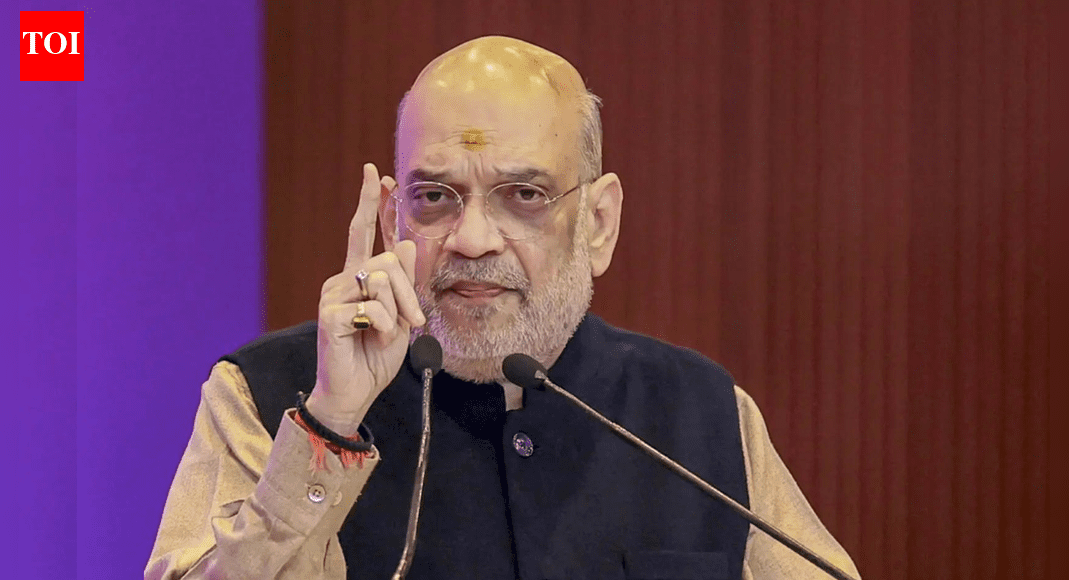
Union Home Minister Amit Shah’s recent announcements at the Anti-Terrorism Conference-2025 signal a significant uplift in India’s internal security architecture. This strategic strengthening, aiming for an ‘impenetrable anti-terrorism grid’ and a ‘360-degree strike’ against organized crime, has profound implications for the overall investment climate in India. Improved internal security directly correlates with reduced sovereign risk, fostering a more predictable and stable environment for capital deployment across the NSE and BSE.
For Retail Investors, Swing Traders, and Long-term Investors, enhanced national stability translates into a potentially lower risk premium for Indian assets, influencing long-term investment strategies and potentially attracting greater foreign direct investment. Finance Professionals will closely monitor policy execution and its impact on sectoral performance and project viability.
While specific financial metrics were not disclosed, the commitment to common anti-terror squads, “Duty to Share” information policy, and new digital tools (NIA crime manual, Organised Crime Network Database) underscore a unified national effort. These measures are designed to preempt threats, directly benefiting economic continuity and investor confidence.
This analysis delves into how these security advancements, particularly in a growing economy like India’s, mitigate systemic risks and unlock new avenues for investment and trading opportunities across various market segments.
Detailed Analysis
India’s ascent as the world’s fourth-largest economy demands an equally robust internal security framework, a critical factor for sustained investment. Historical patterns show that stability, free from terrorism and organized crime, directly impacts a nation’s ability to attract and retain capital. These threats introduce systemic risks, erode investor confidence, escalate operational costs for businesses, and impede long-term capital formation. Union Home Minister Amit Shah’s statements at the Anti-Terrorism Conference-2025, advocating an “impenetrable anti-terrorism grid” and a “360-degree strike” plan, must be seen through an economic prism. These proactive measures are pivotal for safeguarding India’s economic prosperity, influencing market perception and crucial investment decisions across the Stock Market India ecosystem.
The proposed “impenetrable anti-terrorism grid” and the “360-degree strike” against organized crime aim to create a more secure operational environment. By targeting criminal syndicates and terror facilitators, often linked to extortion, the government seeks to reduce supply chain vulnerabilities and business operational risks. Shah’s emphasis on a common Anti-Terror Squad (ATS) structure and the “Duty to Share” information policy, replacing “Need to Know,” signifies a unified, data-driven approach. This enhanced inter-agency coordination, alongside new digital tools like the updated NIA crime manual, an Organised Crime Network Database, and a database for lost and looted weapons, will improve threat preemption and response. These technological and operational upgrades are crucial for minimizing disruptions that can impact sectoral earnings and overall market stability on the NSE and BSE. Successful operations like “Sindoor” and “Mahadev” underscore the government’s capability in execution.
Globally, robust internal security frameworks typically lead to a lower country risk premium, attracting greater foreign direct investment (FDI) and domestic capital. India’s intensified efforts, as detailed by Minister Shah, position it favorably against emerging market peers facing similar challenges but perhaps lacking such comprehensive, tech-backed strategies. The inextricable link between organized crime and terrorism, often involving illicit financial flows, has direct implications for financial market integrity. By disrupting these networks with a “ruthless approach,” India strengthens its adherence to international financial crime standards and regulatory environment. This proactive stance is vital for bolstering investor confidence, especially for long-term investors assessing the sustainability of India’s growth trajectory. Mandatory use of platforms like NATGRID and NIDAAN further harmonizes intelligence, a key step for maintaining investor trust.
For Retail Investors, these security enhancements signal a more stable macro environment, potentially reducing market volatility. Long-term Investors should consider these developments foundational to India’s sustained economic growth, reinforcing the bullish thesis on Indian equities. Reduced organized crime could specifically benefit sectors sensitive to local law and order, such as manufacturing, real estate, and logistics. Finance Professionals will find improved risk assessment for projects, particularly large-scale infrastructure. Investors should monitor policy implementation, government spending on security, and improvements in ease of doing business reports as tangible metrics. The sustained pursuit of internal security excellence is poised to underpin a robust and resilient Indian Stock Market.
About the Author