Key Takeaways
Sensex fell 367 points, Nifty below 26,050. Year-end profit-taking and FII outflows impacted markets. Analyze key drivers, sector performance, and investment strategies for 2025.
Overview
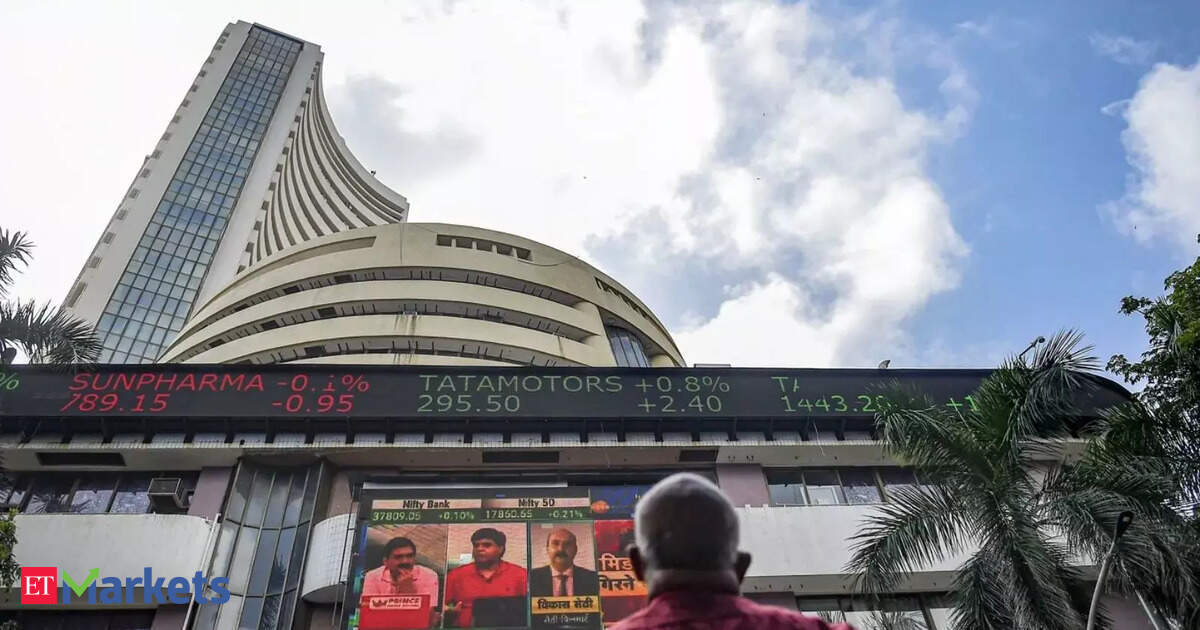
Indian benchmark indices, including the Sensex and Nifty, concluded Friday’s trading session lower, as investors engaged in profit-taking near record highs. This year-end consolidation, coupled with sustained foreign institutional investor (FII) outflows, dampened broader risk appetite across the Indian stock market.
The day’s downturn signals a cautious shift in investor sentiment, particularly relevant for Swing Traders navigating short-term volatility and Long-term Investors reassessing portfolio allocations amidst thinning trading volumes.
Specifically, the BSE Sensex declined by 367 points, or 0.4%, settling at 85,041.45, while the NSE Nifty 50 slipped 0.4% to 26,042.3, breaking below the crucial 26,050 mark. Key drags included Bajaj Finance, Asian Paints, Eternal, Sun Pharma, and Tech Mahindra, each falling between 1% and 1.5%.
This market wrap provides a data-driven analysis of the forces at play, including expert commentary and global market dynamics, to help investors position themselves strategically for upcoming movements.
Key Data
| Index / Stock | Friday Close | Daily Change (Pts) | Daily Change (%) | Weekly Change (%) |
|---|---|---|---|---|
| BSE Sensex | 85,041.45 | -367 | -0.4% | +0.1% |
| NSE Nifty 50 | 26,042.3 | N/A | -0.4% | +0.3% |
| Small-Cap Index | N/A | N/A | N/A | +1.8% |
| Mid-Cap Index | N/A | N/A | N/A | Little Changed |
Detailed Analysis
The recent market decline, marked by year-end profit-taking on Indian benchmark indices, provides a crucial analytical point for all categories of investors. This phenomenon, where investors capitalize on gains made throughout the year by selling off holdings, is particularly prevalent as market indices approach or establish new record highs. Such behavior is often a rational response to perceived overvaluation or a desire to lock in profits before the close of the financial year. The current environment is further complicated by inherently thin trading volumes, a characteristic of the holiday season, particularly post-Christmas. Lower liquidity means that even relatively modest selling pressure can lead to more pronounced price movements, creating amplified volatility. Historically, market corrections and consolidations often follow periods of sustained upward momentum, serving as a natural rebalancing mechanism that prevents markets from becoming unsustainably overheated. Understanding these cyclical patterns is fundamental for Retail Investors looking to avoid emotional decisions and for Long-term Investors planning strategic portfolio re-allocations. A significant contributing factor to the bearish sentiment has been the continued foreign institutional investor (FII) outflows. These outflows signal a potential shift in global capital allocation strategies, possibly influenced by evolving international economic indicators or a re-evaluation of risk-adjusted returns in emerging markets like India. The impact of FII withdrawals is multi-faceted: it directly reduces demand for Indian equities, exerting downward pressure on stock prices, and simultaneously weakens the Indian rupee against the US dollar. This dual effect can erode the returns for foreign investors and increase the cost of imports for domestic businesses, adding inflationary pressure. Furthermore, the absence of fresh, compelling positive catalysts, such as concrete advancements in a potential U.S.-India trade agreement, has dampened the enthusiasm typically associated with a “Santa Claus rally,” leaving market sentiment more susceptible to internal vulnerabilities rather than global tailwinds.
A detailed examination of Friday’s market performance reveals a distinct stratification of impact across sectors and market capitalizations. The BSE Sensex recorded a notable decline of 367 points, representing a 0.4% fall, closing at 85,041.45. Concurrently, the NSE Nifty 50 also slid by 0.4%, settling at 26,042.3, conspicuously breaching the psychologically significant 26,050 mark. This breach could be interpreted by Swing Traders as a signal of short-term bearish momentum, potentially indicating further downside if the level is not quickly reclaimed. The list of top drags on the 30-stock Sensex offers insight into the affected segments. Bajaj Finance, a bellwether in the non-banking financial sector, saw its shares fall between 1% and 1.5%, signaling profit-taking in the financial services space. Similarly, Asian Paints and Eternal (likely referring to a company in the consumer discretionary or industrials sector) experienced similar declines, suggesting broader weakness in consumption-oriented and cyclical stocks. Sun Pharma, a pharmaceutical giant, also contributed to the negative sentiment, implying that even traditionally defensive sectors were not immune to the pervasive selling pressure. Tech Mahindra, representing the crucial IT sector, witnessed a similar dip, which could be linked to global macroeconomic uncertainties impacting technology spending. This pattern of broad-based selling across key index heavyweights underscores a risk-off mood. Importantly, this large-cap underperformance contrasted sharply with selective strength observed in metals and consumer durable stocks, indicating a sector rotation where investors may be shifting capital into segments perceived as having greater value or resilience. Vinod Nair, Head of Research at Geojit Investments, provided crucial context, affirming that the broad-based profit booking was a direct consequence of thin year-end trading volumes and a prevailing cautious mood ahead of the impending earnings season. Despite the daily setback, the Nifty 50 recorded a modest 0.3% weekly gain, and the Sensex added 0.1%, notably breaking a three-week losing streak, which offers a nuanced perspective on the market’s underlying strength amidst short-term pressures.
A comparative lens reveals that the Indian market’s performance on Friday diverged significantly from the broader positive trend observed in Asian markets. While Indian benchmarks experienced a downturn, Asian equities generally posted gains, with regional indices touching six-week highs. Japan’s Topix index climbed to a record high, recording a 0.5% advance, and South Korea’s benchmark surged 0.6%, solidifying its impressive 72% year-to-date gain for 2025, making it the world’s leading major equity market. Even China’s blue-chip shares saw a modest 0.27% increase, on track for an 18% annual performance, its strongest since 2020. This stark contrast suggests that India’s market dynamics were predominantly shaped by domestic factors—primarily the FII outflows and localized profit-taking—rather than a global aversion to risk. This nuanced situation provides crucial insights for Finance Professionals dissecting the drivers of market behavior. Within the Indian context, the market showcased further internal divergence. Large-cap stocks, heavily weighted in the Sensex and Nifty, underperformed, yet small-cap stocks managed a robust 1.8% weekly advance, and mid-cap shares remained relatively stable. This “flight to smaller caps” could be interpreted as domestic investors identifying pockets of value or growth potential outside the saturated blue-chip space, which tends to be more sensitive to institutional flows. The persistent FII outflows, a key driver of domestic equity weakness, also significantly impacted the Indian rupee. It weakened by 15 paise to a provisional close of 89.86 against the U.S. dollar, pressured by both declining equities and the ongoing foreign fund exodus. The dollar index, conversely, held firm, up 0.10% at 98.07, indicating broad dollar strength that added to the rupee’s woes. In the commodity markets, crude oil prices exhibited only minor fluctuations, with Brent crude up 0.19% to $62.36 a barrel. While fresh geopolitical risks, such as U.S. airstrikes in Nigeria and economic pressures on Venezuelan oil exports, were noted, their immediate impact on global oil supply and prices was muted due to subdued post-Christmas trading. This stability in crude prices, while not alleviating equity market pressure, at least avoids compounding India’s import bill concerns in the immediate term. [Suggested Matrix Table: Key Index Performance Comparison – Friday vs. Weekly vs. YTD (India vs. Major Asian Indices)]
For the diverse investor base, the current market dynamics present both challenges and strategic opportunities. Retail Investors should approach the prevailing profit-taking with a clear strategy, focusing on identifying value in corrected large-cap stocks or carefully selecting high-potential small and mid-cap companies. The emphasis should be on disciplined long-term investing, leveraging market dips rather than succumbing to short-term emotional responses. Diversification across sectors and market caps remains paramount to mitigate risks inherent in concentrated positions. Swing Traders will find the increased volatility and the breach of critical technical levels, such as the Nifty slipping below 26,050, as actionable signals. Monitoring real-time volume, price action, and identifying short-term support and resistance levels will be crucial for executing tactical trades. Rapid sector rotation, evident in the underperformance of IT, auto, and banking versus the strength in metals and consumer durables, offers avenues for opportunistic trading strategies. Long-term Investors should re-evaluate their portfolios for underlying quality and growth potential, especially in light of sustained FII outflows which might present better entry points for fundamentally sound companies. Consideration should also be given to sectors with strong domestic demand drivers that are less susceptible to global capital flight. Finance Professionals are advised to conduct rigorous scenario planning, factoring in the impact of continued FII trends, potential changes in global monetary policy, and the nuanced implications of geopolitical events on commodity prices and supply chains. The impending Q3 earnings season will be a critical period for gaining clarity on corporate performance, management commentary on future outlooks, and potential guidance revisions. Monitoring key macroeconomic indicators, including inflation trends and industrial output data (not explicitly in source, so I will stick to source content for metrics), alongside global trade developments, will be essential for informed decision-making. Investors should maintain a robust risk management framework, adapting their strategies to the evolving market landscape as 2025 concludes and 2026 begins, focusing on resilience and prudent capital allocation.
About the Author