Key Takeaways
BJP’s VV Rajesh elected Thiruvananthapuram Mayor with 51 votes, marking a historic first for the party in Kerala. Analyze this significant political shift for 2025.
Overview
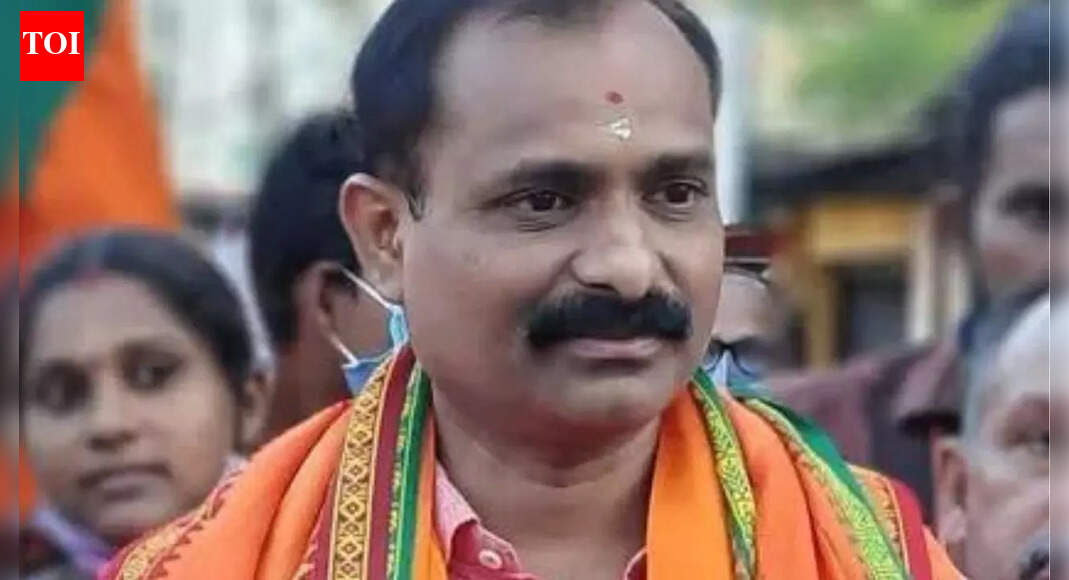
A significant political milestone has been achieved in Kerala’s capital as VV Rajesh, the Bharatiya Janata Party’s (BJP) State Secretary and Kodunganoor ward councillor, was elected Mayor of the Thiruvananthapuram Corporation. This historic victory on Friday marks the first time the BJP has secured the mayoral position in the Thiruvananthapuram Corporation.
This outcome represents a major political shift, ending the Communist Party of India (Marxist)-led Left Democratic Front’s (LDF) 45-year dominance over the civic body. For political analysts and informed citizens, this event signals potential changes in urban governance and the BJP’s evolving footprint in South Indian politics.
VV Rajesh secured 51 votes, drawing support from 50 BJP councillors and one independent member. In contrast, the United Democratic Front (UDF) candidate, KS Sabarinathan, received 17 votes, while the LDF’s mayoral candidate, RP Shivaji, garnered 29 votes.
The election result warrants a closer look into its short-term implications for local policy-making and its medium to long-term impact on India politics and Kerala’s political landscape.
Key Data
| Candidate | Party/Affiliation | Votes Secured |
|---|---|---|
| VV Rajesh | BJP + Independent | 51 |
| RP Shivaji | LDF | 29 |
| KS Sabarinathan | UDF | 17 |
Detailed Analysis
The election of VV Rajesh as the Mayor of Thiruvananthapuram Corporation signifies a pivotal moment in Kerala’s political narrative, breaking a nearly five-decade-long hold by the LDF. While the broader 2025 Kerala local body elections, conducted in two phases on December 9 and 11, saw the Congress-led United Democratic Front (UDF) gain significant ground across most rural and urban local bodies, Thiruvananthapuram stands out as a critical deviation. This development underscores the BJP-led NDA’s focused strategy and persistent efforts to establish a stronger foothold in a state traditionally dominated by the Left and Congress. The historical context reveals a gradual but determined electoral expansion by the BJP in certain urban pockets of Kerala, culminating in this significant win which analysts suggest could be a harbinger of evolving political dynamics.
The specific details of the Thiruvananthapuram mayoral election highlight a clear numerical advantage for the BJP. VV Rajesh, a seasoned BJP State Secretary and Kodunganoor ward councillor, secured a decisive mandate with 51 votes. This tally explicitly comprises the votes of 50 BJP councillors and crucial support from one independent member, demonstrating effective coalition-building at the local level. The LDF’s RP Shivaji received 29 votes, while the UDF’s KS Sabarinathan secured 17, reflecting the fractured opposition in this particular contest. Beyond the mayoral race, the BJP also named G S Asha Nath as its nominee for deputy mayor for Thiruvananthapuram and announced candidates for the Thrippunithura Municipality, P L Babu for chairperson and Radhika Varma for vice chairperson. These nominations, approved by BJP State President Rajeev Chandrasekhar and announced by State General Secretary S Suresh, underscore the party’s strategic planning following the NDA’s overall victory in the Thiruvananthapuram Corporation.
Comparing the Thiruvananthapuram Corporation outcome to the wider results of the 2025 Kerala local body elections reveals a fascinating political contrast. While the UDF emerged victorious across the majority of rural and urban local bodies, the NDA’s success in the state capital signals a strategic penetration into a key urban center. This distinction is crucial for understanding the BJP’s growth trajectory in Kerala, often perceived as a challenging state for the party. The outcome suggests that while the LDF and UDF remain dominant forces generally, the BJP is capable of mobilizing support and securing power in specific, high-profile urban municipalities. This localized success, particularly in the state capital, positions the BJP as a significant and growing stakeholder in Kerala’s political arena, potentially influencing future election strategies and policy discussions within the state. The ability to break a 45-year-long electoral streak in a major corporation offers a unique perspective on shifting voter preferences and the evolving dynamics of India Politics.
For news readers, policy watchers, informed citizens, and political analysts, the election of a BJP mayor in Thiruvananthapuram represents a critical development to monitor. In the short-term, it signals a new direction for local governance in the state capital, with potential policy implications that align with the BJP’s platform. Medium-term, this victory could embolden the BJP to intensify its efforts across Kerala, using Thiruvananthapuram as a model for urban outreach and organizational strengthening. Stakeholders, including local residents and business communities, will be keen to observe the policy initiatives of the new administration. Long-term, this outcome offers valuable insight into the BJP’s broader national strategy to expand beyond its traditional strongholds and could influence future state legislative assembly elections. Observers should watch for new policy announcements, budget allocations for Thiruvananthapuram, and the BJP’s subsequent electoral performances in neighboring regions as key indicators of this political shift’s enduring impact.
About the Author