Key Takeaways
Donald Trump claims US launched deadly strikes on ISIS targets in Nigeria. Understand the implications for global security and current affairs for General Readers.
Overview
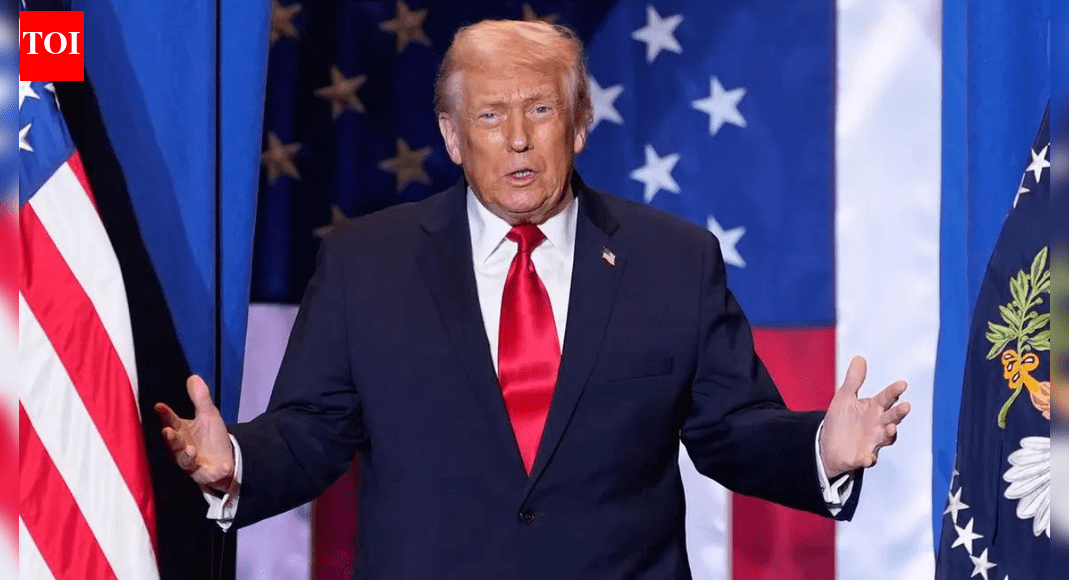
Former US President Donald Trump announced he ordered “powerful and deadly strikes” against ISIS targets in northwest Nigeria. His statement, made on Truth Social, cited the group’s alleged targeting and killing of Christians, marking a significant global current affairs development.
For general readers, this highlights ongoing concerns about international terrorism and the complex role of global powers. Trump’s declaration impacts foreign policy discussions and adds to today’s critical news updates, prompting analysis of past actions.
He stated the strikes were carried out “at my direction as Commander in Chief” against “terrorist scum,” alleging “viciously killing, primarily, innocent Christians” at unprecedented levels.
This News Update offers vital context on global security and potential policy implications.
Detailed Analysis
Donald Trump’s recent declaration regarding past US strikes in Nigeria builds upon a history of his outspoken views on international security and the protection of religious minorities. The former President has repeatedly addressed the plight of Christians in Nigeria, notably in November, when he reportedly urged his secretary of defence to prepare for “possible action.” This earlier statement even suggested the US could intervene “guns-a-blazing” to safeguard the Christian population in Africa’s most populous nation. Such rhetoric underscores a consistent theme in his foreign policy approach, emphasizing a direct and forceful response to perceived threats against specific communities. The alleged “deadly strikes” are presented within this established pattern of warnings and interventions, adding a retrospective layer to his tenure as Commander in Chief. This broader context helps general readers understand the continuity of his concerns and the seriousness of the global situation.
According to Trump’s post on Truth Social, the US launched “numerous perfect strikes” against Islamic State (ISIS) terrorists in northwest Nigeria. He explicitly stated these actions occurred “at my direction as Commander in Chief,” targeting militants he described as “terrorist scum.” The former President alleged that ISIS had been “targeting and viciously killing, primarily, innocent Christians, at levels not seen for many years, and even centuries.” This specific claim about the severity of attacks forms the core justification for the military response. Trump further claimed he had previously warned these terrorists about “hell to pay” if the “slaughtering of Christians” continued, suggesting a direct linkage between his warnings and the subsequent military action. He concluded his post by wishing “Merry Christmas to all, including the dead terrorists,” asserting there would be “many more” if attacks on Christians persisted. These pronouncements offer a rare insight into claims of past covert military operations, raising questions about their timing and disclosure within today’s news updates.
This public disclosure by a former head of state, detailing past military actions and their specific targets, deviates from conventional protocols for classified operations. Typically, such sensitive information remains under tight security, especially when involving international partners and specific terrorist groups. The claim of “perfect strikes” and the direct attribution to ISIS in Nigeria highlight the group’s persistent presence and operational reach, a concern that has prompted various international counter-terrorism efforts over the years. While specific details of these alleged US strikes are not independently verifiable from the source content, the broader context of ISIS-affiliated violence in parts of Africa remains a critical issue for global security and human rights. This development invites general news consumers to consider the varying approaches to transparency in international military engagements and their impact on current affairs.
For general readers and news consumers, Donald Trump’s assertion about US strikes in Nigeria underscores the enduring threat of radical Islamic terrorism and the complex, often opaque, nature of international counter-terrorism efforts. This news update highlights the continuous geopolitical challenges faced globally, even as a former president continues to influence discourse. It also prompts reflection on how information regarding past military operations is disclosed and the implications for both domestic and international relations. Audiences should monitor any official responses or further details that may emerge regarding these alleged actions, as they could shape perceptions of past US foreign policy and current affairs in the region. Understanding these dynamics is crucial for grasping global security today and for contextualizing India News related to international events.
About the Author