Key Takeaways
Navi Mumbai Airport operations begin, a major infrastructure milestone. Analyze its impact on Indian aviation stocks, Adani Group, and long-term investment opportunities.
Overview
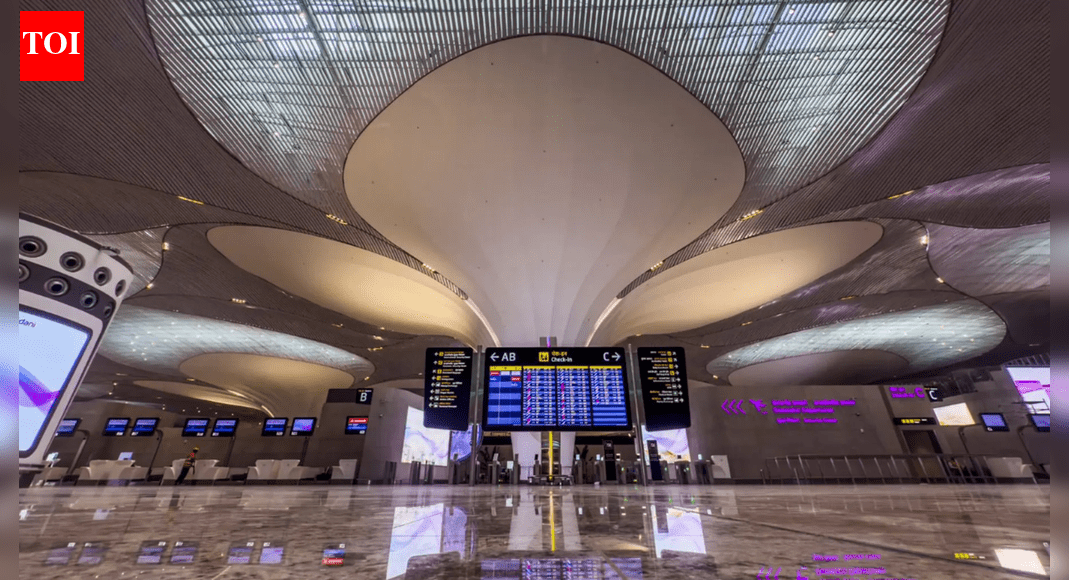
The eagerly anticipated **Navi Mumbai International Airport** (NMIA) commenced commercial flight operations on Thursday, marking a significant infrastructural milestone for India. This new greenfield airport immediately addresses Mumbai’s persistent aviation congestion, fundamentally reshaping the region’s air travel capacity and offering new avenues for investment.
For retail investors, swing traders, and long-term investors, this development signals robust growth in India’s aviation and infrastructure sectors. It places Mumbai among global cities supported by multiple airports, alleviating pressure on the existing Chhatrapati Shivaji Maharaj International Airport and expanding the overall market.
On its inaugural day, NMIA facilitated 48 flights, serving over 4,000 passengers across nine domestic destinations. The airport initially operates for 12 hours daily, with plans for progressive scaling to round-the-clock services from February next year.
This analysis will delve into the financial implications, stakeholder impact, and key metrics investors should monitor, linking this development to broader trends in the Indian stock market and long-term investment strategies.
Detailed Analysis
The operational launch of the Navi Mumbai International Airport (NMIA) culminates a vision almost three decades in the making, addressing a critical need for expanded aviation infrastructure in one of India’s most populous and economically vibrant regions. Mumbai, a major global financial hub, has long grappled with the limitations of its primary airport, Chhatrapati Shivaji Maharaj International Airport (CSMIA), which often operates at near-full capacity. This persistent congestion, coupled with surging demand for greater connectivity driven by India’s rapidly expanding middle class and economic growth, underscored the urgent requirement for a secondary aviation gateway. NMIA, therefore, stands as a cornerstone of India’s broader commitment to enhancing national infrastructure, aligning seamlessly with the country’s ambitious economic development goals and increasing air travel accessibility for millions. Its development under Navi Mumbai International Airport Ltd (NMIAL), a special purpose vehicle where the Adani Group holds a 74% stake and CIDCO the remaining 26%, represents a significant public-private partnership in a critical national project for India, drawing investor attention to the Adani Group’s extensive infrastructure portfolio and its impact on the NSE and BSE indices.
NMIA’s inaugural day saw robust activity, demonstrating its immediate operational readiness and potential. A total of 48 flights connected nine domestic destinations, serving over 4,000 passengers, with peak traffic recorded early in the morning between 5 am and 7 am. IndiGo spearheaded commercial operations, with flight 6E 460 from Bengaluru landing at 8 am, greeted by a traditional water cannon salute. Shortly thereafter, IndiGo flight 6E 882 departed for Hyderabad at 8:40 am, completing the airport’s first arrival and departure cycle. Beyond IndiGo, Air India Express, Akasa Air, and regional carrier Star Air also commenced services, signalling strong airline confidence in the new facility. Currently, the airport operates for 12 hours daily, managing up to 10 aircraft movements per hour, with 24 scheduled daily departures planned to 13 destinations. IndiGo has outlined an initial schedule connecting NMIA with 13 domestic destinations between December 25 and December 30, including key cities like Delhi, Ahmedabad, Chennai, and Goa. This structured ramp-up ensures a steady integration into the national aviation network, providing critical data points for financial analysis and forecasting revenue for airport operators and airlines alike. The operational efficiency and rapid scaling of NMIA will be vital for its financial viability and contribution to India’s aviation sector growth.
With NMIA now operational, Mumbai joins an elite league of global aviation hubs like London, New York, and Shanghai, which benefit from multiple airports to manage high volumes of air traffic. This strategic expansion is vital for Mumbai, whose single primary airport has long been a bottleneck for growth, unlike these global counterparts with diversified aviation infrastructure. The capacity to manage up to 10 aircraft movements per hour during its initial 12-hour operational window immediately enhances the region’s total aviation capacity, providing crucial relief to CSMIA and improving overall air travel fluidity. The planned expansion to round-the-clock services from February next year will further elevate Mumbai’s competitive positioning in the global aviation landscape, attracting more airlines and potentially fostering new international routes. This development highlights India’s commitment to building world-class infrastructure capable of competing internationally and accommodating significant travel growth, which has direct implications for investment in the Indian stock market. Beyond the airport operator, this infrastructure upgrade stimulates growth in ancillary sectors such as logistics, hospitality, retail, and regional real estate, particularly in the Navi Mumbai area. Companies involved in ground handling, in-flight catering, airport services, and commercial establishments around NMIA stand to benefit significantly, creating a ripple effect across the broader economy and providing diverse opportunities for long-term investors.
For retail investors, the operational launch of Navi Mumbai International Airport represents a tangible sign of progress in India’s infrastructure narrative. Consider opportunities in companies directly or indirectly linked to the aviation sector, such as listed airlines like InterGlobe Aviation (IndiGo) or SpiceJet, which stand to benefit from increased capacity and potentially new route opportunities. Adani Enterprises, the parent company of Adani Airport Holdings, gains further portfolio strength, impacting its standing on the NSE and BSE. Long-term investors should evaluate this within the context of India’s robust economic growth and rising discretionary incomes, which are key drivers for air travel demand. Monitor the progressive scaling to 24/7 operations from February next year, as this will further solidify NMIA’s role and potential impact on local travel and economic activity. Swing traders might find short-term opportunities in aviation stocks following news of new route launches or passenger traffic updates at NMIA, watching technical levels for entry and exit points. Finance professionals should delve into the capital expenditure plans, long-term concession agreements, and the projected return on investment (ROI) for such large-scale infrastructure projects. Key metrics to monitor include passenger traffic growth, cargo volumes, non-aeronautical revenue per passenger, and the overall financial health of companies operating at or benefiting from NMIA. Potential risks include slower-than-anticipated traffic growth, increased competition, or unforeseen operational challenges. However, the overarching opportunity lies in participating in India’s dynamic aviation and infrastructure expansion.
About the Author