Key Takeaways
Bangladesh unrest escalates targeted attacks, raising geopolitical risk. Analyze implications for India’s regional investment outlook and emerging market stability 2025.
Overview
Ongoing targeted attacks on Hindu families in Bangladesh amid national unrest signal heightened geopolitical risk for the broader South Asian investment landscape. This escalation, though localized, underscores the interconnectedness of regional stability and investor sentiment, particularly for India-focused portfolios and emerging market strategies.
For Retail Investors, Swing Traders, Long-term Investors, and Finance Professionals, such developments necessitate a re-evaluation of sovereign risk premiums and potential impacts on cross-border trade and investment flows. Geopolitical volatility can influence capital allocation decisions and risk perceptions across key regional indices like the Nifty and Sensex.
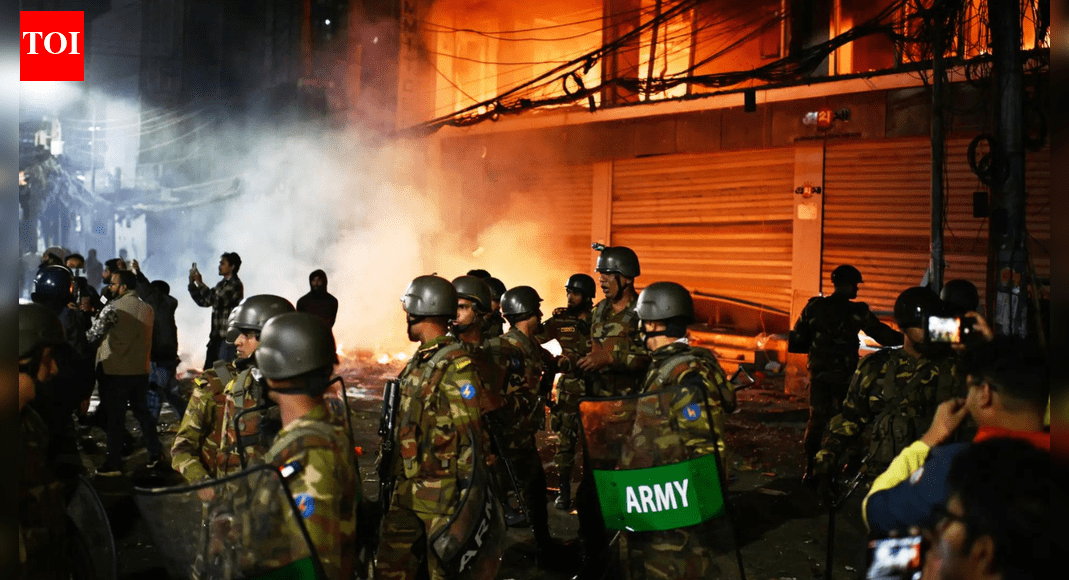
Recent reports highlight at least seven Hindu homes burnt in five days, with local media describing these as planned attacks. Authorities have arrested five suspects following two lynchings, indicating a concerning breakdown in law and order. While specific financial metrics directly linked to these incidents are not disclosed, the qualitative risk is significant.
This analysis delves into the short-term market reactions, medium-term economic ripple effects, and long-term strategic implications for investors operating within the South Asian corridor, emphasizing the need for robust financial analysis incorporating non-market factors.
Detailed Analysis
Geopolitical stability in South Asia is a critical, yet often underestimated, variable for investors focused on emerging markets, particularly India. The ongoing unrest in Bangladesh, marked by disturbing reports of targeted violence against minority communities, serves as a stark reminder of how socio-political dynamics can introduce significant non-market risks into investment equations. Periods of heightened communal tension in the region have historically correlated with increased perceived risk by international investors, impacting foreign direct investment (FDI) inflows and portfolio allocations. This isn’t about direct financial metrics in Bangladesh but the spillover effect on regional investment narratives, influencing sentiment for Stock Market India and broader South Asian economic prospects. For finance professionals, assessing sovereign risk inherently includes evaluating social cohesion and the government’s capacity to maintain order. A perceived failure in these areas, even within a neighboring country, can indirectly influence credit ratings, currency stability, and overall investor confidence in the region, including India, especially for companies with significant cross-border exposure or those operating within similar socio-political environments. The absence of specific financial metrics tied directly to these incidents in Bangladesh means the analysis must primarily focus on qualitative risk assessment and potential macroeconomic ripple effects.
The escalation of targeted attacks, including the burning of at least seven Hindu homes and two recent lynchings of individuals like 28-year-old Dipu Chandra Das, demands attention not just for humanitarian reasons but for its potential to destabilize a key regional trading partner and geopolitical ally. Such incidents, which local media describe as ‘planned attacks’ with malicious intent—like doors being fastened from the outside to trap residents—reflect deep-seated issues that extend beyond transient civil unrest. This signals a more systemic challenge to the rule of law and social harmony, factors paramount to long-term economic predictability and a stable investment climate. The evolving situation contributes to an elevated risk premium that investors might apply to the broader South Asian investment landscape, impacting sectors with regional dependencies. While authorities have arrested five suspects and initiated meetings to foster interfaith harmony, the continued occurrence of such violence raises questions about the efficacy and speed of law enforcement. For investors, delayed or ineffective justice mechanisms signal higher sovereign risk and can deter both local and foreign capital. Businesses require a predictable legal environment; persistent impunity or slow justice creates an unfavorable climate for investment, making detailed financial analysis more complex.
Although direct economic data isn’t provided in the source for these specific events, the potential economic impact channels are clear. Firstly, Foreign Direct Investment (FDI): companies considering long-term capital deployment weigh political stability heavily. Escalating unrest increases perceived risk, potentially diverting FDI to more stable regions. Secondly, trade relations: Bangladesh is an important trading partner for India. Prolonged unrest can disrupt trade routes, manufacturing output, and consumer demand, impacting Indian exporters and supply chains with dependencies in Bangladesh. This can directly affect companies listed on the NSE and BSE with significant regional exposure. Thirdly, investor perception of the broader South Asian market can suffer. When assessing emerging markets, investors often compare political stability metrics. Nations with strong institutional frameworks that swiftly address communal tensions or law and order breakdowns are generally preferred. Bangladesh’s current situation, characterized by targeted violence and concerns over law enforcement effectiveness, might lead it to be benchmarked unfavorably against regional peers demonstrating stronger social cohesion and state capacity, thereby increasing its country risk premium and making investment decisions more cautious. The perceived lack of timely justice, as highlighted by Mithun Shil, points to a critical systemic issue that can erode trust, a cornerstone for any robust investment environment.
The current spate of attacks draws unsettling parallels with previous instances of communal violence that have periodically flared up in Bangladesh. Mithun Shil’s observation, ‘A similar incident occurred at another Hindu house in a neighbouring village just three days ago. Since the law enforcement agencies haven’t caught the perpetrators yet, these incidents keep happening,’ points to a critical systemic issue. This perceived lack of timely justice and accountability may embolden perpetrators, distinguishing the current situation from more localized, isolated incidents. The absence of swift law enforcement action contributes to concerns about deterrence, impacting the long-term investment viability. The targeted nature of these arsons and lynchings, contrasted with general civil unrest, suggests an insidious agenda impacting religious harmony, which can significantly deter capital. Addressing this pattern requires not just reactive arrests but proactive measures to ensure justice and build trust across communities, thereby combating the climate of fear—a crucial element for a stable economy. The broader trend of geopolitical fragmentation means investors are increasingly sensitive to such non-economic risks. The ability of a government to protect its citizens, especially minorities, is seen as a proxy for its overall governance strength and predictability – factors that directly influence investment decisions and the perceived safety of investment. For long-term investors, the erosion of social harmony points to underlying structural weaknesses that can impede sustainable economic growth, influencing the Investment outlook for the region. Swing traders, while less concerned with long-term fundamentals, would monitor escalating tensions for potential short-term volatility in currencies or regional ETFs. Finance professionals incorporate these qualitative data points into their discounted cash flow models and risk-adjusted returns, often increasing the discount rate for assets exposed to such uncertainties. [Suggested Matrix Table: Comparison of South Asian Emerging Markets: Key Political Stability Risk Factors (Rule of Law Index, Social Cohesion Score, Government Effectiveness Index, Minority Rights Protection Index) – *Note: Specific data for this table is not available in the source content, this is illustrative of analytical framework.*]
For Retail Investors, this unrest underscores the importance of portfolio diversification and understanding geopolitical exposure, even in seemingly distant markets. While direct Indian market impact might be limited in the short term, any significant deterioration of relations or prolonged instability could affect specific sectors or companies with cross-border ties. Monitor news for signs of de-escalation or heightened government response, as this forms part of comprehensive Investment strategy. For Swing Traders, watch for short-term sentiment shifts affecting regional currencies or specific sector stocks if broader market anxiety rises. Geopolitical events can create volatility, offering both risk and opportunity, but swift reactions are key. Focus on robust risk management and tight stop-losses given the unpredictable nature of such events. Long-term Investors and Finance Professionals should integrate geopolitical risk into fundamental analysis. Evaluate companies with significant exposure to South Asian emerging markets, assessing their resilience to supply chain disruptions, political instability, and changes in regulatory environments. Key metrics to monitor include bilateral trade data between India and Bangladesh, any official statements from regional bodies (SAARC, BIMSTEC), and international human rights reports that influence global perception. The effectiveness of Bangladesh’s law enforcement and judiciary in delivering justice will be a crucial indicator for restoring long-term investor confidence. Proactive due diligence regarding Environmental, Social, and Governance (ESG) factors, particularly social stability and human rights, becomes paramount for sustainable Investment and Trading strategies in the region. The path forward for Bangladesh, and its implications for regional investment, hinges on the state’s capacity to uphold the rule of law, protect minority rights, and foster interfaith harmony. Investors will closely observe these fundamental indicators of stability, knowing they form the bedrock of sustainable economic growth and reduced geopolitical risk premium for the entire South Asian investment corridor, impacting sentiment for Sensex and Nifty.
About the Author