Key Takeaways
Leading fast-food chains like Haldiram and Wow Momos target Indian railways. Analyze the strong ROI potential, non-fare revenue impact, and investor outlook for this expansion.
Overview
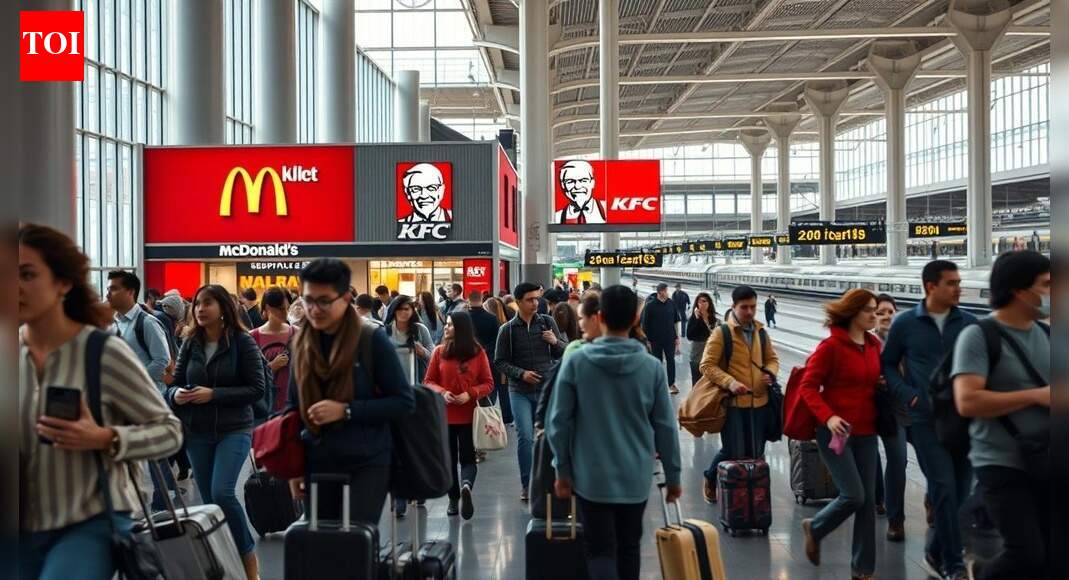
Leading fast-food and snack giants, including Haldiram and Wow Momos, are aggressively pursuing opportunities to establish premium food and beverage outlets at Indian railway stations. This strategic pivot follows the recent amendment to Indian Railways’ Catering Policy 2017, unlocking a potentially vast new market for the Quick Service Restaurant (QSR) sector.
For retail investors and finance professionals, this development signals a significant growth catalyst, potentially driving increased valuations and expanded market reach for key players. The sheer volume of passenger traffic at over 7,000 railway stations presents an unparalleled sales potential, reportedly outstripping even that of airports in terms of scale, despite potentially lower average order values.
Indian Railways reported non-fare revenue of Rs 588.07 crore in FY24, which surged to Rs 686.9 crore in FY25. This new policy aims to significantly boost these figures, tapping into a sector that currently contributes only about 3% to total railway income, far below the 30% seen in developed nations.
As these premium outlets are slated to become operational from 2026, investors should closely monitor the e-auction process for five-year licenses and the subsequent rollout strategies of the participating brands, assessing their potential impact on stock market India dynamics.
Key Data
| Metric | FY24 (₹ Crore) | FY25 (₹ Crore) | Change (%) |
|---|---|---|---|
| Indian Railways Non-Fare Revenue | 588.07 | 686.90 | 16.80% |
Detailed Analysis
The Indian QSR sector stands at the cusp of a transformative expansion, fueled by Indian Railways’ ambitious plan to upgrade passenger experience and significantly boost its non-fare revenue. This initiative represents a strategic pivot, inviting established brands like McDonald’s, KFC, Haldiram’s, Wow Momo, and Baskin Robbins into the vast network of over 7,000 railway stations. Historically, Indian Railways has focused primarily on ticket sales, with non-fare revenue contributing a mere 3% to its total income in FY25. A Niti Aayog assessment underscores this untapped potential, noting that railways in developed countries often derive around 30% of their income from non-fare sources. This policy amendment, allowing premium catering outlets, is a direct response to bridge this gap, fundamentally altering the landscape for both railway services and the QSR industry in India.
For the fast-food chains, the appeal lies in the unmatched scale. As highlighted by Sagar Daryani, President of the National Restaurants Association of India (NRAI) and co-founder of Wow! Momo, while airports may offer higher average order values, railway stations promise strong Returns on Investment (ROI) driven by sheer volume-led sales, faster turnaround times (TAT), and potentially lower entry costs compared to airport concessions. Brands will operate under five-year licenses awarded through e-auctions, with flexibility for company-owned or franchise models. Crucially, premium outlets must adhere to significantly improved quality standards, alongside paying a fixed license fee. This blend of high footfall, government backing, and a structured operational framework positions railway stations as a ‘major growth engine’ for organized food brands, creating substantial opportunities for both established players and emerging chains in the dynamic Stock Market India context.
Comparing this initiative, the potential sales volume at railway stations could conceivably dwarf that of airports. While airport F&B revenue is dominated by beverages (around 70%), similar demand patterns are anticipated at railway stations, suggesting a robust market for soft drinks, coffee, and juices. This contrasts with the current, more fragmented and often unorganized food offerings at many stations. The move aligns Indian Railways with global best practices where robust non-fare revenue streams are vital. Furthermore, the substantial increase in Indian Railways’ non-fare revenue from Rs 588.07 crore in FY24 to Rs 686.9 crore in FY25, a 16.80% jump, underscores the immediate positive impact of even preliminary measures and signals a strong growth trajectory. [Suggested Matrix Table: Comparison of Expected Revenue Drivers for QSRs at Airports vs. Railway Stations – Metrics: Average Order Value, Daily Footfall, Operational Costs, Revenue Potential, License Structure]
For retail investors and swing traders, the QSR stocks with exposure to this segment could experience upward momentum as the 2026 operational deadline approaches. Companies like Haldiram and Wow Momo, if they pursue public listings or are part of larger conglomerates, could see enhanced investor interest. Long-term investors should evaluate the operational efficiency, cost structures, and brand execution capabilities of companies securing these licenses. Key metrics to monitor include the success of the e-auctions, the number of stations covered, and early sales data post-2026. Risks include potential operational complexities at high-volume stations, intense competition for prime locations, and the need to maintain stringent quality standards. However, the opportunity to tap into India’s vast railway passenger base across diverse socio-economic groups represents a compelling long-term growth story within the broader investment landscape, signifying a fundamental shift in travel retail and QSR expansion strategies.
About the Author