Key Takeaways
Discovery of Arctic methane mounds deep in Greenland Sea reshapes climate risk models. Analyze investment implications for ESG, energy, and deep-sea tech stocks.
Overview
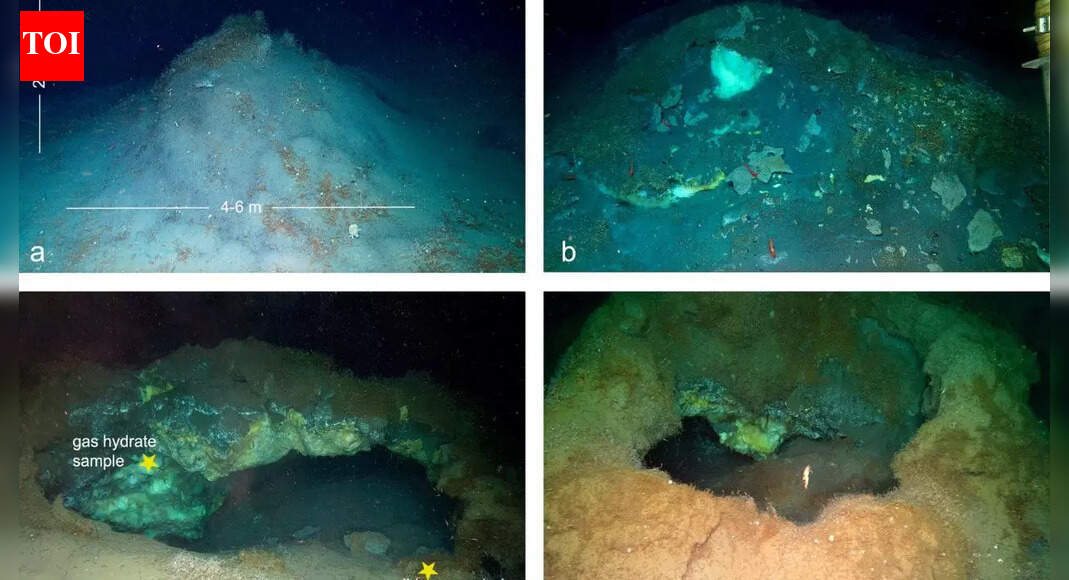
A groundbreaking scientific discovery beneath the Greenland Sea’s icy edges reveals a hidden world of methane hydrate mounds, offering critical insights into the Earth’s carbon cycle and its potential long-term climate implications. This unprecedented find, located 3.6 kilometers deep along the Molloy Ridge, challenges prior assumptions about deep-sea geological and biological interactions in the Arctic, a region central to global climate processes.
For Retail Investors, Swing Traders, Long-term Investors, and Finance Professionals, this discovery necessitates a nuanced understanding of evolving climate risk and potential shifts in energy investment strategies. While not directly impacting current market volatility, it underscores the systemic importance of deep-ocean phenomena for long-term sustainability and resource management.
Scientists identified gas hydrate mounds, crystalline ice trapping large amounts of methane, at depths of 3,640 meters—among the deepest known formations. These formations act as a “long-term trap,” presently hindering massive methane release into the water body.
Investors should monitor future research into Arctic methane stability, advancements in deep-sea exploration technology, and the integration of such findings into global climate and carbon market models, crucial for informed investment decisions in 2025 and beyond.
Detailed Analysis
The global investment landscape increasingly integrates climate risk and Environmental, Social, and Governance (ESG) factors into portfolio strategies. Historically, discussions around methane release and climate impact have focused on shallower Arctic permafrost thaw and continental shelf hydrates. This new discovery of methane hydrate mounds deep beneath the Greenland Sea introduces a novel dimension to this complex equation, shifting the analytical lens to ultra-deep ocean environments. While current conditions on the Molloy Ridge indicate a stable methane trap, the very existence of such a significant, previously unknown reservoir necessitates a reassessment of long-term carbon cycle models and their financial implications. The financial sector must now consider the potential for these deep-sea systems to react to future oceanic warming, even if distant, and the resulting cascading effects on global climate and economic stability.
Detailed analysis of the scientific findings highlights several key aspects. The methane hydrate mounds are situated along the Molloy Ridge, recognized as one of the world’s deepest mid-ocean ridges. Tectonic activity here creates channels, facilitating methane gas flow from deeper Earth layers. As this methane encounters lower ocean floor temperatures, it either forms stable hydrates or seeps out. Crucially, the discovery of chemosynthetic organisms, thriving on methane seeps at 3,640 meters without sunlight, demonstrates a robust biological interaction that effectively consumes and cycles this methane locally. This complex interaction forms a natural long-term trap, currently preventing large-scale methane escape into the ocean column. From an investment perspective, this natural mechanism offers a temporary buffer against catastrophic methane release from this specific deep-sea source. However, the reliance on such intricate geological and biological stability means any significant environmental shifts, such as unforeseen deep-ocean warming, could have profound, albeit currently unquantifiable, financial repercussions for sectors sensitive to climate change and carbon pricing.
Comparing this deep-sea methane stability to other Arctic methane concerns, such as those associated with rapidly thawing shallow permafrost, reveals a crucial distinction. While shallower methane reservoirs face more immediate and discernible risks from current warming trends, the newly discovered deep-sea sites introduce a layer of long-term, systemic risk, requiring enhanced predictive modeling. This finding directly impacts the validity and completeness of current climate models, which underpin many financial risk assessments and green investment strategies. Investment in advanced deep-sea exploration technologies, such as the remotely operated robotic vehicles instrumental in this discovery, also gains renewed significance. Companies specializing in marine robotics, deep-sea sensing, and data analytics could see increased interest, although specific publicly traded entities for such niche applications are not readily available. This scientific advancement underscores the need for financial professionals to broaden their scope of environmental risk analysis beyond conventional metrics and geographical boundaries.
For investors, this discovery serves as a potent reminder of the interconnectedness of Earth’s systems and their eventual financial ramifications. Retail Investors should consider diversifying into ESG-focused funds that rigorously assess climate resilience and adaptive technologies, viewing such scientific findings as indicators of systemic risk. Swing Traders will find no immediate trading signals, but could monitor news flows around Arctic climate research for potential market-moving developments in commodities or deep-sea technology sectors. Long-term Investors and Finance Professionals must integrate this ultra-deep ocean methane stability into comprehensive climate risk frameworks, evaluating potential impacts on energy transition portfolios, carbon credit markets, and infrastructure investments. While this deep-sea methane reservoir currently acts as a stabilizing force, its long-term stability is contingent on climatic conditions, making ongoing scientific monitoring and robust climate scenario planning essential for future investment prudence. The critical takeaway is that investment decisions must increasingly account for complex, long-duration environmental factors, leveraging every piece of scientific data to refine risk assessments.
About the Author