Key Takeaways
Tarique Rahman’s return to Bangladesh marks a pivotal moment for upcoming general elections. Explore political implications and key stakeholders for 2025.
Overview
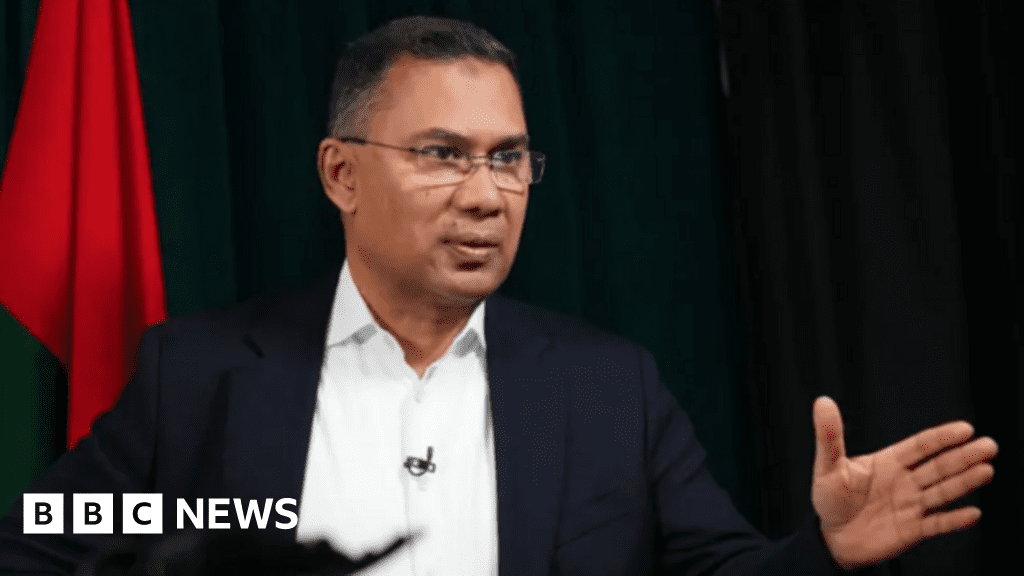
In a significant political development, Tarique Rahman, long considered the front-runner for Bangladesh’s premiership, has returned after 17 years in exile, marking a pivotal moment ahead of landmark general elections. This return reshapes the landscape of Bangladesh’s government and policy, drawing intense scrutiny from News Readers and Political Analysts globally.
Rahman’s re-entry into national politics coincides with the ousting of former Prime Minister Sheikh Hasina last year, who now lives in exile in India. This shift signifies a potential reversal of political fortunes and a profound change in leadership dynamics, prompting policy watchers to consider the immediate implications for governance in Bangladesh.
The 60-year-old scion of the influential Zia family and leader of the Bangladesh Nationalist Party (BNP), Rahman had resided in London since 2008. His return follows his exoneration from various criminal investigations initiated during the previous Awami League administration, contrasting sharply with Hasina’s recent death sentence in absentia.
Informed Citizens and Policy Watchers will closely monitor the upcoming elections, deemed among Bangladesh’s most consequential, to observe how this dramatic political realignment influences the nation’s democratic future and regional stability.
Key Data
| Political Figure | Current Status | Party Affiliation | Legal Standing/Allegations |
|---|---|---|---|
| Tarique Rahman | Returned from 17-year exile, Front-runner for PM | Bangladesh Nationalist Party (BNP) | Cleared of all criminal charges post-regime fall |
| Sheikh Hasina | Ousted PM, Living in exile in India | Awami League | Sentenced to death (in absentia) for suppressing anti-government protests; denies crimes against humanity |
Detailed Analysis
Tarique Rahman’s return to Bangladesh, concluding a 17-year period of self-imposed exile in London, heralds a profound inflection point in the nation’s political trajectory. His reappearance on the national stage is not merely a personal journey but a significant political maneuver, carefully timed ahead of landmark general elections slated for the new year. This development unfolds against a backdrop of intense political volatility and a long-standing rivalry that has shaped Bangladesh’s governance for decades. Rahman, as the scion of the influential Zia family and son of former prime minister Khaleda Zia, carries a considerable political legacy, positioning him as a central figure for the Bangladesh Nationalist Party (BNP). The BNP’s declared ambition to return to power underscores the gravity of these elections, which are poised to redefine the country’s leadership and policy direction. The narrative of Rahman’s exile, commencing in 2008, and his subsequent return is deeply intertwined with the shifting power dynamics between the two dominant political families, encapsulating a cycle of political ascendancy, opposition, and legal challenges. His previous entanglement in various criminal investigations, initiated during the Awami League’s tenure under Sheikh Hasina, and his subsequent exoneration after her regime’s fall, illuminates the highly politicized nature of judicial processes in periods of governmental transition within Bangladesh. This historical context is vital for understanding the current political landscape and the stakes involved for all stakeholders.
The immediate and pronounced significance of Rahman’s return is amplified by the circumstances surrounding former Prime Minister Sheikh Hasina. Her ousting last year, followed by her current exile in India, represents a dramatic reversal of fortune for the long-reigning Awami League leader. Moreover, the legal proceedings against her, culminating in a death sentence delivered in absentia for her alleged role in suppressing anti-government protests, underscore the severe consequences of political transitions in the region. UN investigators’ findings, which noted up to 1,400 fatalities in student-led unrest, add a somber and critical dimension to the charges Hasina faces, even as she denies committing crimes against humanity. This legal and political isolation of Hasina is further compounded by the Awami League’s diminished electoral prospects; the party is deemed unlikely to be permitted to participate in the upcoming general elections. This exclusion profoundly alters the competitive dynamics, potentially paving a clearer path for the BNP and Tarique Rahman. His status as the front-runner is thus not merely a testament to his party’s strength but also a direct consequence of the political incapacitation of his primary adversary. The elections, widely characterized as among Bangladesh’s most consequential, are set to occur in an environment significantly devoid of a major political contender, raising questions about the fairness and representativeness of the democratic exercise.
A comparative analysis of the political trajectories of Tarique Rahman and Sheikh Hasina reveals a recurring pattern of power struggles, exiles, and legal challenges that have come to define Bangladesh’s political narrative. Both figures, representing the two most prominent political dynasties, have experienced periods of governmental authority followed by spells of political vulnerability or forced absence. Rahman’s 17 years in London mirror, in a different form, Hasina’s current exile in India, highlighting a cyclical nature of political fortunes. The contrasting legal outcomes for the two leaders — Rahman’s clearance from charges following Hasina’s ousting versus Hasina’s death sentence post-removal from power — vividly illustrates how judicial processes can become entwined with political transitions. This dynamic points to a persistent challenge in ensuring judicial independence amidst intense political rivalry. The potential exclusion of the Awami League from the upcoming elections, a party that has significantly shaped Bangladesh’s policy and governance for extended periods, represents a critical shift. Such an exclusion could lead to a less competitive electoral process, potentially concentrating power within the BNP. Historically, the absence of strong opposition has often raised concerns about the balance of power and the health of democratic institutions. This situation prompts a deeper look into the implications for governance and how future political shifts might be managed within a framework that aims for both stability and representative democracy. This cyclical pattern of political exclusion and return warrants close observation, suggesting a continuous evolution in the nation’s political landscape, often fraught with inherent risks. [Suggested Matrix Table: Key Political Figures: Status, Allegations, and Trajectory]
For News Readers, this development mandates a close watch on the unfolding political narrative, particularly the nuances of the election campaign and the rhetoric emanating from the BNP. The focus will be on the BNP’s specific policy pronouncements, which have been less articulated during Rahman’s exile. Policy Watchers will scrutinize the implications for future governance and potential policy shifts. A new BNP government might pursue different economic orientations, foreign policy alignments, and domestic reforms, particularly concerning judicial independence and civil liberties, given the historical context of politically motivated legal actions. Informed Citizens and Political Analysts should consider the broader implications for Bangladesh’s democratic framework and political stability. The exclusion of a major party could invite questions about the long-term health of multi-party democracy and the potential for a renewed cycle of political vendettas. Key metrics to monitor include the transparency and fairness of the election process, the public’s reaction to Rahman’s return and his platform, and any subsequent legal or political challenges to the election results. The post-election period will be critical in observing how the new government manages internal dissent, international relations, and the deep-seated political divisions that have characterized Bangladesh’s modern history. This complex political environment presents both potential opportunities for new policy directions and significant risks related to political fragmentation and governance stability in the region.
About the Author