Key Takeaways
CBI will move Supreme Court challenging former BJP MLA Kuldeep Singh Sengar’s bail in Unnao rape case. Understand legal implications and policy impact.
Overview
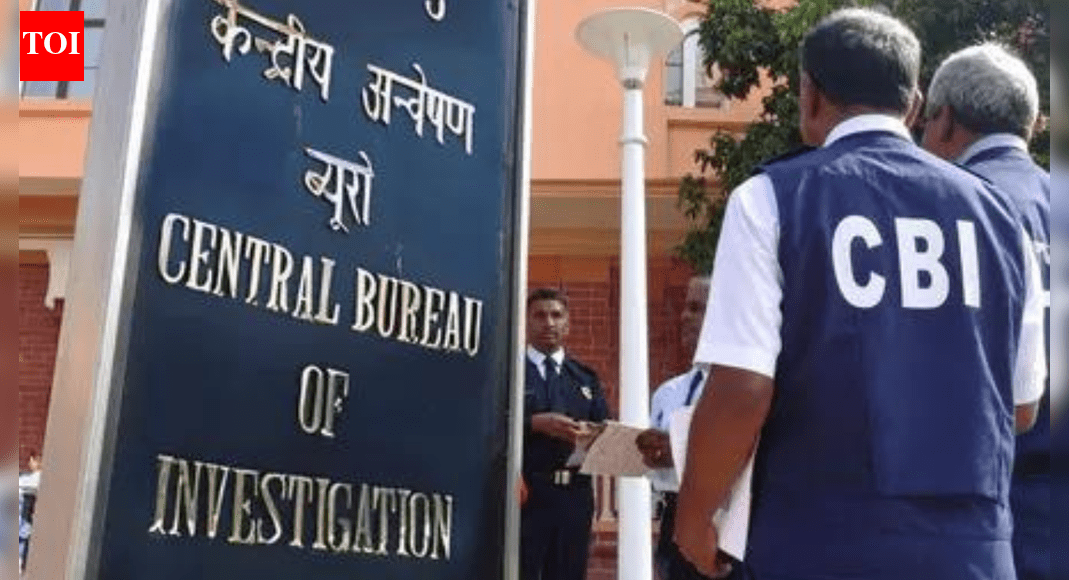
The Central Bureau of Investigation (CBI) has decided to promptly approach the Supreme Court to challenge the Delhi High Court’s recent order, which suspended the life sentence and granted bail to former BJP MLA Kuldeep Singh Sengar in the high-profile 2017 Unnao rape case. This pivotal legal maneuver intensifies the ongoing judicial scrutiny surrounding a case that has garnered significant national attention and sparked widespread debate on political accountability and victim justice.
This development carries substantial implications for News Readers, Policy Watchers, Informed Citizens, and Political Analysts, underscoring the complexities of legal processes involving influential public figures. The CBI’s decision reflects a commitment to ensuring the enforcement of judicial pronouncements in sensitive cases, particularly those that challenge the societal fabric and test the efficacy of the justice delivery system.
Sengar, despite the Delhi High Court’s bail order, will remain incarcerated as he is concurrently serving a separate 10-year jail term in another case related to the custodial death of the rape survivor’s father. The Delhi High Court suspended his life sentence after noting he had already spent approximately seven years and five months in prison.
The upcoming Supreme Court hearing will be a critical juncture, drawing attention to the balance between judicial discretion in bail matters and the broader public interest in upholding convictions for severe crimes, especially within India Politics and its legal framework.
Detailed Analysis
The Unnao rape case represents a deeply unsettling chapter in India’s recent legal and political history, bringing to the forefront critical questions about judicial independence, political influence, and the protection of vulnerable citizens. The case, involving a minor girl’s rape by a then-sitting MLA, gained national prominence due to the allegations of political cover-up, subsequent threats to the survivor and her family, and a series of tragic incidents including the custodial death of the survivor’s father and a fatal accident involving her aunts. The Supreme Court itself intervened in August 2019, transferring all related cases from Uttar Pradesh to Delhi to ensure a fair trial, highlighting the extraordinary circumstances surrounding the proceedings. Historically, cases involving high-profile political figures accused of grave crimes often face intense public and media scrutiny, placing immense pressure on the judicial system to uphold the rule of law without bias. This particular case has continuously served as a litmus test for the robustness of India’s legal mechanisms in addressing abuses of power, setting a precedent for how the government and judiciary collectively respond to such allegations and ensure justice is not only done but also seen to be done, irrespective of the accused’s stature.
The CBI’s immediate decision to challenge the Delhi High Court’s bail order reflects a determined stance to ensure the conviction and life sentence awarded to Kuldeep Singh Sengar remains in force. The agency’s spokesperson confirmed their intent to file a Special Leave Petition before the Supreme Court, reiterating their strong opposition to the suspension of his life sentence. This move is particularly significant given the High Court’s rationale for granting bail, which cited Sengar’s seven years and five months already spent in prison while his appeal against conviction and sentence is pending. However, the High Court also imposed stringent conditions, including a personal bond of Rs 15 lakh with three sureties of the same amount, a prohibition on entering a five-kilometre radius of the survivor’s residence in Delhi, and a restraint from issuing any threats to her or her mother. These conditions underscore the court’s recognition of the serious nature of the case and the ongoing safety concerns. Despite these developments, Sengar’s continued incarceration due to his 10-year term in the custodial death case offers a temporary safeguard, but the CBI’s challenge aims for a more definitive resolution on the rape conviction itself, ensuring that the legal process fully runs its course at the apex court. The detailed legal arguments by both sides, focusing on judicial precedent for bail suspension versus the gravity of the crime and its impact, will be crucial in the upcoming Supreme Court proceedings.
Comparing this judicial development within the broader context of India Politics, it mirrors a recurring tension between legal proceduralism and the public demand for swift and unequivocal justice, especially in cases of sexual violence involving powerful individuals. The Delhi High Court’s decision, while adhering to certain legal principles regarding time served during appeal, contrasts sharply with the survivor’s vehement reaction, who termed the bail as “kaal” or death for her family, expressing fears for their safety and a deepening of distrust among survivors of sexual violence. Similar high-profile cases in India have often seen a prolonged legal battle where bail decisions at various judicial levels become a focal point of public discourse, impacting public confidence in the justice system. The transfer of the case by the Supreme Court from Uttar Pradesh to Delhi earlier signified the need for an unbiased environment, and the current appeal continues this trajectory of apex judicial oversight. Stakeholders, including legal analysts, women’s rights activists, and informed citizens, will be closely watching how the Supreme Court balances the accused’s rights to appeal and bail against the imperative to protect victims and ensure societal justice. The case also offers a comparative lens on judicial responses across different courts, highlighting the interpretive nuances of bail provisions and the importance of a consistent approach in matters of public interest, particularly when policy implications for victim safety and perpetrator accountability are at stake.
For News Readers, Policy Watchers, Informed Citizens, and Political Analysts, the CBI’s decision to move the Supreme Court signals a critical phase in the Unnao rape case, embodying the ongoing struggle for justice in India. The immediate takeaway is the re-escalation of this complex legal battle to the highest judicial authority, ensuring continued scrutiny on political accountability and the broader justice system. Policy watchers should observe how the Supreme Court’s eventual ruling might influence future bail guidelines and legal interpretations in cases involving serious crimes by public figures, potentially shaping legal policy on victim protection and offender deterrence. The survivor’s public protest and meeting with prominent political figures like Rahul Gandhi and Sonia Gandhi further highlight the intersection of legal battles with political advocacy, underscoring the mechanisms through which citizens seek redress and support when confronting powerful adversaries. The core issue remains the safety and security of the survivor and her family, especially after her allegations of withdrawn security detail. Therefore, News Readers should monitor the Supreme Court’s hearing schedule and the specific arguments presented by both the CBI and Sengar’s legal team. Political analysts will find this case a significant study in the dynamics of political influence within legal processes and the resilience of activists and victims in their pursuit of justice, offering insights into the evolving landscape of judicial oversight and democratic checks and balances in India.
About the Author