Key Takeaways
A man identified as Saiful was killed in Dhaka, Bangladesh, by a crude bomb amid ongoing unrest. Get the full details, context of recent violence, and its implications.
Overview
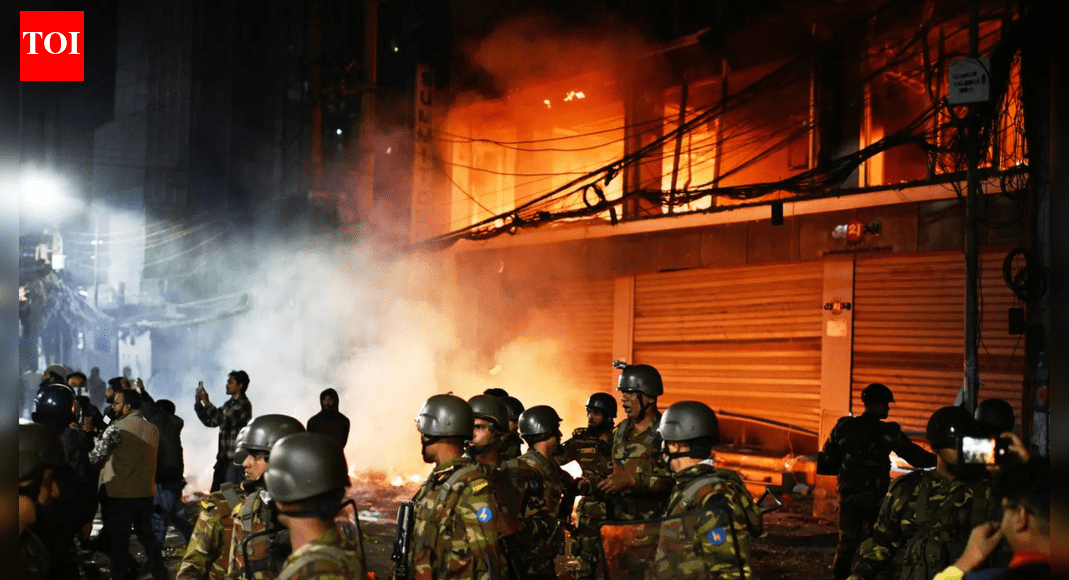
A recent escalation in the ongoing Bangladesh unrest saw a man tragically killed on Wednesday following a crude bomb attack in Dhaka. The deceased, identified as Saiful, was struck by a bomb hurled from a flyover in the city’s Moghbazar area, highlighting the volatile current affairs in the South Asian nation.
This incident underscores the continuing tensions gripping Bangladesh, drawing attention from general readers and news consumers globally. The violence reflects deeper societal and political challenges, marking a significant moment in today’s updates from the region.
The attack occurred around 7 PM, confirmed by Md Mohiuddin, inspector (operations) of Hatirjheel Police Station. Saiful was reportedly having tea at a roadside stall when the bomb hit him.
The immediate fallout signals urgent considerations, with broader implications for stability in Bangladesh, a critical focus area for India News and regional security.
Detailed Analysis
The tragic death of Saiful in Dhaka adds another grim chapter to Bangladesh’s escalating unrest, a situation characterized by profound political and social turmoil. This latest act of violence, a crude bomb attack in a bustling urban area, reflects a concerning pattern of instability that has been building across the nation. The roots of this turmoil can be traced back to significant events, including the death of prominent student activist Sharif Osman Hadi, who succumbed to injuries following an assassination attempt in Dhaka. Hadi’s critical role in last year’s anti-government protests, which ultimately led to the ousting of Sheikh Hasina’s administration, made his death a powerful catalyst for widespread public uproar. Interim leader Muhammad Yunus publicly vowed justice and ‘no leniency’ for those responsible, yet the violence persists.
The specific incident involving Saiful occurred as he was taking tea at a roadside stall in Moghbazar, Dhaka. A crude bomb, thrown from an overhead flyover, tragically ended his life around 7 PM on Wednesday. This detail, confirmed by Hatirjheel Police Station’s inspector Md Mohiuddin, paints a vivid picture of random violence affecting ordinary citizens. The attack on Saiful unfolds amidst a backdrop of several high-profile incidents that have inflamed public sentiment. Critically, the lynching of Dipu Chandra Das, a Hindu youth, in Mymensingh just last week over alleged blasphemy, further intensified the nation’s fragile state. His body was also reportedly set on fire. This horrifying act sparked widespread protests by diverse groups, including factory workers, students, and human rights organizations, across Dhaka and other regions, signaling deep societal fractures.
Comparing the current wave of unrest to previous periods of instability in Bangladesh reveals a distressing trend of escalating violence and communal tensions. While political assassinations and mob justice are not entirely new to the region, the proximity and severity of recent events – Hadi’s death, Das’s lynching, and now Saiful’s killing – suggest a heightened state of volatility. The mob attack on Dipu Chandra Das notably coincided with the death of Sharif Osman Hadi, whom the source identifies as a leader of the radical right-wing cultural group Inqilab Mancha. This confluence of events indicates a complex interplay of political grievances, religious sensitivities, and social unrest, making the current situation particularly challenging for the interim government to manage effectively and threatening broader regional stability.
For general readers and news consumers, these developments in Bangladesh highlight the severe human cost of political and social instability. The arbitrary nature of Saiful’s death, coupled with the communal violence seen in Dipu Chandra Das’s lynching, underscores the pervasive risk faced by ordinary citizens. Monitoring the government’s response to these incidents, including any arrests or judicial proceedings, will be crucial. Observers should also watch for further protests, any shifts in government policy aimed at restoring order, or efforts to address underlying communal tensions. The situation demands continued attention as it not only impacts Bangladesh but also holds significant implications for regional peace and the well-being of its diverse communities.
About the Author