Key Takeaways
Assam’s Karbi Anglong violence highlights regional instability, impacting investor sentiment. Analyze socio-political risks, legal hurdles, and implications for India’s investment landscape in 2025.
Overview
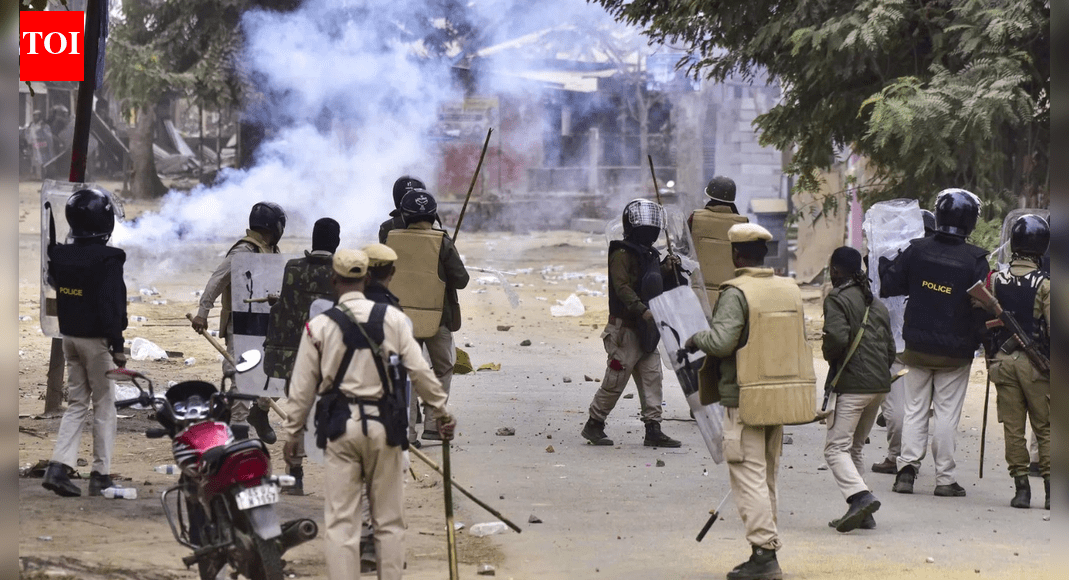
Recent reports confirm the deployment of the Army in violence-hit West Karbi Anglong, Assam, following escalated land dispute protests. This significant law and order situation, coupled with mobile internet suspension and curfew-like restrictions, signals heightened regional instability, drawing immediate attention from Stock Market India participants.
For Retail Investors, Swing Traders, and Long-term Investors, this unrest underscores the critical importance of socio-political stability as a direct factor influencing regional investment viability. Such events can trigger unforeseen risks for businesses operating in or reliant on the affected areas, necessitating careful Financial Analysis.
Key developments include two fatalities, dozens injured, and 48 police personnel hurt amidst clashes over alleged illegal settlements. Assam CM Himanta Sarma cited a Gauhati High Court stay on evictions, adding a legal dimension to the escalating tensions.
This situation demands a detailed examination of potential market impacts, especially concerning long-term infrastructure projects and local economic stability, which prudent Trading strategies must now factor in.
Detailed Analysis
The recent deployment of Army personnel in Assam’s Karbi Anglong district, a region already under the protective ambit of the Sixth Schedule of the Constitution, transcends a mere law and order incident to become a significant marker of regional socio-political risk for the broader Indian investment landscape. Historically, areas with complex land rights, particularly those with constitutional safeguards for indigenous communities, have presented unique challenges for economic development and external capital infusion. The current unrest, rooted in long-standing tensions over alleged illegal encroachments on tribal lands, exemplifies how deep-seated societal issues can rapidly escalate, creating an unpredictable environment for potential investors in regional ventures.
Detailed accounts from the ground confirm two fatalities and dozens injured, with 48 police personnel, including senior officers, also sustaining injuries in confrontations involving crude bombs, bows, and arrows. The destruction of shops in Kheroni, a trading town, represents direct economic loss and disrupts local commerce. Authorities responded with curfew-like restrictions and mobile internet suspension in two districts, severe measures that inevitably hamper business operations and communication. Critically, CM Himanta Sarma’s acknowledgement of a Gauhati High Court stay on evictions introduces a legal and regulatory overhang, suggesting that immediate resolution of the core land dispute is complicated by judicial intervention. This judicial impediment prolongs uncertainty, which directly impacts investor confidence by blurring the regulatory pathways for land-dependent projects and creating an elevated risk premium for any regional allocation.
Comparing this localized instability to similar instances of unrest in other resource-rich or constitutionally protected zones across India reveals a consistent pattern: such events can significantly impact regional GDP growth projections and deter foreign and domestic direct investment. The sustained suspension of mobile internet services, while aimed at controlling misinformation, invariably stifles digital economic activities and disrupts supply chains, especially for smaller businesses and local trading networks that rely on seamless connectivity. This regional disturbance suggests a need for a re-evaluation of the political and social stability factor in investment models for North-Eastern India, potentially shifting focus towards sectors less reliant on land-intensive operations or those with robust community engagement strategies, distinguishing them from traditional heavy industries.
For Retail Investors and Swing Traders, monitoring the de-escalation of the situation and any governmental or judicial pronouncements will be crucial for assessing short-term market reactions to companies with significant operational footprints or supply chain exposure in Assam. Long-term Investors and Finance Professionals, however, must consider the broader implications of such events on regional governance quality and regulatory predictability. This incident highlights the need for rigorous due diligence beyond standard financial metrics, incorporating socio-political risk analysis and the strength of legal frameworks governing indigenous land rights. The eventual resolution of the Gauhati High Court stay and the government’s long-term strategy to address tribal land demands will be key indicators for the future investment climate, shaping perception of stability and ease of doing business in critical regions. Investors should monitor policy developments concerning the Sixth Schedule areas, as these will define the operating environment for various sectors.
About the Author