Key Takeaways
Zelensky unveils a new Ukraine peace plan. Analyze potential market shifts, commodity price stability, and investment opportunities for 2025 in India.
Overview
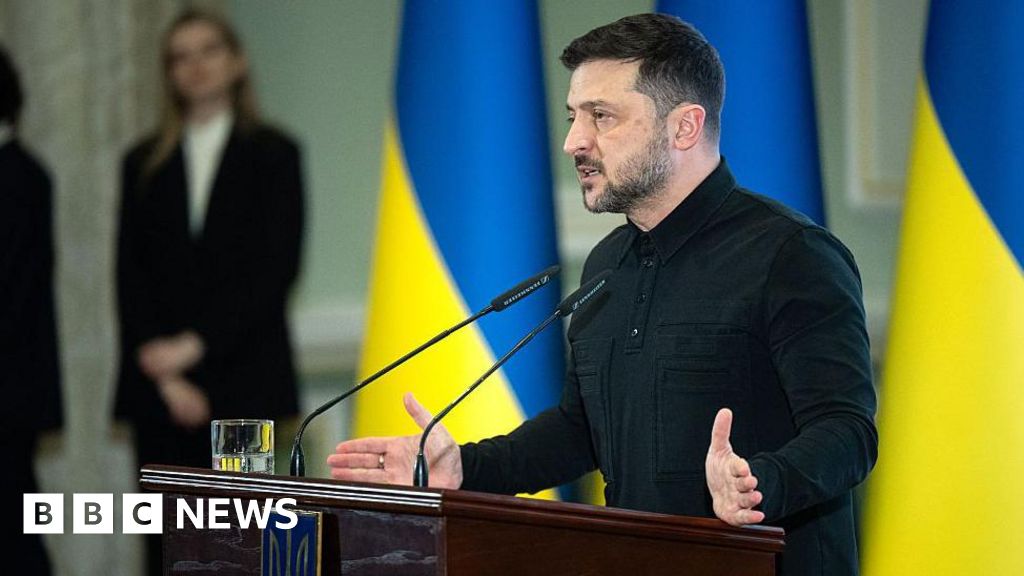
The latest geopolitical development concerning Ukraine has introduced a potential shift in the global risk landscape, warranting close observation from Stock Market India participants. Ukrainian President Volodymyr Zelensky has detailed an updated 20-point peace plan, offering Russia a possible withdrawal of Ukrainian troops from the eastern regions, a key demand from Moscow, alongside proposals for security guarantees.
For Retail Investors, Swing Traders, and Long-term Investors, this development signals a potential de-escalation that could influence commodity prices, specifically energy and agricultural goods, and broader investor sentiment. The resolution of prolonged conflicts often reduces geopolitical risk premiums across various asset classes.
Key proposals include the establishment of a “free economic zone” in Donbas and a demilitarised zone around the Zaporizhzhia nuclear plant, alongside Russian troop withdrawals from Dnipropetrovsk, Mykolaiv, Sumy, and Kharkiv regions. These elements directly relate to economic reconstruction and energy stability.
This evolving situation necessitates a careful financial analysis to understand short, medium, and long-term implications for global and Indian markets, guiding prudent Investment and Trading strategies.
Detailed Analysis
Geopolitical tensions invariably cast long shadows over global financial markets, manifesting as increased volatility and elevated risk premiums. The protracted conflict in Ukraine, since its inception, has been a significant driver of market uncertainty, particularly impacting energy prices, global supply chains, and sovereign debt markets across Europe and beyond. Periods of heightened conflict have historically correlated with shifts in investor confidence, leading to capital flight from riskier assets and a reallocation towards safe havens. Conversely, prospects of de-escalation, even early-stage peace overtures, often trigger a positive market response, reflecting reduced systemic risk. This current proposal, therefore, arrives at a critical juncture, providing a potential pathway to stability, which could ripple through various global economic indicators and influence future Investment decisions, especially for discerning Finance Professionals monitoring Stock Market India.
Zelensky’s 20-point plan, an update to an earlier 28-point document, outlines several elements with direct financial ramifications. The potential withdrawal of Ukrainian troops from the eastern Donetsk region, a long-standing Russian demand, could pave the way for a more stable regional operating environment. This de-escalation directly addresses one of the primary drivers of volatility in global commodity markets, particularly crude oil and natural gas prices, which have seen significant swings based on conflict intensity. Furthermore, the proposition of a “free economic zone” in the Donbas region, alongside a similar zone around the Zaporizhzhia nuclear power plant, indicates a strategic focus on economic revival and energy security. The withdrawal of Russian troops from key regions like Dnipropetrovsk, Mykolaiv, Sumy, and Kharkiv points to potential reconstruction booms and the restoration of normal economic activity, enhancing investor confidence in Ukraine’s long-term viability, and indirectly influencing global perceptions of risk impacting broader indices like the NSE and BSE.
Analyzing the potential impact of this peace plan requires drawing parallels with historical geopolitical resolutions. While direct comparisons are challenging due to the unique nature of each conflict, past instances of de-escalation have often led to initial market rallies driven by sentiment, followed by sustained growth contingent on effective implementation. For example, ceasefires or peace treaties in other regions have typically seen a decline in defense sector stocks, an uplift in infrastructure and rebuilding-focused equities, and a normalisation of commodity prices. The proposal’s emphasis on strong security guarantees from the US, NATO, and European partners suggests a robust framework designed to prevent future conflicts, potentially lowering long-term geopolitical risk premiums. This could reposition various global Investment vehicles, prompting Finance Professionals to re-evaluate their risk models. However, the plan’s success hinges on Russian acceptance and resolution of “sensitive issues” at the “leaders’ level,” indicating considerable execution risk. [Suggested Matrix Table: Geopolitical Risk Premium Index (Conceptual) – Pre-Plan Announcement vs. Post-Announcement – Implication for Global Equity & Commodity Markets]
For Retail Investors and Swing Traders, this peace plan introduces a period of heightened market sensitivity to geopolitical headlines. Short-term volatility around news updates offers potential trading opportunities but also demands stringent risk management. Monitoring official statements from all parties, commodity price movements, and global equity index reactions (e.g., Nifty and Sensex responses to international news) remains crucial. Long-term Investors and Finance Professionals should assess the structural implications for global energy markets, agricultural sectors, and companies with exposure to reconstruction efforts or supply chain vulnerabilities. A successful implementation could usher in an era of reduced risk and new investment avenues, while a failure could re-ignite volatility. Investors should strategically position portfolios to balance exposure to potential recovery plays with defensive assets, preparing for diverse scenarios in this evolving global financial landscape.
About the Author