Key Takeaways
Brazil Supreme Court grants Bolsonaro prison leave for surgery amidst legal complexities. Understand the policy implications, political maneuvering, and impact on governance.
Overview
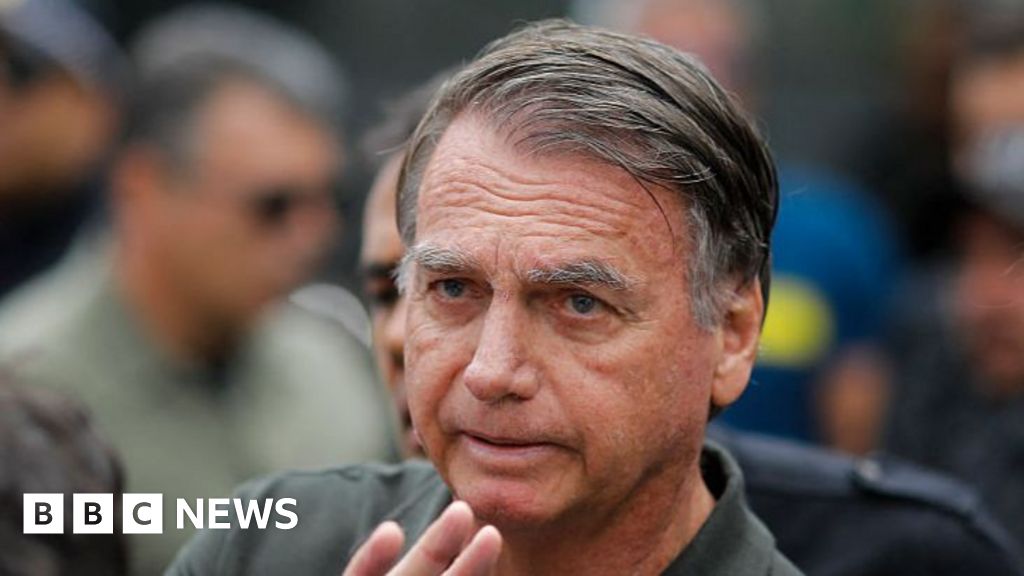
The Brazil Supreme Court has granted former President Jair Bolsonaro temporary permission to leave prison for a hernia operation scheduled for Christmas Day 2025. This judicial decree by Justice Alexandre de Moraes allows Bolsonaro, currently serving a 27-year sentence for coup plotting, to receive necessary medical care amidst ongoing health complications.
For News Readers and Political Analysts, this decision highlights the intricate balance between judicial authority, public health, and political accountability in a high-profile case. It underscores the continued legal scrutiny faced by a former head of state.
Bolsonaro, 70, has endured health issues since a 2018 stabbing and recently received mandated full-time medical care. His 27-year prison sentence stems from plotting a coup following his 2022 election loss.
This development occurs as Brazil’s political landscape grapples with legislative efforts to reduce his sentence, setting the stage for further executive and parliamentary clashes.
Key Data
| Aspect | Judicial Ruling (Current) | Legislative Proposal (Bill) | Executive Stance |
|---|---|---|---|
| Sentence for Coup Plotting | 27 years | Less than 3 years | Veto Promised |
| Medical Care Status | Full-time care mandated | N/A | N/A |
Detailed Analysis
The Supreme Court’s decision to grant Brazil’s former President Jair Bolsonaro temporary release for surgery underscores the complex interplay of legal due process and political realities for high-profile figures. This ruling follows a trajectory of events since his 2018 presidential campaign, marked by a stabbing incident that has led to persistent health complications. Bolsonaro’s political journey culminated in his defeat in the 2022 election to left-wing rival Luiz Inácio Lula da Silva, subsequently leading to a 27-year prison sentence for plotting a coup d’état. The current legal leniency for medical reasons stands in stark contrast to his severe conviction, reflecting a judiciary balancing humanitarian concerns with punitive justice. This historical context of both personal adversity and significant political misconduct is crucial for understanding the current judicial and legislative landscape surrounding Bolsonaro’s future.
Justice Alexandre de Moraes, who presided over Bolsonaro’s trial, explicitly granted permission for the former president to transfer from federal police jail in Brasilia to a hospital for a hernia operation on December 25th. This specific medical authorization follows a previous mandate by Justice Moraes in November, ensuring Bolsonaro received full-time medical care due to his ongoing health issues. While the Supreme Court facilitated this medical leave, the broader political arena is simultaneously debating a bill passed by the lower house. Legal experts suggest this bill could drastically reduce Bolsonaro’s 27-year sentence to less than three years. This legislative move has sparked considerable public reaction, including tens of thousands protesting against it in Brazil’s main cities. Meanwhile, US President Donald Trump, who previously labelled Bolsonaro’s investigation a “witch hunt,” welcomed the bill’s passage, indicating an international dimension to the domestic political drama.
The current situation highlights a striking divergence in how different branches of Brazil’s government are addressing Bolsonaro’s legal status. On one hand, the Supreme Court, through Justice Moraes, demonstrates a compassionate approach to his health needs, granting temporary medical leave. On the other, the legislative branch has advanced a bill that challenges the judiciary’s severe sentencing for coup plotting, potentially softening the punitive outcome significantly. This creates a direct policy conflict with President Lula, who has vowed to veto the bill, though acknowledging that a conservative Congress could override his decision. The tension between judicial rulings, legislative actions, and executive power characterizes this complex period. This case also draws parallels with other high-profile political leaders facing legal challenges, where public sentiment and legislative maneuvers often intersect with judicial independence.
For News Readers, Policy Watchers, Informed Citizens, and Political Analysts, this unfolding narrative offers critical insights into the resilience of democratic institutions under pressure. The Supreme Court’s allowance for medical leave, while routine in many contexts, takes on heightened significance given Bolsonaro’s criminal conviction and flight risk designation. Stakeholders must monitor President Lula’s promised veto and the subsequent actions of the largely conservative Congress, as an override would dramatically alter the policy landscape regarding high-profile political accountability. This scenario underscores the dynamic nature of judicial enforcement when challenged by legislative will and public opinion, both domestically and internationally. The next few weeks, particularly concerning the bill’s fate, will be pivotal in shaping perceptions of justice and political stability in Brazil.
About the Author