Key Takeaways
India’s CDS highlights AI military tech & quantum computing as crucial for modern defense. Discover how convergence warfare reshapes security for tech innovators.
Overview
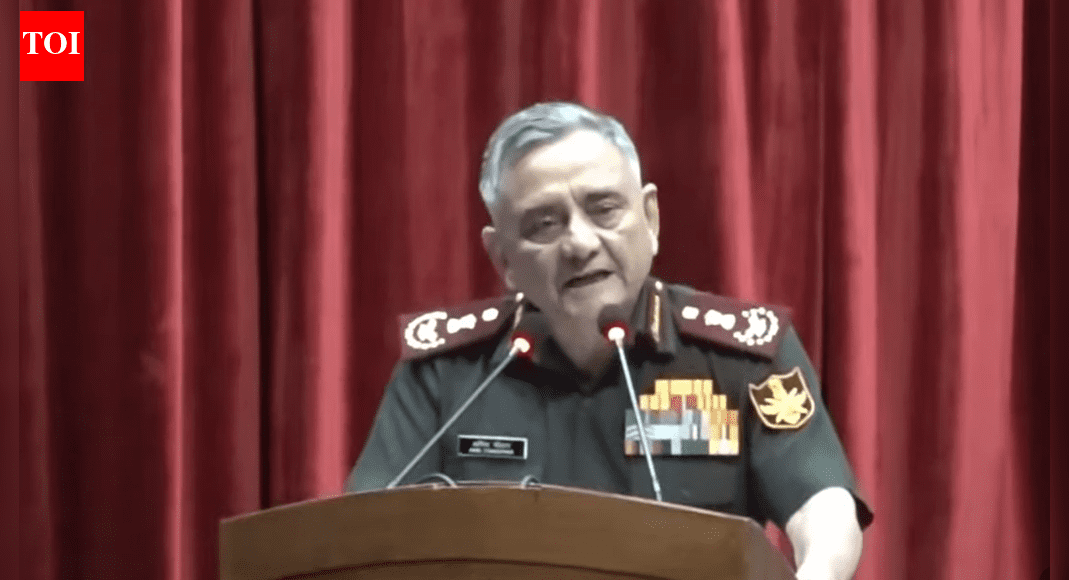
India’s Chief of Defence Staff, General Anil Chauhan, recently underscored the critical role of cutting-edge AI military tech and other advanced innovations in future defense strategies. Speaking at IIT Bombay, he highlighted the nation’s need to prepare for evolving, high-intensity conflicts driven by technological convergence.
This strategic pivot offers significant implications for Tech Enthusiasts, Innovators, Developers, and Startup Founders across India. The emphasis on indigenous development of dual-use technologies presents a nascent but rapidly expanding ecosystem for disruptive solutions.
Gen Chauhan specifically cited artificial intelligence, quantum technologies, edge computing, hypersonic systems, advanced materials, and robotics as key drivers reshaping modern warfare, transforming multi-domain operations into a necessity rather than an option.
Understanding these shifts provides crucial insights into emerging opportunities and challenges for India’s technology sector and its contribution to national security.
Detailed Analysis
The discourse on India’s defense preparedness, traditionally anchored in geopolitical realities, is undergoing a profound transformation. General Anil Chauhan’s address at IIT Bombay marks a pivotal moment, shifting the national security dialogue firmly into the realm of advanced technology and innovation. This perspective resonates with the global trend where strategic advantage increasingly hinges on technological supremacy, not merely numerical strength. For Technology India, this signifies a direct call to action for its vibrant ecosystem, from established tech giants to agile startups, to contribute to a future-focused defense strategy. The historical context of conflicts, even short-duration, high-intensity ones like ‘Operation Sindoor’ cited by the CDS, now becomes a testbed for the simultaneous application of diverse technological capabilities.
A detailed tech analysis reveals the core components of what Gen Chauhan termed ‘convergence warfare.’ Artificial Intelligence (AI) serves as the brain, enabling predictive analytics, autonomous systems, and rapid decision-making across battlefield domains. Quantum technologies promise unprecedented secure communication and computational power, potentially disrupting existing encryption standards. Edge computing facilitates decentralized, real-time data processing critical for agile multi-domain operations in contested environments. Hypersonic systems redefine speed and maneuverability, challenging traditional air defense paradigms. Advanced materials contribute to lighter, stronger, and more resilient platforms, while robotics, from autonomous drones to ground vehicles, augment human capabilities and reduce risk. The integration of these elements creates a synergistic effect, demanding extensive cross-domain command and control and unprecedented coordination among Army, Navy, Air Force, and emerging cyber, space, and cognitive domain forces.
Comparing India’s stance to global military tech trends, the focus on AI and Innovation aligns with leading defense powers investing heavily in these areas. While specific funding rounds or product specifications for Indian defense tech were not disclosed in the source, the clear articulation by the CDS highlights a strategic intent for indigenous capability building. This imperative creates a unique market context for Indian startups and developers, differing from purely commercial ventures. The requirement to create ‘asymmetry against weaker adversaries’ through new domains, while preventing others from exploiting similar advantages, underscores the competitive positioning desired by India. This necessitates a robust R&D pipeline and a seamless integration of academia, industry, and defense institutions. [Suggested Matrix Table: Key Technologies for Convergence Warfare vs. Traditional Defense Capabilities, highlighting AI, Quantum, Robotics, Hypersonics and their impact on Speed, Secrecy, and Precision]
For Tech Enthusiasts, Innovators, Early Adopters, Developers, and Startup Founders, this strategic directive from the Chief of Defence Staff presents both profound challenges and unparalleled opportunities. The call for preparedness in multi-domain operations directly translates into a demand for solutions in cybersecurity, secure communications, autonomous systems, data fusion, and advanced sensor technologies. Startup Founders should monitor government initiatives, defense innovation challenges, and public-private partnership models in areas like AI in defense innovation, quantum computing for secure networks, and advanced robotics. Developers can anticipate demand for specialized software and algorithms for command and control systems, predictive maintenance, and combat simulation. Risks include the ethical considerations of AI in warfare and the stringent security requirements for defense-grade technology. Opportunities lie in India’s aspiration for self-reliance in defense, creating a fertile ground for innovation in high-tech, dual-use solutions that serve both national security and potential commercial applications in a future where technology defines conflict.
About the Author