Key Takeaways
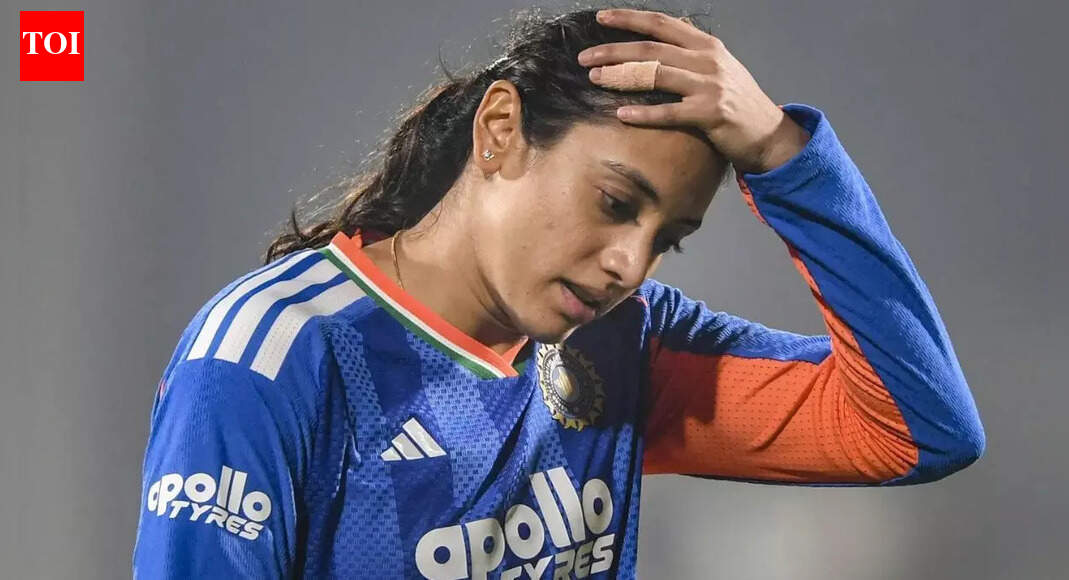
Smriti Mandhana becomes first Indian woman to score 4000 T20I runs. Discover her record-breaking pace, match insights, and impact on Indian cricket.
Market Introduction
A new chapter in Indian cricket history! Smriti Mandhana, India’s dynamic left-handed opener, has etched her name into the record books, becoming the first Indian woman cricketer to smash an incredible 4,000 runs in Twenty20 Internationals. This monumental achievement during the first Women’s T20I against Sri Lanka on Sunday, December 21, 2025, in Visakhapatnam, sent ripples of excitement across the global cricketing fraternity.
This is more than just a personal milestone; it’s a powerful statement for Indian women’s cricket. Mandhana not only joins an elite global list but does so with a speed that underscores her dominant and aggressive batting style, setting a new benchmark for aspiring cricketers nationwide.
Reaching the 4,000-run mark in just 3,227 balls, Mandhana outpaced New Zealand legend Suzie Bates, who took 3,675 balls for the same feat. Mandhana contributed 25 runs off 25 balls in the recent match, a pivotal innings that saw her cross this historic threshold.
Cricket enthusiasts and analysts are now keenly watching how this record further elevates her standing and impacts the team’s strategies, especially with major tournaments on the horizon for Indian women’s cricket. Her consistent performance continues to inspire, fueling the passion for sports in India.
Data at a Glance
| Player | T20I Runs | Balls Faced | Pace Advantage |
|---|---|---|---|
| Smriti Mandhana | 4,000+ | 3,227 | Faster |
| Suzie Bates | 4,716 | 3,675 | Slower |
In-Depth Analysis
The realm of Indian women’s cricket is currently basking in an unparalleled golden age, a period marked by historic victories, burgeoning talent, and a surge in public adoration. Standing resplendent at the forefront of this exhilarating era is none other than Smriti Mandhana, whose dynamic left-handed batting has not only captivated millions but also consistently pushed the boundaries of what’s possible in the sport. Her recent, electrifying achievement of becoming the first Indian woman cricketer to breach the monumental 4,000-run barrier in T20 Internationals isn’t merely a personal milestone; it represents a profound seismic shift in the narrative of Indian sports. This isn’t just about runs; it’s about pioneering new benchmarks, shattering glass ceilings, and inspiring an entire generation. This accomplishment follows closely on the heels of another momentous occasion – India’s glorious maiden victory in the ODI World Cup, where Mandhana’s contributions were absolutely pivotal. Such consistent, high-profile successes, both team-based and individual, are collectively elevating women’s cricket from a promising niche to a vibrant, integral part of India’s sporting identity. This growing prominence is reflected in swelling fan numbers, increased media attention, and a powerful wave of young girls eager to emulate their heroes, fundamentally reshaping the future trajectory of cricket and cementing a powerful legacy for its female torchbearers.
Mandhana’s journey to this unprecedented 4,000-run milestone in T20I cricket is a chronicle of explosive power, elegant stroke play, and unwavering consistency. The historic moment unfolded during the gripping first Women’s T20I contest against Sri Lanka, held in the vibrant city of Visakhapatnam. Her crucial innings of 25 runs off just 25 balls during India’s chase of 122 wasn’t her highest score, yet it was undeniably one of her most significant, as it propelled her past the coveted 4,000-run mark. This achievement places her in an elite global echelon, a testament to her world-class caliber. She now stands as only the second woman in the annals of international T20 cricket to reach this figure, sharing this exclusive space with the formidable New Zealand legend, Suzie Bates, who currently boasts an impressive 4,716 runs in the format. However, what truly amplifies the luster of Mandhana’s record is the breathtaking speed with which she reached this pinnacle. Mandhana remarkably accumulated her 4,000 runs in a mere 3,227 balls. This is a stark contrast and a significant advantage over Bates, who required 3,675 balls to achieve the same feat. This remarkable acceleration underscores Mandhana’s aggressive, attacking approach to T20 batting, highlighting her ability to dictate terms to bowlers from the outset. Her swift return to international duties and immediate impact after the high-stakes ODI World Cup triumph further solidifies her position as a cornerstone of the Indian team, showcasing her enduring passion and relentless drive for excellence.
The brilliance of Smriti Mandhana’s record truly comes into sharp focus when placed in a comparative context, both within the high-stakes world of T20 International cricket and against the backdrop of her peers. While New Zealand’s Suzie Bates holds the overall lead in T20I runs, Mandhana’s quicker accumulation of 4,000 runs — achieving the feat in 448 fewer balls — speaks volumes about her distinct, modern approach to the shortest format. This demonstrates a higher strike rate, a non-negotiable metric for success in contemporary T20 cricket, where rapid scoring and boundary-hitting are paramount. Such aggressive intent allows Mandhana to set the tone early in an innings, either by providing quick starts for daunting chases or by laying a solid, yet accelerated, foundation for massive totals. This aggressive philosophy contrasts with more traditional anchoring roles, showcasing the evolving dynamics of women’s T20 batting globally. Furthermore, the overall team performance in the match where Mandhana broke the record offers valuable insight. The Indian bowlers delivered a masterclass in discipline, efficiently restricting Sri Lanka to a manageable 121 runs for six wickets. Even in the face of challenging conditions, including significant dew that made gripping the ball difficult, India’s attack held strong. The Sri Lankan batters, despite individual efforts like Vishmi Gunaratne’s 39 off 43 balls, and contributions from Hasini Perera (20) and Harshitha Samarawickrama (21), struggled to build decisive partnerships or accelerate scoring effectively. The early breakthrough provided by young pacer Kranti Gaud, dismissing the aggressive Sri Lankan captain Chamari Athapaththu, was a testament to India’s strategic prowess. The economic spells from Deepti Sharma and the calm, controlled debut performance by Vaishnavi Sharma highlight a balanced team effort, where individual star power like Mandhana’s perfectly complements a collective, disciplined bowling unit. This synergy ensures that India remains a formidable force, with both bat and ball delivering critical impacts.
[Suggested Matrix Table: Player T20I Batting Pace Comparison (Smriti Mandhana vs. Suzie Bates) showing Total Runs, Balls Faced, Calculated Strike Rate, and Innings Played for both players.]
For the passionate Sports Fans, the dedicated Cricket Enthusiasts, and the meticulous Sports Analysts across India and beyond, Smriti Mandhana’s record-shattering performance is more than just an individual triumph; it is a powerful reaffirmation of the strength, depth, and exciting future of Indian women’s cricket. For fans, this milestone solidifies Mandhana’s status as a global cricketing icon, a role model whose fearless and elegant batting brings immense joy and a sense of national pride. Her ability to bounce back and immediately perform at a world-class level, especially after the immense pressure and euphoria of the recent ODI World Cup victory, speaks volumes about her mental resilience and unparalleled commitment. Her consistent performance not only fuels excitement for upcoming series and tournaments but also acts as a profound source of inspiration for countless aspiring young cricketers, both girls and boys, highlighting that dedication and talent know no gender boundaries. For sports analysts, Mandhana’s record-breaking pace offers invaluable insights into the evolving dynamics of T20 batting strategies. It underscores the critical importance of a high strike rate and rapid run accumulation in modern white-ball cricket. Analysts will now keenly scrutinize her continued consistency, her adaptability against diverse bowling attacks, and her strategic influence within the team, especially as India navigates future high-stakes tournaments. They will also be looking at how her success motivates her teammates, creating healthy competition and further elevating the team’s overall performance. This achievement sets a new, elevated benchmark for all Indian cricketers and promises a future filled with even more thrilling encounters, historic moments, and sustained dominance on the global cricketing stage for Indian women’s cricket. The journey continues, and with stars like Mandhana leading the way, the best is undoubtedly yet to come.
About the Author