Key Takeaways
Australian PM Albanese was booed at a vigil following the Bondi Beach shooting. Explore political implications, foreign policy debates, and stakeholder reactions in 2025.
Market Introduction
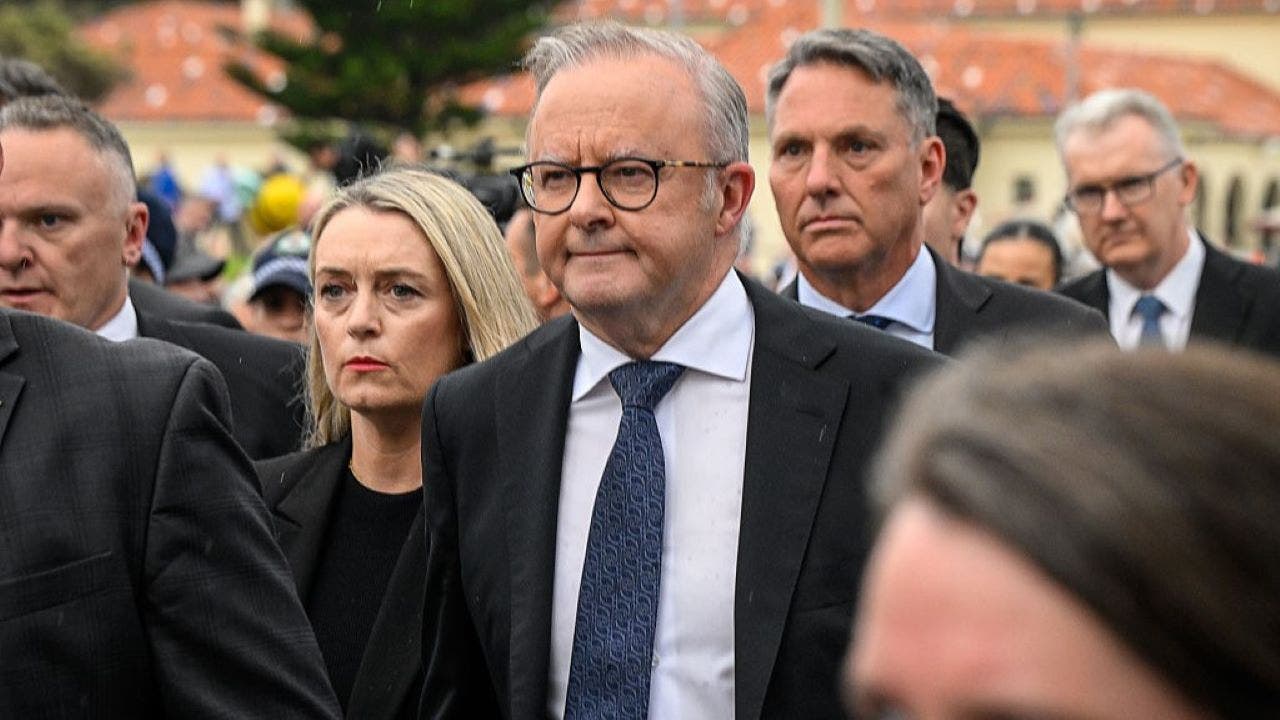
Australian Prime Minister Anthony Albanese faced public dissent at a somber vigil held for the victims of the recent Bondi Beach shooting, drawing boos from a crowd of an estimated 10,000 mourners on Sunday. This stark reaction highlights the volatile intersection of national tragedy and contentious foreign policy decisions.
The incident underscores the growing political scrutiny faced by the Albanese government, particularly concerning its stance on international relations and perceived domestic implications for community harmony. It presents a critical moment for policy watchers and political analysts to assess public sentiment.
The scene saw Albanese booed following a mention of his presence by David Ossip, president of the New South Wales Jewish Board of Deputies, while opposition leader Sussan Ley received cheers. Ley has publicly stated her intention to reverse the government’s recognition of a Palestinian state.
This event signals a deepening division within Australian politics, prompting close observation of the government’s diplomatic strategies and its engagement with diverse community groups moving forward.
In-Depth Analysis
Vigils, traditionally spaces for collective grief and unity, rarely become platforms for political dissent. The recent event at Bondi Beach, honoring the 15 victims of the December 14 attack, diverged sharply from this norm. Prime Minister Anthony Albanese’s reception, marked by boos from a significant portion of the estimated 10,000 mourners, signifies a profound challenge to his government’s authority and policy direction. This incident cannot be isolated from the broader geopolitical context, particularly Australia’s evolving foreign policy concerning the Israeli-Palestinian conflict and the heightened sensitivity surrounding antisemitism globally and domestically.
The immediate catalyst for the public’s vocal disapproval appears to be deeply rooted in Albanese’s government’s decision to recognize a Palestinian state. David Ossip, a prominent Jewish community leader, described the perceived rise in antisemitism as the “nadir of antisemitism in our country,” directly referencing the tense atmosphere. This sentiment was echoed by Israeli Prime Minister Benjamin Netanyahu, who in a letter to Albanese, explicitly argued that recognizing a Palestinian state “pours fuel on the antisemitic fire.” Netanyahu further accused Albanese’s government of inaction against the spread of antisemitism, asserting that it “let the disease spread and the result is the horrific attacks on Jews we saw today.” In contrast, opposition leader Sussan Ley received cheers after expressing her intent to reverse the government’s decision, highlighting a clear policy divergence that resonates strongly with a segment of the public.
The contrasting public reactions to Prime Minister Albanese and opposition leader Sussan Ley at the same memorial event provide a stark illustration of the domestic political fault lines. Albanese’s government has pursued a foreign policy that includes recognizing a Palestinian state, aligning with a growing number of nations, yet provoking strong reactions from those who view such a move as detrimental to Israel and potentially fueling antisemitism. Ley’s position, advocating for a reversal of this recognition, offers a clear alternative that garnered favor among the mourners present. This divergence is not merely a debate over diplomatic recognition but touches upon core values and community anxieties, particularly in the wake of a tragic attack that saw Naveed Akram, 24, charged with murder and terrorism. The incident showcases how international policy decisions can profoundly impact domestic political landscapes and public trust, especially when intertwined with sensitive community issues and national tragedies.
For News Readers, Policy Watchers, Informed Citizens, and Political Analysts, the Bondi Beach vigil serves as a critical barometer of public sentiment concerning Australia’s foreign policy and the government’s handling of complex socio-political issues. This event signals potential shifts in electoral dynamics and increases pressure on the Albanese government to articulate its diplomatic stance with greater clarity and address community concerns more directly. Stakeholders, including various community groups and international allies, will closely monitor how the government responds to this public dissent. Future policy discussions in Parliament regarding foreign relations, particularly those affecting the Middle East, and any measures introduced to combat antisemitism, will be key indicators of the government’s strategic response. The incident highlights the intricate balance leaders must maintain between international diplomacy and domestic political cohesion.
About the Author