Key Takeaways
Australia Politics sees PM Albanese face intense criticism after Bondi attack. Explore government’s policy response, security challenges, and implications for global governance.
Market Introduction
A week after the tragic Bondi beach terror attack, Australia observed a solemn national day of reflection, overshadowed by significant political repercussions for Prime Minister Anthony Albanese. He faced boos from the Jewish community at the Bondi memorial, highlighting deep-seated frustrations.
This public display of anger underscores growing discontent, particularly regarding a perceived rise in antisemitic attacks since October 7, 2023, and governmental inaction. The incident presents critical challenges for the Australian Government in managing national security and delicate community relations.
The attack resulted in 15 fatalities, including a 10-year-old girl and a British-born rabbi. Notably, New South Wales Premier Chris Minns received praise, contrasting sharply with the federal leader’s reception.
This event compels News Readers, Policy Watchers, Informed Citizens, and Political Analysts to scrutinize Australia’s policy frameworks on counter-terrorism and hate speech, with unfolding implications for future governance.
In-Depth Analysis
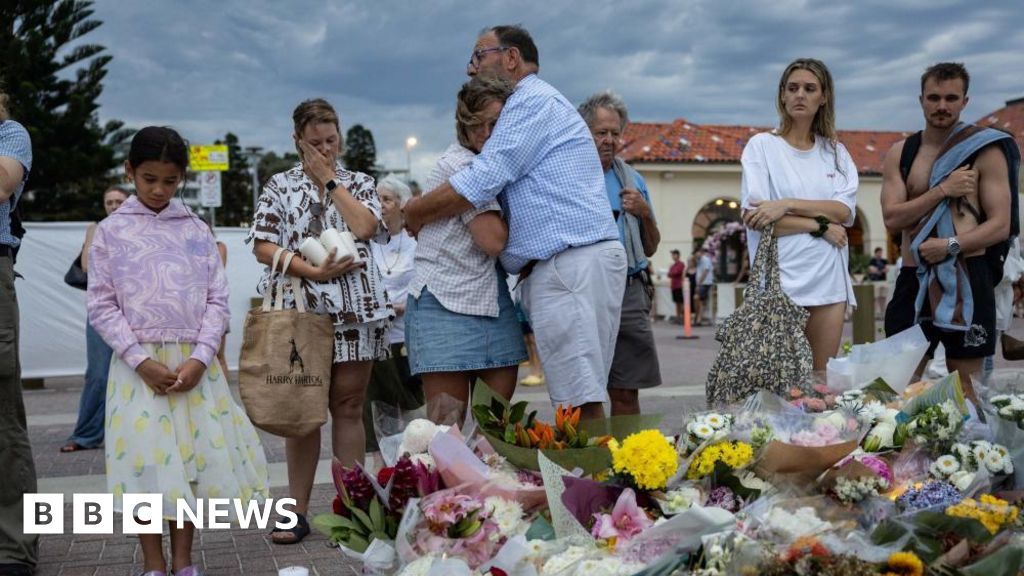
The collective grief following the horrific Bondi beach terror attack, which occurred a week prior, swiftly transitioned into a complex political narrative during Australia’s national day of reflection. While mourners gathered to honour the 15 victims, a heartbreaking toll that included a 10-year-old girl, a British-born rabbi, and a Holocaust survivor, the memorial at Bondi beach simultaneously served as a stark and undeniable platform for public dissent. Prime Minister Anthony Albanese’s arrival was met with audible boos and sharp shouts of ‘Blood on your hands.’ This intense vocalisation represented a powerful demonstration of anger emanating from Australia’s Jewish community, directly aimed at his federal government.
This visceral public reaction is deeply rooted in a perceived increase in antisemitic incidents across Australia, which community leaders indicate has intensified since the October 2023 Hamas attack on Israel and the subsequent protracted conflict in Gaza. The sentiment points to a profound, deep-seated frustration with the federal government’s handling of these escalating tensions, encompassing both domestic community security and its broader foreign policy stance concerning the Middle East. The incident highlighted not only immediate security failures but also a growing chasm between community expectations and governmental response, compelling News Readers and Policy Watchers to examine the multifaceted pressures on Australia’s political leadership.
A detailed analysis of the memorial event reveals a clear and concerning divergence in public perception between federal and state leadership during a moment of national tragedy. While Prime Minister Albanese faced overt hostility, including an incident where a protester reportedly moved towards him before being intercepted by police, New South Wales Premier Chris Minns received widespread accolades. Minns was lauded for his swift and unreserved admission of government errors that may have contributed to the security lapses leading up to the attack. His empathetic engagement, demonstrated by his attendance at multiple victim funerals from which Albanese was notably absent, resonated strongly with the grieving community.
Premier Minns’ public apology, stating, “We are deeply sorry. We grieve with you, and with humility, I acknowledge that the government’s highest duty is to protect its citizens. And we did not do that one week ago,” provided a crucial moment of direct accountability that momentarily appeased some community concerns. This stark contrast highlights immediate and significant political ramifications for Albanese, who has acknowledged his responsibility amidst escalating accusations from Israeli Prime Minister Benjamin Netanyahu. Netanyahu specifically criticised Australia for rewarding Hamas by recognising a Palestinian state and for a perceived failure to curb antisemitism domestically. These international pressures further complicate the already sensitive landscape for Australia Politics and its government’s public image.
In response to the crisis, the federal government under Prime Minister Albanese has initiated a series of significant policy adjustments. These include a decisive crackdown on hate speech and incitement to violence, alongside a comprehensive review of both police and national intelligence agencies. This acknowledges a ‘rapidly changing security environment’ that demands heightened vigilance and adaptable strategies. Furthermore, Albanese has announced critical reforms to existing gun laws and the reintroduction of a gun buyback scheme, an initiative reminiscent of the pivotal reforms implemented after the devastating 1996 Port Arthur massacre. This policy shift signifies a reactive, yet necessary, posture to address critical gaps in national security frameworks and community protection measures.
In contrast, the state government’s immediate and unequivocal apology by Premier Minns offered an example of direct and empathetic accountability that demonstrably appeased some community concerns in the short term. The call by David Ossip, President of the New South Wales Jewish Board of Deputies, for a “Royal Commission” to investigate the catastrophe, underscores a broader and deeper demand for a comprehensive, beyond-state-level examination. This commission would delve into security failures, the systemic rise of antisemitism, and the adequacy of current responses, signifying potential long-term, structural policy implications for Australia’s governance and social cohesion. This layered response highlights varied approaches to crisis management within Australia Politics.
For News Readers, Policy Watchers, Informed Citizens, and Political Analysts, the aftermath of the Bondi attack offers crucial insights into the complexities of governance, particularly during periods of heightened social and international tension. In the short term, Prime Minister Albanese’s immediate political challenges encompass the critical task of restoring confidence within affected communities and demonstrating the effective implementation of the announced security and hate speech reforms. These initial steps are vital for stemming further public discontent and stabilising the political climate.
In the medium term, the proposed Royal Commission, if established, could fundamentally reshape national security protocols, counter-terrorism strategies, and foster a more integrated, cross-jurisdictional approach to combating hate crimes across Australia. The commission’s findings and recommendations would serve as a crucial roadmap for future policy development, influencing how intelligence is gathered, threats are assessed, and community grievances are addressed. The evolving policy landscape, particularly concerning stricter gun control measures and the outcomes of the intelligence agency review, will be critical metrics to monitor for their tangible effectiveness and public reception, providing a barometer for the government’s success in navigating this crisis.
The long-term implications underscore how global conflicts, such as the ongoing tensions in the Middle East, can profoundly impact domestic policy and political stability within nations like Australia. This incident serves as a potent reminder for policymakers globally, including those deeply invested in India Politics, that international dynamics often have significant local repercussions, influencing everything from national security postures to community relations and public discourse. Therefore, a balanced, fact-based approach to both governance and public discourse is not merely advisable but essential, not only for Australia but also for informing similar policy considerations in India and beyond, fostering resilience against interconnected global challenges.
About the Author