Key Takeaways
Bangladeshi journalist Reaz Ahmad condemns post-Osman Hadi violence, flagging security lapses. Learn implications for upcoming national elections.
Market Introduction
A senior Bangladeshi journalist has strongly condemned the recent political violence that erupted across parts of Bangladesh following the tragic death of Inqilab Moncho leader Osman Hadi. This unrest, occurring just weeks before the national election, signals significant security lapses and raises troubling questions about the pre-poll environment.
The violence, characterized by attacks on media houses and cultural institutions, underscores mounting concerns among News Readers, Policy Watchers, and Political Analysts regarding stability and press freedom in the region. The situation highlights the critical need for robust governance and pre-emptive measures to ensure free and fair elections.
Osman Hadi, a young activist linked to last year’s July uprising, died on December 18 after being shot on December 12. Protests, initially peaceful, escalated into violence on Friday, with “fringe elements” exploiting grief, as noted by Dhaka Tribune editor Reaz Ahmad.
This incident necessitates a balanced political analysis of the immediate aftermath, potential ripple effects, and long-term implications for India Politics and regional stability, particularly regarding government action and electoral integrity ahead of the February 12 polls.
In-Depth Analysis
The recent eruption of violence in Bangladesh following the death of political activist Osman Hadi casts a long shadow over the nation’s impending general election, scheduled for February 12. This event is not merely an isolated incident but a critical indicator of underlying political tensions and potential vulnerabilities in the security apparatus. Osman Hadi, a figure associated with the previous year’s July uprising, was targeted by masked assailants, suffering a fatal gunshot wound. His subsequent death, despite medical efforts, ignited widespread grief among his supporters, leading to demonstrations that regrettably escalated into destructive violence in various parts of Dhaka. Historically, pre-election periods in many democracies, particularly in South Asia, are often marked by heightened political rhetoric and occasional civil unrest, making the state’s role in maintaining peace paramount. This incident, however, signals a concerning trend where public sentiment can be swiftly co-opted for violent ends, underscoring the delicate balance between freedom of expression and public order.
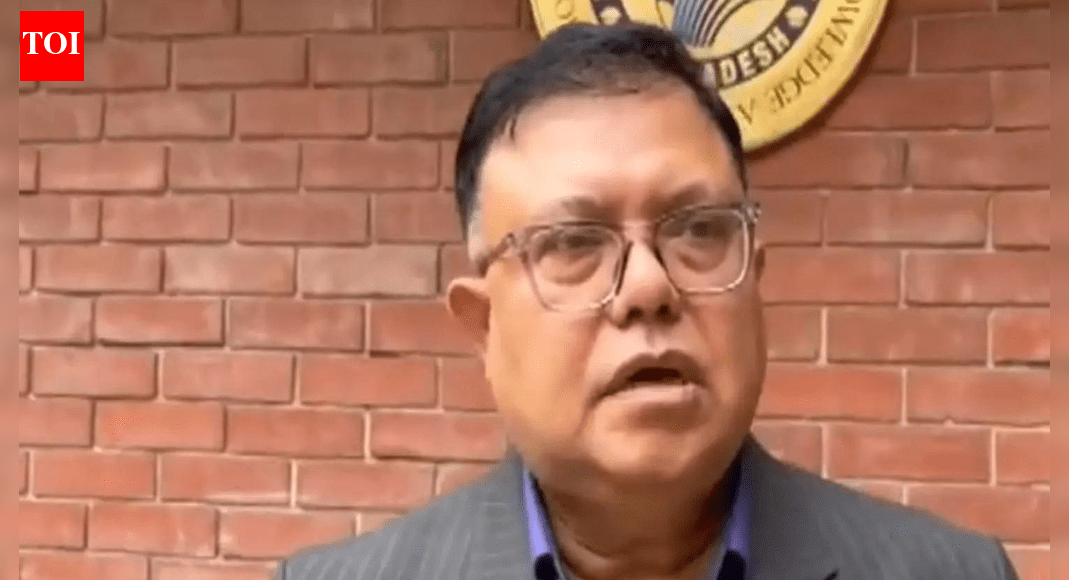
Dhaka Tribune editor Reaz Ahmad’s remarks provide a crucial journalistic perspective, highlighting the dual nature of the public response: genuine grief intertwined with exploitation by opportunistic “fringe elements.” Ahmad explicitly criticized the serious lapses in law and order, suggesting that better planning and pre-emptive measures by authorities could have averted the unrest. The attacks on prominent media houses and cultural institutions are particularly alarming, serving as a “really bad example” for a nation preparing for a democratic exercise. Such actions, he argued, are not merely acts of vandalism but deliberate attempts to instill fear among journalists and compromise press freedom during a sensitive electoral phase. Ahmad’s call for the government to restore “complete grip” over the law and order situation and to hold perpetrators accountable underscores a fundamental expectation from an informed citizenry and policy watchers: that the state provides a secure environment for all, especially during periods of heightened political activity.
Comparatively, the situation in Bangladesh mirrors challenges faced by several emerging democracies where the lines between political protest and civil disobedience can blur, often with violent consequences. Attacks on media outlets, as witnessed here, are a direct assault on the pillars of a democratic process, inhibiting the free flow of information essential for informed decision-making. In contexts similar to India Politics, where media plays a vital role in election coverage, such incidents risk creating a chilling effect, leading to self-censorship and hindering transparent reporting. The government’s response, therefore, becomes a critical benchmark for its commitment to democratic values and the protection of fundamental rights. Effective law enforcement and transparent investigations are not just about punishing criminals but about reassuring the public, safeguarding journalistic integrity, and reinforcing the rule of law against elements that seek to destabilize the electoral environment.
For News Readers, Policy Watchers, Informed Citizens, and Political Analysts, the developments in Bangladesh offer critical insights into the fragility of political stability during electoral cycles. The immediate implications include heightened scrutiny on the upcoming February 12 elections, with concerns about voter turnout, potential intimidation, and the overall fairness of the process. Policy Watchers will be monitoring the government’s strategies to address security lapses, protect media personnel, and ensure accountability for the violence. For Informed Citizens, the incident underscores the importance of discerning information critically amidst a charged political climate and demanding transparency from authorities. Political Analysts will closely examine this event as a potential precursor to broader electoral dynamics, evaluating its long-term impact on political participation, government policy, and the trajectory of democracy in Bangladesh. The commitment to identify and punish those responsible for the violence will be a key metric in assessing the government’s resolve to uphold peace and protect democratic institutions.
About the Author