Key Takeaways
AI and advanced sensor tech are critical for preventing train-wildlife collisions in India. Discover how innovation can secure rail networks and protect endangered species.
Market Introduction
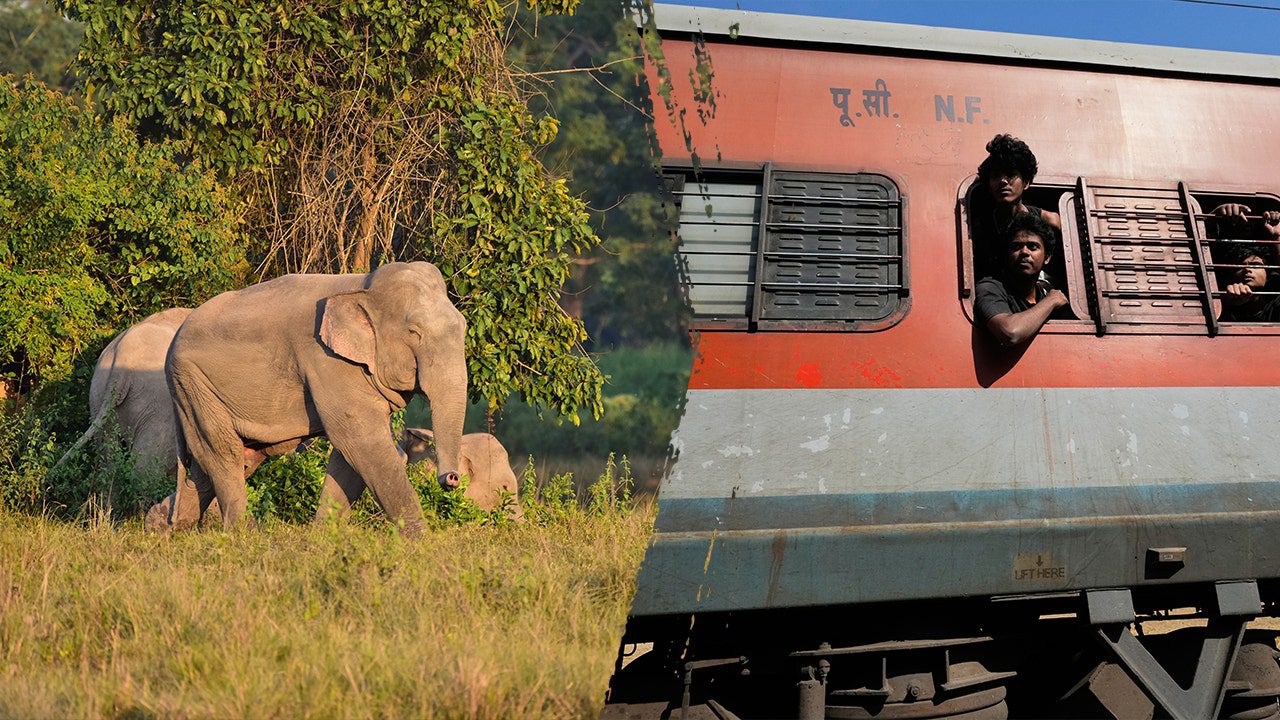
The tragic incident in Assam, where a high-speed passenger train collided with a herd of wild Asiatic elephants, claiming seven lives and injuring a calf, underscores a pressing challenge for Technology India. This devastating event highlights the urgent need for innovative solutions to mitigate human-wildlife conflicts exacerbated by expanding infrastructure.
For Tech Enthusiasts, Innovators, Early Adopters, Developers, and Startup Founders, this scenario presents a critical problem statement: How can advanced AI, sensor technology, and IoT integrate to create safer railway corridors for both passengers and endangered species?
The incident involved a Rajdhani Express carrying approximately 650 passengers, ultimately derailing its engine and five coaches, though fortunately, no human casualties were reported. With Assam housing an estimated 7,000 wild Asiatic elephants, and at least a dozen killed on tracks since 2020, the scale of this issue is undeniable.
The following analysis delves into potential technological interventions, market opportunities for startups, and the future implications of smart railway safety systems in India.
Data at a Glance
| Challenge Metric | Value (Current Incident / Context) |
|---|---|
| Elephants Killed (Current Incident) | 7 |
| Injured Calf (Current Incident) | 1 |
| Wild Asiatic Elephants in Assam (Est.) | ~7,000 |
| Elephants Killed on Tracks in Assam (since 2020) | At least 12 |
| Global Asiatic Elephant Population (Est.) | 30,000-50,000 (Endangered) |
| Train Passengers (Current Incident) | ~650 |
| Coaches Derailed (Current Incident) | 5 |
In-Depth Analysis
The recent collision in Assam, leading to the tragic death of seven endangered Asiatic elephants, vividly underscores an escalating, complex challenge at the intersection of India’s rapid infrastructural development and vital wildlife conservation efforts. India, home to a significant portion of the world’s wild Asiatic elephants, faces an ongoing struggle as railway lines increasingly traverse critical animal migration paths and natural habitats. The expansion of high-speed passenger services, while a boon for connectivity and economic growth, inadvertently amplifies the risks of such devastating encounters. This isn’t merely an isolated incident; it represents a systemic issue, with at least a dozen elephants perishing on Assam’s railway tracks since 2020 alone. Such statistics demand a paradigm shift from reactive mitigation to proactive prevention, pushing the boundaries of what current technology can offer. The sheer scale of the problem, with approximately 7,000 wild Asiatic elephants inhabiting Assam – a significant segment of the global 30,000-50,000 endangered population – necessitates urgent, scalable, and sustainable innovation. This context provides a compelling backdrop for Tech India to step forward, transforming a dire ecological crisis into a fertile ground for technological ingenuity and deployment.
To truly address the vulnerabilities highlighted by incidents like the Rajdhani Express collision, where a driver’s emergency braking proved insufficient, a multi-layered technological approach is paramount. This involves the strategic deployment of advanced sensor networks coupled with robust AI-powered predictive analytics and seamless IoT integration. Consider the specifications of such a system: high-resolution thermal cameras, acoustic sensors capable of detecting large animal vocalizations, LiDAR (Light Detection and Ranging) for precise mapping of terrain and moving objects, and ground-penetrating radar could collectively establish an invisible digital perimeter around railway tracks in vulnerable zones. These sensors, operating round-the-clock and unaffected by adverse weather conditions like fog or heavy rain, would transmit real-time data to edge computing devices for immediate localized processing. Concurrently, this data would feed into sophisticated Machine Learning (ML) models, potentially Convolutional Neural Networks (CNNs) trained on vast datasets of animal movement patterns, environmental factors, and historical collision data. These AI models would not only detect the presence of animals but could also predict their trajectories, identify potential crossing points with higher accuracy, and significantly reduce false positives, which are often a drawback of simpler detection systems. The IoT layer would ensure that these alerts are instantaneously communicated to both train operators via in-cab systems and central railway control, enabling proactive measures such as automated speed reductions, the activation of non-invasive acoustic or light deterrents, or even temporary barrier deployments in designated elephant corridors, long before a visual sighting or emergency braking becomes necessary. This integrated system fundamentally shifts railway safety from a reactive human-dependent process to a proactive, technologically enhanced prevention framework, mitigating both wildlife casualties and the operational disruption and financial impact of incidents like derailments.
A comparative analysis starkly reveals the limitations of traditional railway wildlife safety measures against the potential of AI-driven solutions. Current approaches often rely on physical barriers like rudimentary fencing, signage, human patrols, and, as seen in Assam, the human-dependent emergency braking system. While these methods have their place, their efficacy is inherently constrained by detection range, human reaction time, and susceptibility to environmental conditions or vigilance fatigue. In contrast, an AI-powered detection and response system offers superior, all-weather detection capabilities with a significantly extended range, translating into crucial extra minutes for proactive intervention. The latency between detection and response is dramatically minimized, moving from seconds to milliseconds, which is vital when dealing with high-speed trains. Moreover, such a system’s scalability across thousands of kilometers of railway lines is far greater than deploying constant human oversight. The initial investment in deploying advanced sensor infrastructure and developing sophisticated AI platforms might seem substantial, but when weighed against the recurring costs of wildlife fatalities, derailment investigations, track repairs, service disruptions, and the invaluable ecological loss, the long-term cost-effectiveness and societal benefits become clear. India could look to global precedents where similar intelligent transport systems are being explored for various safety challenges, adapting the best practices to its unique ecological and infrastructural landscape. This transition from a labor-intensive, reactive model to a data-driven, proactive one is a critical step for modernizing Indian Railways and setting a global benchmark in sustainable innovation.
For Tech Enthusiasts, Innovators, Early Adopters, Developers, and Startup Founders, the persistent issue of railway-wildlife collisions in India represents a compelling frontier for **AI and innovation**. This sector is ripe for disruption, offering significant opportunities for startups focused on developing robust, low-power sensor hardware tailored for India’s diverse terrains, sophisticated AI algorithms for precise animal behavior prediction, and resilient IoT platforms capable of operating in remote environments. Developers can contribute through expertise in embedded systems for sensor integration, machine learning for computer vision and acoustic analysis, and secure network architecture. Early adopters and innovators should eye the burgeoning market for “wildlife-tech” or “green tech” solutions in India, where the blend of environmental urgency and a supportive startup ecosystem creates fertile ground for impact-driven ventures. Key metrics to monitor include pilot project announcements by Indian Railways for smart corridors, funding rounds specifically targeting environmental technology startups, and government incentives designed to foster railway safety innovations. The long-term vision is not just about preventing tragedies but about creating a blueprint for smart infrastructure that harmoniously coexists with nature, positioning **Technology India** as a leader in sustainable innovation and showcasing how technological advancement can drive both economic progress and ecological stewardship.
About the Author