Key Takeaways
US seizes Venezuela-linked oil tankers, escalating sanctions. Analyze the impact on global oil markets, geopolitical risk, and investor strategies in 2025.
Market Introduction
The United States has significantly escalated its economic pressure on Venezuela, executing a second oil tanker seizure this month in international waters. This assertive action, following President Trump’s “blockade” directive against sanctioned Venezuelan oil, signals heightened geopolitical tensions with direct implications for global commodity markets, especially crude oil prices and shipping logistics. Stock Market India participants, from retail investors to finance professionals, must closely monitor this evolving scenario for its systemic risk and impact on Investment.
Such international developments directly influence global risk premiums, affecting sectors sensitive to oil price volatility like energy, logistics, and inflation outlooks. Swing traders may identify short-term price movements, while long-term investors assess portfolio resilience. Prudent Financial Analysis is crucial for informed Trading decisions amidst these dynamics.
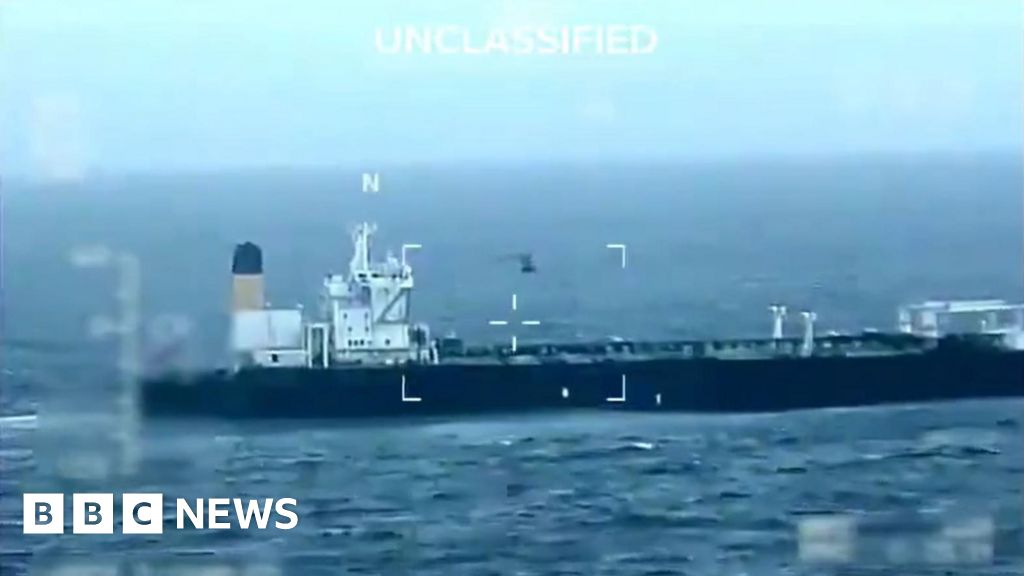
The recent December 20 seizure involved the Panamanian-flagged “Centuries” in international waters, following the earlier taking of the “Skipper.” Both vessels were allegedly involved in illicit oil shipping. Venezuela, highly dependent on oil exports, denies US accusations of funding “narco terrorism,” characterizing the seizures as attempts to steal its vital resources.
This escalating enforcement demands a meticulous review of potential market ramifications, technical levels for energy indices, and adaptive Investment strategies in an increasingly volatile global economic landscape for informed Trading.
In-Depth Analysis
The recent US Coast Guard seizure of a Venezuela-linked oil tanker marks a significant escalation in geopolitical tensions, directly impacting global energy markets. This second such operation within a month underscores a hardening US stance against Venezuelan crude, moving from economic sanctions to active interdiction. Venezuela, holding the world’s largest proven oil reserves, relies heavily on these revenues, making disruptions critical for its stability and global supply dynamics. President Trump’s “blockade” declaration signals an aggressive enforcement approach, raising questions about maritime law and potential international incidents. Investors must contextualize these actions within the long-standing US-Venezuela friction, characterized by sanctions aimed at isolating the Maduro administration and its alleged ties to “narco terrorism.”
The December 20 operation, confirmed by Homeland Security Secretary Kristi Noem, involved a specialized tactical team boarding the Panamanian-flagged crude-oil tanker “Centuries” in international waters, mirroring the earlier “Skipper” seizure. The US justifies these actions by disrupting “illicit movement of sanctioned oil” allegedly funding “narco terrorism” linked to President Maduro’s “Cartel de los Soles.” Maduro, however, denies these accusations, asserting the US aims to “steal” oil and “kidnap” crews. The absence of public evidence for drug smuggling, particularly after prior deadly strikes, has drawn Congressional scrutiny. This ambiguity, coupled with aggressive interdiction, injects considerable uncertainty into global oil supply stability. For energy sector investors, this translates to potential upward pressure on crude oil prices and increased volatility for shipping logistics companies, effectively tightening the informal embargo on Venezuelan oil, impacting the broader commodity market landscape.
The “Centuries” seizure, following the “Skipper” incident, marks a clear escalation in US enforcement against Venezuela’s oil trade. This shift from traditional financial sanctions to active maritime interdiction acts as a de facto “blockade.” While explicit financial metrics are unavailable, the implied impact includes higher operational costs and increased insurance premiums for vessels associated with Venezuelan crude. This strongly disincentivizes shippers, tightening global oil supply. Historically, similar geopolitical disruptions, like tanker incidents in chokepoints, have swiftly injected volatility into crude oil prices. Investors should analyze how this geopolitical risk premium influences the broader commodity market, assessing potential benefits for energy producers in more stable jurisdictions. Close monitoring of global energy supply-demand balances and shipping indices is crucial.
For Retail Investors, Swing Traders, Long-term Investors, and Finance Professionals, escalating US action against Venezuela’s oil trade presents a complex risk-reward profile. Short-term, swing traders may find opportunities in oil price volatility, driven by supply disruption fears and heightened geopolitical risk premiums affecting crude oil futures or energy ETFs. Long-term investors must assess portfolio resilience against potentially sustained higher energy costs and economic deceleration. Focus should be on companies with robust balance sheets and diversified supply chains. Key metrics to monitor include crude oil price movements, global shipping rates, and US-Venezuela diplomatic developments. Any expansion of maritime interdiction could significantly impact global energy flows. This scenario underscores the critical importance of integrating geopolitical risk into fundamental and technical analysis for astute global market Investment and Trading decisions.
About the Author