Key Takeaways
Sonia Gandhi criticizes PM Modi’s VB-G RAM G Bill, alleging an ‘attack on poor’ and weakening of MGNREGA. Understand the new rural employment policy and its political implications for India.
Market Introduction
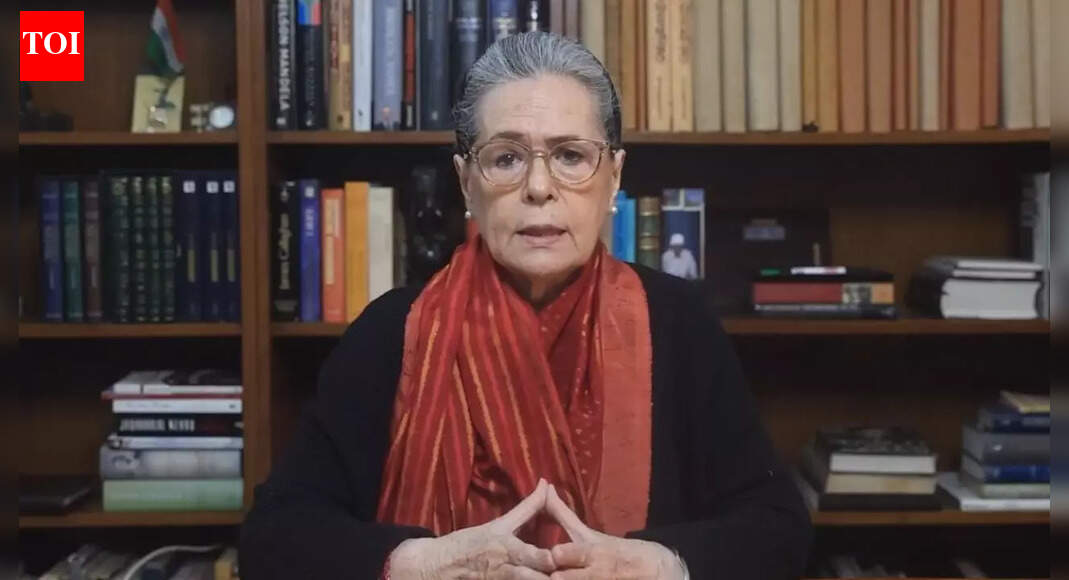
Congress Rajya Sabha member Sonia Gandhi has fiercely criticised Prime Minister Narendra Modi over the recently passed VB-G RAM G Bill, accusing the central government of undermining the poor by ‘running a bulldozer over MGNREGA’. This strong political statement highlights a significant legislative shift impacting rural India.
This development sends ripples across India Politics, signaling a major policy reorientation concerning rural employment and welfare, drawing sharp lines between the opposition and the ruling government on socio-economic priorities for millions of citizens.
The Viksit Bharat Guarantee for Rozgar and Ajeevika Mission (Gramin) Act, 2025, guarantees 125 days of wage employment per rural household, directly replacing the two-decade-old Mahatma Gandhi National Rural Employment Guarantee Act (MGNREGA).
This article delves into the implications of this legislative change, examining stakeholder perspectives, historical context, and policy ramifications for India’s rural populace.
Data at a Glance
| Aspect | Previous (MGNREGA) | New (VB-G RAM G Bill 2025) | Key Stance / Claim |
|---|---|---|---|
| Full Name | Mahatma Gandhi National Rural Employment Guarantee Act | Viksit Bharat Guarantee for Rozgar and Ajeevika Mission (Gramin) Act, 2025 | Opposition criticizes removal of ‘Mahatma Gandhi’ name |
| Employment Guarantee | Provided employment, ‘lifeline’ during Covid crisis | Guarantees 125 days of wage employment per rural household | Framework for rural employment and livelihood |
| Government’s Claim | ‘Riddled by corruption and inefficiency’ | ‘Improves substantially’, ‘modern statutory framework’, ‘aligned with Viksit Bharat 2047’ | Aimed at enhanced efficacy and national vision |
| Opposition’s Claim | Scheme ‘never about a political party’, ‘national interest and public welfare’ | ‘Attack on interests of crores of farmers, workers and landless rural poor’, ‘tried to weaken for 11 years’ | Weakening a vital social safety net |
In-Depth Analysis
The Mahatma Gandhi National Rural Employment Guarantee Act (MGNREGA), enacted nearly two decades ago, emerged as a landmark legislation aiming to provide a social safety net through guaranteed wage employment for rural households. Conceived and implemented with significant contribution from the Congress, the scheme quickly established itself as a critical intervention, particularly proving to be a lifeline for millions of rural unemployed, poor, and marginalised sections during the economic hardships of the COVID-19 crisis. Its original intent transcended party politics, focusing squarely on national interest and public welfare by offering a fundamental right to work. Over the past eleven years, however, the Modi government has, according to critics like Sonia Gandhi, consistently attempted to weaken MGNREGA, paving the way for its eventual replacement, signaling a strategic re-evaluation of India’s approach to rural employment and poverty alleviation.
The recently passed Viksit Bharat Guarantee for Rozgar and Ajeevika Mission (Gramin) Act, 2025, or VB-G RAM G Bill, represents this culmination. Rural Development Minister Shivraj Singh Chouhan champions the new legislation, asserting that it substantially improves upon its predecessor. Chouhan’s defense posits that MGNREGA was ‘riddled by corruption and inefficiency,’ and the VB-G RAM G Bill seeks to establish a ‘modern statutory framework aligned with Viksit Bharat 2047.’ This revamped law guarantees 125 days of wage employment per rural household whose adult members volunteer for unskilled manual work. In stark contrast, the opposition, particularly the INDIA bloc, fiercely protested the bill’s passage. Sonia Gandhi’s remarks, calling it an ‘attack on the poor’ and an act of ‘running a bulldozer over MGNREGA,’ underscore a deep ideological divide. Opposition members demanded the bill be sent to a parliamentary committee for scrutiny, vehemently assailing the government for removing Mahatma Gandhi’s name from the rural employment guarantee scheme, a move they perceive as symbolic of undermining the scheme’s foundational principles.
The replacement of MGNREGA with the VB-G RAM G Bill highlights a significant ideological and political contention within India Politics. While the government frames the new bill as an improvement, addressing perceived inefficiencies and aligning with a broader national development vision (Viksit Bharat 2047), the opposition views it as an assault on a proven welfare mechanism and an attempt to erase the legacy of a previous administration’s contributions to public welfare. The debate extends beyond mere nomenclature, touching upon the fundamental philosophical approaches to poverty alleviation: a rights-based entitlement versus a mission-oriented approach to development. This move echoes past instances where the government has sought to re-brand or overhaul existing schemes, often sparking similar political clashes over credit, efficiency, and socio-political impact. The legislative battle, marked by overnight protests and the tearing of bill copies, underscores the high stakes involved in defining the narrative around social welfare policies.
For News Readers, Policy Watchers, Informed Citizens, and Political Analysts, this legislative overhaul presents critical dimensions to monitor. In the short term, the immediate challenge lies in the effective implementation of the VB-G RAM G Bill and its seamless transition from the MGNREGA framework. Medium-term implications include observing the scheme’s impact on rural livelihoods, wage patterns, and the absorption of unskilled labour, especially in economically vulnerable regions. Long-term, this policy shift will shape the future of India’s rural development strategy and its alignment with the broader vision of Viksit Bharat 2047. Stakeholders must scrutinize the efficacy of the new framework in addressing corruption claims, ensuring equitable access, and delivering on its employment guarantees. Upcoming government reports, budget allocations for the new mission, and public feedback from rural areas will be crucial metrics to track. The political discourse surrounding this bill will undoubtedly continue to be a focal point, influencing public perception and potentially playing a role in future electoral narratives.
About the Author