Key Takeaways
PM Modi’s helicopter failed to land in West Bengal due to fog, delaying his key administrative and BJP rally events. Understand the policy implications and political context.
Market Introduction
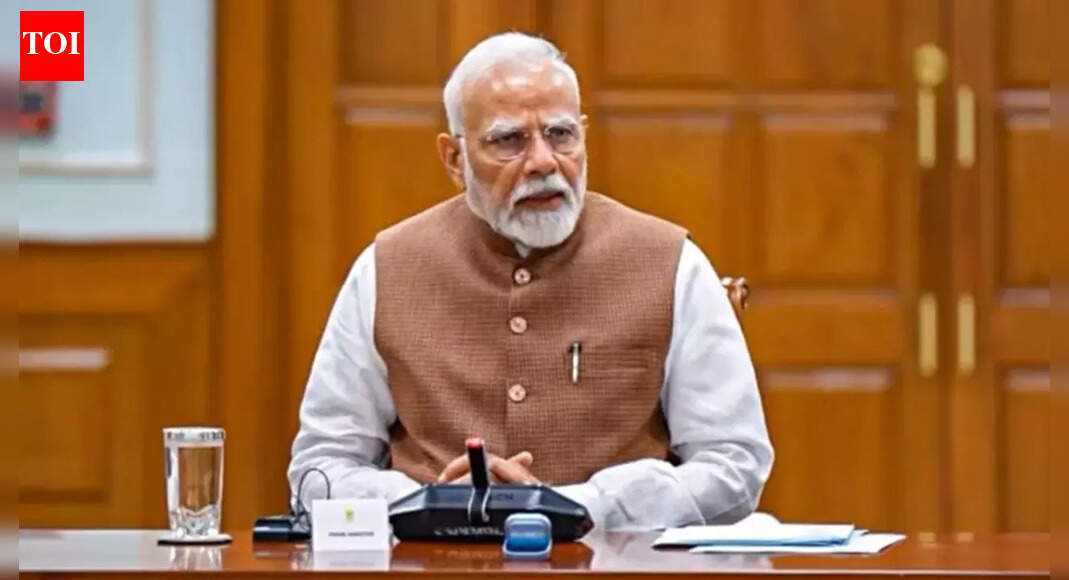
Prime Minister Narendra Modi’s anticipated visit to West Bengal on Saturday, December 20, 2025, faced an unexpected logistical challenge when his helicopter could not land at Taherpur helipad. Dense fog and low visibility forced the PM’s chopper to return safely to Kolkata airport, impacting a meticulously planned schedule of administrative and political engagements.
This incident, though without any untoward events, highlights the complexities of high-profile political campaigning and infrastructure project inaugurations, particularly in states with critical electoral contests. It momentarily disrupted key government initiatives and a significant Bharatiya Janata Party (BJP) rally, showcasing the critical role of operational preparedness in India politics.
The PM was scheduled to inaugurate development projects worth approximately Rs 3,200 crore, including vital highway improvements aimed at enhancing connectivity between Kolkata and Siliguri. These include a 66.7 km four-lane stretch of National Highway 34.
The incident casts a spotlight on political preparedness and operational contingencies, especially given the intensifying electoral rivalry between the BJP and the Trinamool Congress in West Bengal, underscoring the dynamic landscape of India politics.
Data at a Glance
| Project | Scope/Type | Estimated Value | Objective |
|---|---|---|---|
| Barajaguli Krishnanagar Section | 66.7 km Four-Lane NH 34 | Part of ₹3,200 Cr | Improve Kolkata-Siliguri Connectivity |
| Barasat Barajaguli Section | Four-Laning of NH 34 (Foundation Stone) | Part of ₹3,200 Cr | Enhance Regional Infrastructure |
| Total Projects | Various Highway Development | ₹3,200 Crore | Boost West Bengal Connectivity |
In-Depth Analysis
The Prime Minister’s West Bengal visit, even with its aerial setback, underscores the relentless pace of political campaigning and governance in India, particularly in states nearing electoral battles. Historically, West Bengal has proven a crucial battleground, with both national and regional parties fiercely contending for influence. Such high-profile visits combine administrative duties with political outreach, leveraging government project inaugurations to rally public support. The incident on Saturday in Taherpur, while a minor operational hiccup, momentarily disrupted a carefully orchestrated schedule designed to highlight central government initiatives and reinforce the BJP’s narrative of development. This event occurs against a backdrop of intensifying political rivalry, where every public appearance and policy announcement carries significant weight in shaping voter sentiment. The logistical challenges of navigating diverse terrains and weather conditions frequently punctuate such political tours, making preparedness and contingency planning paramount.
The core purpose of PM Modi’s visit centered on launching significant highway projects valued at Rs 3,200 crore. These initiatives, specifically the 66.7 km four-lane stretch of the Barajaguli Krishnanagar section of National Highway 34 and the foundation stone for the four-laning of the Barasat Barajaguli section of NH 34, aim to substantially improve connectivity between Kolkata and Siliguri. These infrastructure developments are crucial for regional economic integration and efficient transport, embodying the government’s focus on policy implementation for growth. Beyond the administrative agenda, the visit was scheduled to include a BJP rally, “Parivartan Sankalpa Sabha,” directly addressing the party’s electoral aspirations in West Bengal. On social media, the Prime Minister explicitly criticized the Trinamool Congress (TMC) government, accusing it of “misrule” and highlighting the perceived disparity between central development initiatives and state-level governance. This dual strategy of showcasing central achievements while critiquing the state administration is a common political tactic observed in India’s election cycles.
The political landscape in West Bengal consistently features a high-stakes contest, contrasting sharply with the relative ease of campaigning in states where the ruling party holds stronger sway. The BJP’s sustained efforts to expand its footprint in West Bengal, particularly through infrastructure development announcements and pointed critiques of the incumbent Trinamool Congress, reflect a strategic focus on states where regional parties dominate. This approach mirrors national government initiatives seen in other states, where central funds bolster local infrastructure, often becoming a political talking point. The incident itself, while weather-related, draws parallels to similar logistical disruptions faced by political leaders, underscoring the operational vulnerabilities inherent in extensive public outreach programs. Furthermore, the quick pivot to Assam for another multi-faceted program highlights the demanding schedule and multi-state focus of India’s top political leadership, balancing development agendas with electoral campaigning across diverse regions.
For News Readers, Policy Watchers, Informed Citizens, and Political Analysts, this event provides insights into the operational realities of high-stakes political travel and the intertwined nature of governance and campaigning. Citizens should monitor the timely implementation of the announced Rs 3,200 crore infrastructure projects, as these directly impact daily connectivity and economic activity in West Bengal. Policy Watchers can analyze the messaging used by the BJP regarding central development versus state governance, which could signal future policy directions and political narratives ahead of upcoming elections. Political Analysts will keenly observe how the BJP adapts its West Bengal strategy following this disruption and how the Trinamool Congress responds to the central government’s criticism and development push. The incident itself serves as a reminder of external factors, like weather, that can influence election dynamics and public perception, making operational resilience a subtle yet critical aspect of political leadership.
About the Author