Key Takeaways
PM Modi inaugurates Guwahati airport’s new terminal. Explore its 1.4 lakh sq m design, policy impact on NE India’s connectivity, commerce, and tourism.
Market Introduction
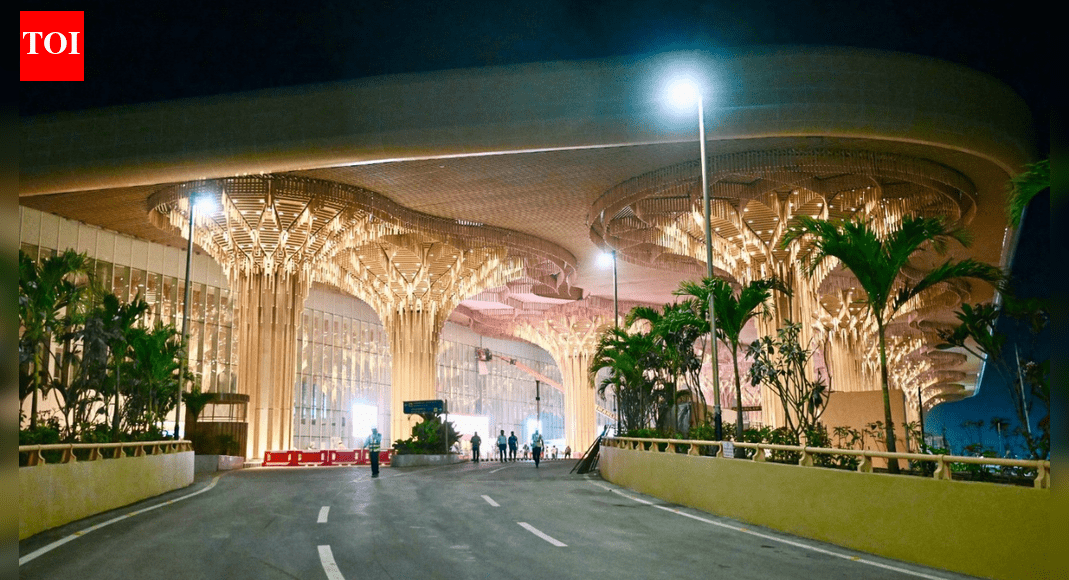
Prime Minister Narendra Modi today inaugurated the new terminal building of Lokapriya Gopinath Bardoloi International Airport in Guwahati, marking a significant milestone in India’s infrastructure development. This strategic move, announced by the Prime Minister on X with striking images of the facility, is poised to substantially enhance regional connectivity and economic activity in Northeast India.
This development is crucial for News Readers, Policy Watchers, Informed Citizens, and Political Analysts, offering insights into the government’s focus on regional development and ‘Ease of Living’ initiatives. It underscores a broader commitment to leveraging infrastructure projects for economic upliftment and improved public services across the nation.
The integrated terminal spans nearly 1.4 lakh square metres and is designed to accommodate up to 1.3 crore passengers annually. Furthermore, it proudly stands as India’s first nature-themed airport facility.
The inauguration signals not only an upgrade in aviation infrastructure but also a boost for commerce and tourism in Assam, providing a clear indicator of policy implications and future growth trajectories for India Politics.
Data at a Glance
| Infrastructure Metric | Value | Context/Impact |
|---|---|---|
| Terminal Area | 1.4 lakh sq metres | Significant expansion for increased passenger handling. |
| Annual Passenger Capacity | 1.3 crore | Addresses rising air travel demand, boosting connectivity. |
| Local Bamboo Utilized | 140 metric tonnes | Integrates local resources, reflects cultural heritage. |
| Indigenous Plants (Sky Forest) | ~1 lakh | Enhances passenger experience, unique nature theme. |
In-Depth Analysis
The inauguration of the new Guwahati airport terminal by Prime Minister Modi highlights the government’s sustained focus on infrastructure development as a key driver for regional growth and national integration. Historically, connectivity has presented a significant challenge for India’s Northeast, often impacting economic potential and ease of access. Projects like this new terminal align with broader policy objectives to bridge these gaps, fostering a more inclusive and equitable development trajectory across all states. This initiative mirrors the government’s strategic vision to bolster regional economies by improving logistical arteries, thereby enhancing citizen’s ‘Ease of Living’ and stimulating local commerce and tourism.
The detailed specifications of the new terminal underscore a modern, forward-thinking approach to public infrastructure. Spanning 1.4 lakh square metres and designed to manage 1.3 crore passengers annually, it significantly expands the airport’s capacity, directly addressing growing air traffic demands. Critically, the terminal distinguishes itself as India’s first nature-themed airport, conceptually centered on “Bamboo Orchids” and integrating 140 metric tonnes of locally sourced Northeast bamboo. Architectural elements like Kaziranga-inspired green landscapes, traditional japi motifs, the rhino symbol, and 57 kopou flower-inspired columns celebrate Assam’s rich biodiversity and cultural heritage. Features like the ‘Sky Forest,’ housing nearly one lakh indigenous plants, aim to offer an immersive, forest-like experience, while digital upgrades such as full-body scanners, DigiYatra contactless travel, automated baggage systems, fast-track immigration, and AI-driven operations promise enhanced passenger experience and operational efficiency, fulfilling a crucial government policy mandate for smart infrastructure.
This project stands out compared to conventional airport designs, which often prioritize pure functional aesthetics over cultural and ecological integration. While many modern terminals globally focus on high-tech features, Guwahati’s design uniquely blends advanced digital systems with a deep commitment to regional identity and environmental consciousness, setting a potential benchmark for future infrastructure endeavors in India. It strengthens Guwahati’s role as a vital gateway to Northeast India, enhancing its strategic importance for trade and tourism within the region and with neighboring countries, aligning with India’s ‘Act East Policy’. The successful execution of such a complex, large-scale government development project reflects a robust implementation of policy, demonstrating capability in delivering transformative public assets while engaging local resources.
For News Readers, Policy Watchers, Informed Citizens, and Political Analysts, this inauguration signifies more than just an airport expansion; it represents a concrete step in the broader narrative of India’s development and governance priorities. Citizens in the Northeast can anticipate smoother, more efficient travel and increased economic opportunities stemming from enhanced commerce and tourism. Policy analysts will observe this project as a case study for integrating sustainability, local culture, and advanced technology within a major public works program, potentially influencing future infrastructure policy. Key metrics to monitor include subsequent growth in passenger traffic, regional GDP indicators related to tourism and trade, and the long-term operational efficiency of the digital systems implemented. This initiative underscores a proactive government approach to India Politics, delivering tangible benefits through strategic infrastructure investments that promise enduring regional economic growth and improved public services.
About the Author