Key Takeaways
KB Home Q4 2025 earnings unexpectedly surpassed forecasts. Understand US housing trends, investor strategy, and homebuilder landscape for informed decisions.
Market Introduction
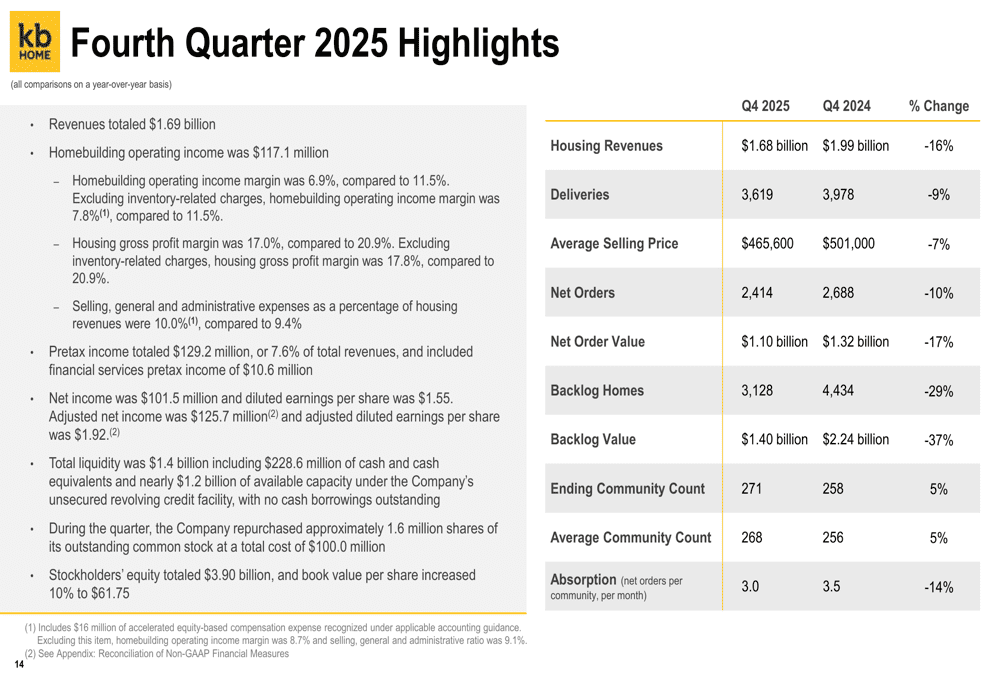
KB Home Q4 2025 earnings unexpectedly surpassed forecasts, signaling a robust operational performance from the prominent US homebuilder. This achievement occurred despite significant margin pressure, highlighting the company’s ability to navigate complex market dynamics. For investors, this qualitative beat underscores resilience within the US housing sector.
The performance suggests adept execution amidst prevailing macroeconomic headwinds, including volatile interest rates and fluctuating material costs. It offers a crucial insight into how top-tier homebuilders are adapting to challenging market conditions, making it vital for both retail and institutional investors to analyze.
While specific revenue growth or precise margin figures were not disclosed, analysts are closely scrutinizing this performance against broader cost erosion. This invites a deeper investigation into the effectiveness of homebuilder strategic decisions and their impact on future profitability.
This article provides an in-depth analysis of the macroeconomic landscape, homebuilder strategies, and crucial investor implications following KB Home’s Q4 2025 report.
In-Depth Analysis
The US housing market continues to present a complex narrative, a phenomenon strikingly exemplified by KB Home’s Q4 2025 performance. An earnings beat, contrasted sharply with persistent margin compression, creates a pivotal paradox for understanding current sector dynamics. This resilience largely stems from robust demographic tailwinds, as younger generations drive sustained household formation across the nation. Moreover, evolving migration patterns towards growth regions further bolster demand in specific markets. Crucially, a structural undersupply of existing homes, a challenge lingering for over a decade since the 2008 financial crisis, inherently grants homebuilders vital pricing power. This foundational demand, however, met significant headwinds in late 2025. Elevated interest rates substantially impacted mortgage affordability for prospective buyers, while pervasive inflationary pressures on key construction materials like lumber and steel consistently tightened cost structures. Escalating wages for skilled labor, fueled by persistent shortages across the industry, further exacerbated these cost pressures. KB Home’s success in this demanding environment, managing to surpass profitability expectations, suggests exceptional operational management. This likely includes optimized sales cycles, sophisticated inventory strategies, and a strong ability to execute projects efficiently despite mounting costs.
Deconstructing KB Home’s Q4 2025 performance reveals a nuanced operational picture for market participants. An “earnings beat” fundamentally means the company’s reported profit exceeded analyst consensus, indicating a stronger-than-anticipated bottom line. For KB Home, this implies highly effective management of its sales pipeline, likely through strategic pricing models, efficient project execution that minimizes delays, or a product mix strongly resonating with buyer preferences. The company clearly converted strong order books into completed sales at volumes sufficient to surpass overall profit expectations, a testament to its market responsiveness and operational agility. Conversely, “margin pressure” signifies a reduction in profitability per unit sold or per dollar of revenue, a critical concern for sustainable growth. This typically arises when rising input costs—materials, labor wages, land acquisition—outpace the company’s ability to raise selling prices or achieve commensurate cost efficiencies elsewhere. While the overall bottom line exceeded forecasts, the underlying profitability of individual home sales likely diminished. Investors must scrutinize future guidance meticulously, particularly management’s stated strategies for mitigating cost inflation and improving these critical gross and net margins. Monitoring key forward-looking demand indicators such as order growth and cancellation rates will provide valuable insights into buyer commitment and market health.
KB Home’s Q4 2025 experience likely reflects broader trends across the US homebuilding sector, offering a snapshot of industry-wide challenges and adaptive responses. Major competitors such as Lennar, D.R. Horton, and PulteGroup navigate similar landscapes, battling persistent supply chain volatility, skilled labor shortages, and universal impacts of rising interest rates on buyer affordability. Despite these formidable headwinds, the sector collectively demonstrates notable resilience, leveraging adaptive strategies and the enduring appeal of homeownership as a fundamental investment. Builders frequently employ strategic pre-selling models to lock in demand and pricing, acquire land strategically in high-growth areas to capitalize on demographic shifts, and optimize construction processes through standardization and efficient project management to mitigate rising costs. This scenario prompts investors to assess whether KB Home’s operational strengths are unique, perhaps due to specific geographic focus or a specialized product niche, or if they represent broader industry capabilities that other players also possess. A comparative analysis across key players would offer valuable insights into these strategic differentiators, helping discern sector-wide strength from individual company outperformance and guide investment choices.
The KB Home Q4 2025 report presents a nuanced and multifaceted investment case. The earnings beat offers a crucial short-term positive signal, potentially bolstering stock performance due to demonstrated operational robustness. This outcome could trigger positive analyst sentiment, potentially leading to short-term trading opportunities for agile investors. However, persistent margin pressure introduces significant medium-term risk. Investors must diligently monitor future guidance, focusing specifically on management’s concrete strategies to mitigate ongoing cost inflation and enhance overall profitability. Key metrics like order growth and cancellation rates provide essential forward-looking insights into demand momentum and buyer commitment, which are critical for assessing the health of the business pipeline. Long-term opportunities persist, driven by powerful demographic shifts and the structural housing undersupply that continues to characterize the US market. Yet, these opportunities are tempered by the potential for continued interest rate hikes and sustained inflationary pressures, which could impact affordability and construction costs. Assessing KB Home’s land acquisition strategy, current inventory levels, and geographic exposure remains paramount for formulating a balanced investment outlook, demanding continuous vigilance over broader market and economic indicators.
About the Author