Key Takeaways
Ray Dalio commits to ‘Trump Accounts’ for children launching 2026. Explore global capital, long-term savings, and Indian investor insights.
Market Introduction
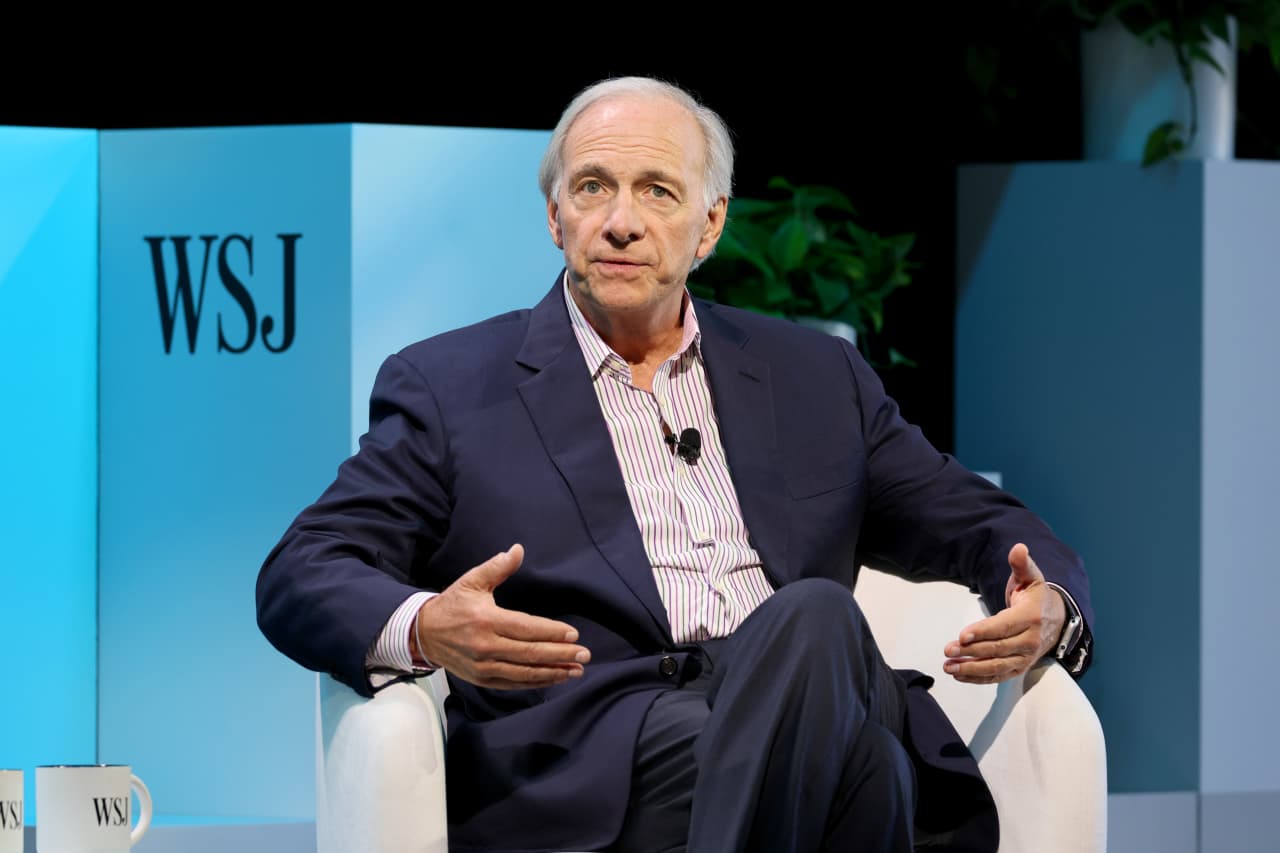
Hedge-fund billionaire Ray Dalio has committed to investing in ‘Trump Accounts’, a new initiative targeting American children set to launch in 2026. This significant endorsement signals a potential paradigm shift in how global capital leaders approach societal wealth creation, moving beyond traditional philanthropy and towards foundational economic empowerment.
For Indian investors, this development offers crucial insights into evolving global trends concerning philanthropic capital and broader wealth generation strategies. It highlights the growing importance of fostering early financial stability and literacy across different demographics, reflecting a global shift in investment philosophy.
Specific fund size, projected returns, or underlying asset allocations for these ‘Trump Accounts’ remain undisclosed at this initial stage. Therefore, immediate quantitative analysis or direct financial metrics are not applicable, shifting focus to conceptual implications and broader market shifts.
Investors should keenly monitor the detailed structure and objectives of these accounts as more information becomes available closer to their 2026 launch, particularly for lessons applicable to domestic initiatives.
In-Depth Analysis
Ray Dalio’s involvement in the ‘Trump Accounts’ initiative, described as investment vehicles for American children becoming available from 2026, generates considerable interest across global financial markets. Dalio, a luminary widely recognized for his macroeconomic insights and long-term investment philosophy cultivated through Bridgewater Associates, lends substantial credibility and visibility to this project. His participation, alongside other deep-pocketed contributors, signifies more than a mere philanthropic gesture; it highlights a potential paradigm shift in how influential capital leaders engage with societal wealth creation, particularly concerning the financial futures of younger generations. Indian investors vigilantly monitor such international capital flows and prominent endorsements, recognizing these as critical indicators of broader global economic trends and innovative investment approaches. This initiative reflects a conceptual investment in future human capital and economic stability, extending beyond conventional market plays, setting a precedent for patient, strategic wealth building.
From a fundamental perspective, the conceptual framework behind investment accounts for children strongly aligns with established principles of compounding and early financial planning. While specific financial metrics such as Price-to-Earnings ratios or EBITDA margins are not applicable due to the absence of a tradable entity or specific asset portfolio, the initiative’s profound potential for long-term capital formation carries significant fundamental weight. Encouraging early and sustained investment cultivates a more financially savvy populace over decades. This potentially leads to a broader, more resilient retail investor base, significantly shifting collective investment horizons towards longer durations and fostering a deeper understanding of market mechanisms. Technically, traditional analysis tools like support/resistance levels, moving averages, or the Relative Strength Index (RSI) are irrelevant without specific underlying assets or a defined fund structure. However, the ‘technical’ implication concerns structural changes to savings patterns. Widespread adoption could represent a significant re-allocation of capital towards long-term growth assets, influencing sectors traditionally favored by institutional capital such as infrastructure or technology.
Direct sector or peer comparison for the ‘Trump Accounts’ themselves remains unfeasible due to the undisclosed investment mandates. Conceptually, this initiative draws parallels with existing child savings programs worldwide. In the United States, 529 plans offer tax-advantaged savings for education, allowing investments in mutual funds and ETFs. India provides schemes like the Public Provident Fund (PPF) for secure, long-term savings with tax benefits and fixed interest rates, alongside the Sukanya Samriddhi Yojana (SSY) specifically for a girl child’s education and marriage. All these programs share the overarching goal of fostering long-term savings and financial security across generations. The distinction for ‘Trump Accounts’ lies in its explicit naming and direct involvement of private capital from billionaires like Ray Dalio, which could grant it unique visibility, scale, and potentially innovative structures not typically seen in purely governmental initiatives. [Suggested Matrix Table: Comparison of Child Savings Schemes – US 529, India PPF, SSY, Trump Accounts – across features like Tax Benefits, Investment Flexibility, Liquidity, Target Demographics, Capital Source]
Ray Dalio’s backing of ‘Trump Accounts’ signals a powerful endorsement of long-term, community-focused financial instruments for both retail and institutional investors. While specific trading opportunities are absent given the pre-launch announcement, the broader message highlights influential capital seeking to shape the future of wealth creation at a foundational level. Investors should closely monitor the accounts’ structure upon their 2026 launch, paying attention to asset allocation strategies, unique investment vehicles, and potential tax incentives. These factors could significantly influence capital flow into specific market segments or emerging industries over time. Risk factors include specific account design, future political shifts impacting policy or public perception, and inherent investment volatility. For Indian investors, the key takeaway is recognizing the global trend towards incentivizing long-term savings and financial literacy from a young age, offering valuable lessons in social finance and potential models for future domestic initiatives.
About the Author