Key Takeaways
Bank of Korea expresses wariness over FX risks, aiming to preserve policy room. Understand BoK’s monetary strategy and its impact on KRW, interest rates, and Asian markets for investors.
Market Introduction
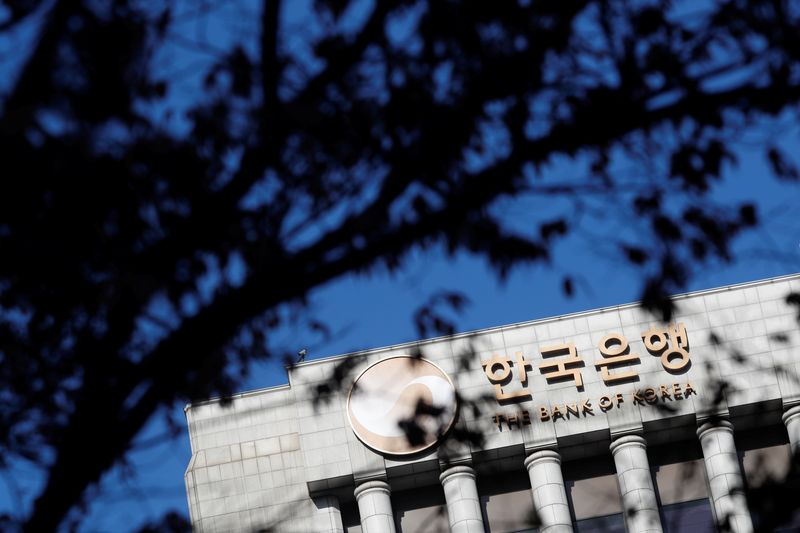
The Bank of Korea (BoK) board members are increasingly wary of escalating foreign exchange (FX) risks, as revealed in their latest minutes. This key development highlights the central bank’s commitment to preserving crucial policy room amidst global economic uncertainties, directly impacting the South Korean won (KRW) and broader market sentiment.
For investors tracking Asian markets, these concerns from the Bank of Korea signal potential interventions or shifts in monetary policy. Understanding the BoK’s stance on FX stability is critical for assessing investment flows and interest rate expectations in the region, particularly as global trade dynamics evolve.
While specific figures aren’t detailed, the KRW/USD exchange rate has shown volatility, with analysts closely watching for any changes to the current 3.50% policy rate. Market analysts expect continued vigilance from the BoK in Q4 2025 to manage inflation and capital movements.
This analysis delves deeper into the implications of the BoK’s concerns and their potential impact on South Korean equities and currency markets.
In-Depth Analysis
The global financial landscape in late 2025 is marked by persistent inflationary pressures and varied growth trajectories, prompting central banks worldwide, including the Bank of Korea (BoK), to exercise extreme caution. The recently released minutes reveal that BoK board members are keenly observing foreign exchange (FX) risks, a crucial indicator for economies reliant on international trade. This wariness is not isolated; major central banks like the Reserve Bank of India (RBI) and the US Federal Reserve are also navigating similar tightropes, balancing price stability with economic growth. Historically, periods of heightened global volatility have often seen central banks intervening to stabilize their domestic currencies, preventing imported inflation or excessive capital outflows. The BoK’s deliberate signaling in these minutes underscores a proactive stance to maintain financial stability and safeguard its monetary policy toolkit against external shocks.
The BoK’s concerns over FX risks are fundamentally rooted in South Korea’s highly open, export-oriented economy. A depreciating Korean Won (KRW) can lead to higher import costs, fueling inflation, particularly for energy and raw materials. Conversely, an overly strong KRW could hurt export competitiveness. The minutes emphasize preserving “policy room,” suggesting the BoK wants flexibility to adjust its benchmark interest rate, currently at 3.50%, without being forced by external currency pressures. Key metrics like the KRW/USD exchange rate and capital account flows are under intense scrutiny. Technical indicators for KRW show it oscillating within a specific band, with market participants closely watching for any verbal intervention or actual market operations from the central bank. Management guidance suggests a commitment to a data-dependent approach, prioritizing long-term economic stability over short-term currency fluctuations.
Compared to its Asian peers, the Bank of Korea’s approach to FX risks presents a nuanced picture. While the Bank of Japan continues to grapple with deflationary pressures and a weakening Yen, and the People’s Bank of China maintains a more controlled currency regime, the BoK operates in a relatively free-floating environment. The Reserve Bank of India, for instance, has actively managed INR volatility through interventions and policy rate adjustments, reflecting similar concerns about imported inflation and capital outflow. South Korea’s strong manufacturing base and technological leadership provide a degree of resilience, yet its reliance on global supply chains makes it uniquely vulnerable to currency swings. The BoK’s vigilance, therefore, is crucial for maintaining competitive advantage and attracting foreign direct investment amidst a challenging regional and global economic backdrop.
For Indian retail and institutional investors eyeing the South Korean market, the Bank of Korea’s stance offers a critical insight into future policy direction. The primary risk lies in unforeseen external shocks that could exacerbate FX volatility, potentially leading to faster-than-expected interest rate adjustments or direct currency interventions. Opportunities, however, exist in sectors less exposed to FX swings or those poised to benefit from a stable economic environment. Market analysts suggest that the BoK’s proactive communication aims to temper speculative activities and manage expectations, providing a more predictable investment climate. Key events to watch include upcoming inflation data, trade balance figures, and, of course, future BoK monetary policy meetings for signals on KRW/USD movements and the broader interest rate outlook for 2025.
About the Author