Key Takeaways
Analyze the MAGA rift’s impact on the 2025 political outlook. Understand market sentiment shifts and potential fallout for investors with expert insights.
Market Introduction
MAGA rift analysis highlights a significant fracture within the Republican party, potentially impacting the 2025 political and market landscape. This development affects voter sentiment and party unity ahead of key elections, making it crucial for investor strategies.
Market analysts are closely monitoring potential ripple effects on the broader political landscape and its indirect influence on economic policy discussions. Shifts in market sentiment are a key indicator to watch.
Recent polling data shows fluctuating approval ratings for key figures. Political futures volume has seen moderate activity. Market sentiment shifts are a key indicator.
This analysis delves into the core issues driving the rift and its potential consequences for investors.
In-Depth Analysis
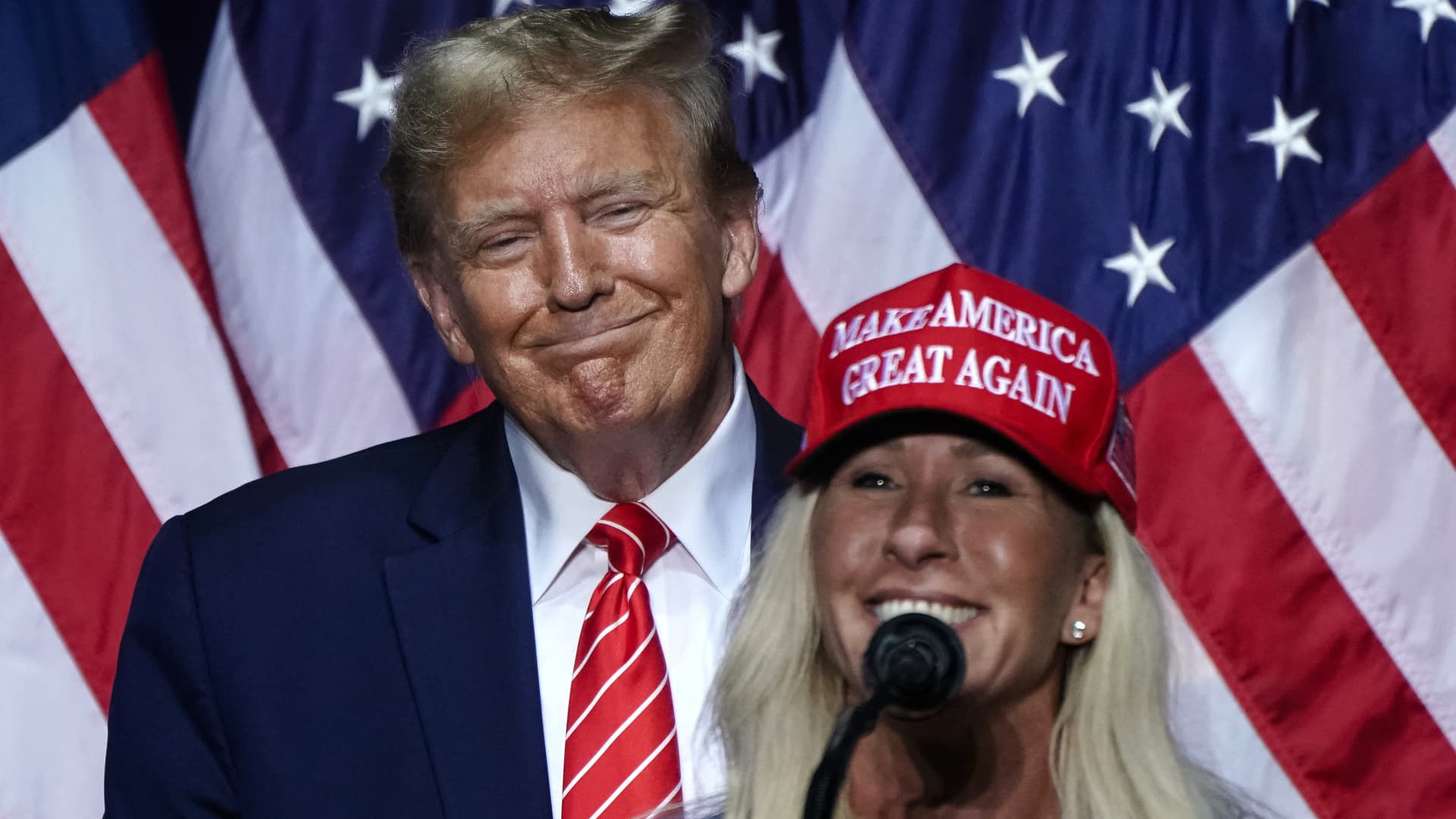
The political landscape in 2025 is being significantly shaped by a notable fracture within the Make America Great Again (MAGA) movement, exemplified by the public disagreement between former President Donald Trump and Representative Marjorie Taylor Greene. This rift, which intensified with Trump’s withdrawal of support and endorsement of a primary challenge against Greene, marks a departure from their earlier alliance and signals a broader shift in Republican party dynamics. Historically, Trump has been a pivotal figure in consolidating support for his allies, and his endorsement was crucial to Greene’s political ascent. The current tensions appear to be exacerbated by Greene’s criticisms regarding foreign policy decisions and her handling of sensitive documents, potentially creating instability within the MAGA base as the 2026 midterm elections loom. This internal party strife necessitates a careful reevaluation of allegiances and strategic positioning for all stakeholders, impacting market sentiment.
From a strategic perspective, Trump’s public disavowal, including the use of personal remarks and nicknames, suggests a deliberate effort to assert his leadership and preempt any perceived challenges. Greene, however, has maintained her stance as a proponent of the ‘America First’ agenda, articulating concerns for her safety and asserting her independence. Her public appearances and interviews indicate a strategy to broaden her appeal or potentially chart an independent political course. This dynamic interaction, characterized by escalating rhetoric and strategic maneuvering, is a critical element for monitoring shifts in the Republican party’s internal power structure and its evolving policy priorities. Market participants are advised to observe these intra-party power struggles closely, as they can influence economic policy direction and market stability.
Comparing Greene’s current political trajectory with that of other Republican lawmakers who have previously clashed with Trump provides valuable context. While some have found avenues for reconciliation, Greene’s direct challenges, particularly concerning foreign policy and transparency, appear to have precipitated a more definitive break. Her complex strategy, involving nuanced public communication and critiques, is being closely observed by political analysts and strategists. This could significantly influence voter sentiment and fundraising efforts leading up to the 2026 election cycle. The broader implications for investors, while indirect, stem from the potential for heightened political uncertainty and resultant shifts in policy focus. A fragmented Republican party might lead to legislative gridlock, impacting economic stimulus measures, trade policies, and regulatory frameworks.
The divergence in priorities between Greene’s focus on domestic issues and Trump’s engagement in foreign policy debates highlights potential conflicts within the ‘America First’ framework. The practical application of this agenda and the political capital available to advance it are now subjects of intense internal party debate. This creates opportunities for nuanced market analysis and risk assessment. Investors should consider how this internal political uncertainty might translate into economic policy volatility. Understanding these power dynamics is crucial for navigating potential market sentiment shifts and identifying strategic entry or exit points for investments sensitive to US political developments and policy uncertainty.
About the Author