Key Takeaways
Waymo driverless cars hit US highways, a major AV milestone. Explore investor implications and the 2025 outlook for autonomous mobility. Read the expert analysis.
Market Introduction
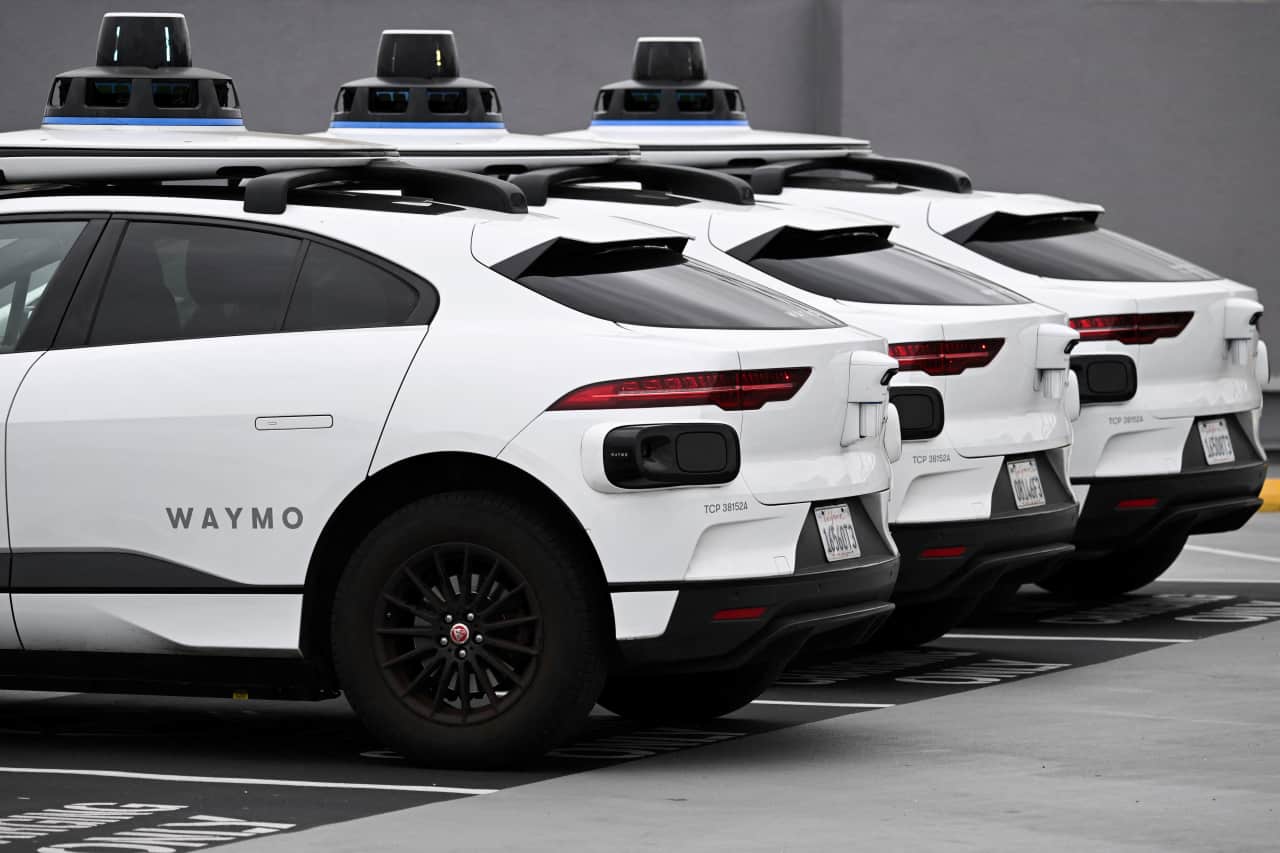
Waymo driverless cars have officially hit U.S. highways, marking a monumental milestone in autonomous vehicle (AV) technology. Alphabet’s subsidiary is now offering public rides on freeways without a safety driver, heralding a new era for AV deployment and crucial for investors monitoring the sector. While specific financial metrics are undisclosed, Waymo’s progress indicates robust advancements, with market analysts observing regulatory approvals and adoption rates closely.
This advancement is vital for understanding the trajectory of autonomous driving technology and its potential market penetration. Investors in Alphabet (GOOGL) and the broader AV ecosystem are keenly watching these developments for signals of future growth.
While precise financial figures for Waymo remain private, industry observers are tracking key performance indicators like operational miles. Analyst price targets for GOOGL often incorporate AV segment growth projections.
The following analysis explores Waymo’s highway capabilities and assesses the 2025 outlook for autonomous mobility.
In-Depth Analysis
The recent expansion of Waymo driverless cars onto U.S. highways represents a pivotal moment in the evolution of autonomous vehicle (AV) technology. Historically confined to geofenced urban areas or requiring safety drivers, Waymo’s foray into freeway driving signifies a major leap, demonstrating heightened confidence in the system’s capability to manage complex, high-speed environments. This move is not merely a technological achievement but a strategic stride towards commercial viability. The company’s methodical approach, grounded in years of extensive testing and data collection across diverse conditions, underpins this significant milestone. As competitors like Cruise and global players continue to refine their technologies, Waymo’s established presence and this highway expansion set a new benchmark for the industry’s journey towards widespread adoption. The historical context reveals a gradual but determined progression from controlled settings to more challenging real-world scenarios, setting the stage for the 2025 outlook for autonomous mobility.
From a fundamental analysis perspective, although Waymo operates as a subsidiary of Alphabet (GOOGL), its progress is intrinsically linked to the parent company’s broader innovation strategy. The successful deployment on highways suggests robust advancements in sensor fusion, AI-driven decision-making, and fail-safe systems. Key metrics such as operational miles, disengagement rates, and the efficiency of the AI driving models are critical indicators of technological maturity. While specific financial targets for Waymo are not disclosed, the reduction in reliance on safety drivers is a crucial step towards improving operational economics. The long-term vision involves scaling these operations to achieve profitability, leveraging the inherent efficiency of driverless systems in areas like fleet management and utilization, a key aspect for investor sentiment in 2025 and beyond.
The autonomous vehicle sector is intensely competitive, with companies like Cruise, Zoox, and various global players vying for market leadership. Waymo’s current advantage stems from its extensive real-world driving experience and its phased rollout strategy, which prioritizes safety and regulatory compliance. Competitors are also pushing boundaries, with some focusing on trucking or specific delivery services. The regulatory landscape remains a significant factor, with varying rules across states and countries impacting the pace of deployment. Market share in the nascent driverless taxi service is still largely theoretical, but Waymo’s early highway operations grant it a significant first-mover advantage in this specific domain. Successfully navigating these regulatory hurdles is as critical as technological prowess for sustained growth in the AV sector.
The expert takeaway is that Waymo’s highway milestone serves as strong validation for autonomous technology and a significant step towards the commercialization of driverless ride-hailing. For investors, this reinforces the long-term potential of companies leading AV development, though the path to profitability remains a marathon, not a sprint. Key risks include evolving regulatory frameworks, public acceptance, and the immense capital required for scaling. Opportunities lie in the potential for massive disruption of the transportation industry, improved safety, and new mobility-as-a-service models. Investors should monitor further regulatory approvals, expansion into new cities, and the development of commercial partnerships that could accelerate revenue generation for the 2025 outlook. Entry points should consider the long-term growth trajectory rather than short-term fluctuations in the AV market.
About the Author